Tools For Reading Through Scripture in 2015

Now that you’ve had some great encouragement to read through the Bible, here are some resources to help you do just that:

tumblr_mu151foTGA1qk8lq4o1_1280
Both Android & iOS have available apps to keep track of various reading plans:

Resources for Bible Reading from Justin Taylor:

Do you want to read the whole Bible?

If the average person reads 200 to 250 words per minute, and if there are about 775,000 words in the Bible, then it would take less than 10 minutes a day to read the whole Bible in a year.

Audio Bibles are usually about 75 hours long, so you can listen to it in just over 12 minutes a day.

But a simple resolution to do this is often an insufficient. Most of us need a more proactive plan.

Stephen Witmer explains the weaknesses of typical plans and offers some advice on reading the Bible together with others—as well as offering his own new two-year plan. (“In my opinion, it is better to read the whole Bible through carefully one time in two years than hastily in one year.”) His plan has you read through one book of the Bible at a time (along with a daily reading from the Psalms or Proverbs). At the end of two years you will have read through the Psalms and Proverbs four times and the rest of the Bible once.

The Gospel Coalition’s For the Love of God Blog (which you can subscribe to via email) takes you through the M’Cheyne reading plan, with a meditation each day by D. A. Carson related to one of the readings. M’Cheyne’s plan has you read shorter selections from four different places in the Bible each day.

George Guthrie’s “Read the Bible for Life Chronological Bible Reading Plan” is a semi-chronological plan, placing the prophets and the NT letters in basic chronological order. You read in four different places each day, along with a daily psalm (so you end up reading the Psalter twice in a year). You can also download a printable booklet.

For those who would benefit from a realistic “discipline + grace” approach, consider “The Bible Reading Plan for Shirkers and Slackers.” As Andy Perry explains, it takes away the pressure (and guilt) of “keeping up” with the entire Bible in one year. You get variety within the week by alternating genres by day, but also continuity by sticking with one genre each day. Here’s the basic idea:

Sundays: Poetry
Mondays: Penteteuch (Genesis through Deuteronomy)
Tuesdays: Old Testament history
Wednesdays: Old Testament history
Thursdays: Old Testament prophets
Fridays: New Testament history
Saturdays: New Testament epistles (letters)

There are a number of Reading Plans for ESV Editions. Crossway has made them accessible in multiple formats:

  • web (a new reading each day appears online at the same link)
  • RSS (subscribe to receive by RSS [Note that these have the text and also a MP3 of it professionally read out!])
    • podcast (subscribe to get your daily reading in audio)
  • iCal (download an iCalendar file)
  • mobile (view a new reading each day on your mobile device)
  • print (download a PDF of the whole plan)
Reading Plan Format
Chronological
Through the Bible chronologically (from Back to the Bible)
RSS iCal Mobile Print Email
Daily Light on the Daily Path
Daily Light on the Daily Path – the ESV version of Samuel Bagster’s classic
RSS iCal Mobile Print Email
Daily Office Lectionary
Daily Psalms, Old Testament, New Testament, and Gospels
RSS iCal Mobile Print Email
Daily Reading Bible
Daily Old Testament, New Testament, and Psalms
RSS iCal Mobile Print Email
ESV Study Bible
Daily Psalms or Wisdom Literature; Pentateuch or the History of Israel; Chronicles or Prophets; and Gospels or Epistles
RSS iCal Mobile Print Email
Every Day in the Word
Daily Old Testament, New Testament, Psalms, Proverbs
RSS iCal Mobile Print Email
Literary Study Bible
Daily Psalms or Wisdom Literature; Pentateuch or the History of Israel; Chronicles or Prophets; and Gospels or Epistles
RSS iCal Mobile Print Email
M’Cheyne One-Year Reading Plan
Daily Old Testament, New Testament, and Psalms or Gospels
RSS iCal Mobile Print Email
Outreach
Daily Old Testament, Psalms, and New Testament
RSS iCal Mobile Print Email
Outreach New Testament
Daily New Testament. Read through the New Testament in 6 months
RSS iCal Mobile Print Email
Through the Bible in a Year
Daily Old Testament and New Testament
RSS iCal Mobile Print Email

You can also access each of these Reading Plans as podcasts:

  • Right-click (Ctrl-click on a Mac) the “RSS” link of the feed you want from the above list.
  • Choose “Copy Link Location” or “Copy Shortcut.”
  • Start iTunes. [Or your podcatcher]
  • Under File, choose “Subscribe to Podcast.”
  • Paste the URL into the box.
  • Click OK.

digital bibleResources for Bible Reading from Ligonier Ministries:

Many Christians take the beginning of a new year to evaluate their Bible reading habits, and then change or begin a Bible reading plan.

Your word is a lamp to my feet and a light to my path. — Psalm 119:105

For your convenience, we’ve compiled a list of Bible reading plans for you to choose from. Maybe this year you will read more of the Bible each day. Perhaps you’ll slow down your reading and instead spend more time considering what you read. Whatever it is you’re looking for in a reading plan, you should find it below.


52 Week Bible Reading Plan

Read through the Bible in a year, with each day of the week dedicated to a different genre: Epistles, The Law, History, Psalms, Poetry, Prophecy, and Gospels.

Duration: One year | Download: PDF


5x5x5 Bible Reading Plan

Read through the New Testament in a year, reading Monday to Friday. Weekends are set aside for reflection and other reading. Especially beneficial if you’re new to a daily discipline of Bible reading.

Duration: One year | Download: PDF


A Bible Reading Chart

Read through the Bible at your own pace. Use this minimalistic, yet beautifully designed, chart to track your reading over 2013.

Duration: Flexible | Download: PDF


Chronological Bible Reading Plan

Read through the Bible in the order the events occurred chronologically.

Duration: One year | Download: PDF


The Discipleship Journal Bible Reading Plan

Four daily readings beginning in Genesis, Psalms, Matthew and Acts.

Duration: One year | Download: PDF


ESV Daily Bible Reading Plan

Four daily readings taken from four lists: Psalms and Wisdom Literature, Pentateuch and History of Israel, Chronicles and Prophets, and Gospels and Epistles.

Duration: One year | Download: PDF


Every Word in the Bible

Read through the Bible one chapter at a time. Readings alternate between the Old and New Testaments.

Duration: Three years | Download: PDF


Historical Bible Reading Plan

The Old Testament readings are similar to Israel’s Hebrew Bible, and the New Testament readings are an attempt to follow the order in which the books were authored.

Duration: One year | Download: PDF


Professor Grant Horner’s Bible Reading System

Reading ten chapters a day, in the course of a year you’ll read the Gospels four times, the Pentateuch twice, Paul’s letters four to five times, the Old Testament wisdom literature six times, the Psalms at least twice, Proverbs and Acts a dozen times, and the OT History and Prophetic books about one and a half times.

Duration: Ongoing | Download: PDF


Robert Murray M’Cheyne Bible Reading Plan

Read the New Testament and Psalms twice and the Old Testament once.

Duration: One or two years | Download: Website


Straight Through the Bible Reading Plan

Read straight through the Bible, from Genesis to Revelation.

Duration: One year | Download: PDF


Tabletalk Bible Reading Plan

Two readings each day; one from the Old Testament and one from the New Testament.

Duration: One year | Download: PDF
App: Accessible in the Ligonier App (iPhone / iPad & Android)


The Legacy Reading Plan

This plan does not have set readings for each day. Instead, it has set books for each month, and set number of Proverbs and Psalms to read each week. It aims to give you more flexibility, while grounding you in specific books of the Bible each month.

Duration: One year | Download: PDF


Two-Year Bible Reading Plan

Read the Old and New Testaments once, and Psalms & Proverbs four times.

Duration: Two years | Download: PDF


In addition to your daily Bible reading, if you’re looking for devotional material that will help you understand the Bible and apply it to daily living, consider Tabletalk magazine. Try it out for three months absolutely free.

Annual Bible Reading, from Guest Blogger: Junior Duran

I didn’t become a Christian until I was 29. When I was growing up in a charismatic Christian household and I had a question about religious beliefs and practices I was told simply, “You just have to have faith.” That response wasn’t good enough for me before I was a Christian and I wasn’t satisfied with it after I became a Christian.

When I was just a few months into the faith I began working in Christian talk radio. The first lesson I learned from the radio personalities were the three rules of bible interpretation:

  1. Context.
  2. Context.
  3. Context.

What is the immediate context of your passage? What is the context of your passage within that specific book? What is the context of the passage within the whole of scripture?

Graeme Goldsworthy lists some approaches to bible reading programs that are “less than helpful”,

  • Bible-reading programmes consisting of unrelated snippets drawn from all parts of Scripture with no obvious connection other than perhaps some loose thematic relationship.
  • Programmes without any perspective on the “big picture” of the history of redemption (salvation history).
  • Strategies that aim at extracting a devotional thought for the day rather than allowing the text to dictate the outcome.
  • Lack of any real hermeneutical guide for the application of texts, especially Old Testament passages.
  • Asking the wrong questions of the text: usually something like, “What does this teach me about myself?’ before asking, ‘How does this passage testify to Christ?’.

[Goldsworthy, Graeme. Gospel-centered Hermeneutics: Foundations and Principles of Evangelical Biblical Interpretation. Downers Grove, IL: IVP Academic, 2006. Print. page 309]

williamtyndale-600Because of principles like these I eventually started reading the The One Year Chronological Bible by Tyndale. Although this is an NIV bible I was later able to get the electronic version for my Laridian Pocket Bible. This enables me to keep the same reading plan while using my preferred bible translation. I’ve been reading through the bible this way for several years.

I want to differentiate between bible reading and bible studying.

I’m not talking about studying the bible, pulling out and comparing commentaries and/or lexicons, or even reading bible study notes. I’m just talking about reading the text. Getting the text into you. Depending on the passage it will take anywhere from five to twenty minutes to finish a day’s readings.

After about my third year of doing this the bible’s big picture began to come into focus. I believe if a person does this it will greatly aide in their discernment and they’ll be able to notice when theologians and commentaries agree or disagree with scripture. Specifically, when a theologian or commentator might concur with one particular scripture passage while possibly contradicting another passage of scripture. Wheat from Chaff, Heat from Light, discernment is important. You can agree with some of what theologians propose in one area while recognizing their inconsistencies in other areas.

Finally, a word about prayer and bible reading. I use the Lord’s Prayer and Psalm 51 as a framework for prayer. Also, since I don’t have time to pray for everything I would like to at one time, I’ve split them out through the week. Here’s my daily prayer and bible reading outline (you might use a notebook).

  • Prayer: Revelation and Illumination (Always pray for understanding before your read the scriptures)
  • Passage: (the text for the day)
  • Principle: (what were some principles learned from the day’s text)
  • Prayer: Confession
    • Petition
      • Restoration and Renewal
      • Submission, Obedience, and Preservation
      • Provision
      • Intercession
    • Deliverance and Protection
      • Sunday: Local Church
      • Monday: Co-Workers
      • Tuesday: Governments
      • Wednesday: Family
      • Thursday: Persecuted Church
      • Friday: Friends
      • Saturday: Neighborhood
    • Adoration and Worship
  • Practice (look for ways to put what you learned today into practice, James 1:22-26)

[ReBlog] Some Thoughts on Reading the Bible in 2015

From Dr. Benjamin Shaw

52514103746“This is not another post on Bible reading plans. There are about a thousand different reading plans out there, and I have no intention of adding to the list. What I will say first is that if you really want to read through the Bible in 2015, use a plan that takes you straight through from the beginning to the end. The Bible is one great big fantastic story, and if you’re reading a little here and a little there every day, you lose the plot.

Second, get yourself a Bible for reading. What I mean is that most Bible publishers do everything they can to make it hard to read the Bible. They print it in two columns. They put cross references in there. They put notes at the bottom of the page. They print in different colors, and add pictures and drawings. All of this can be helpful if you’re studying the Bible. But if you’re reading the Bible, it all distracts. When was the last time you picked up a novel that was printed in double columns, or had footnotes, or was printed in different colors, or had cross references? Of course you wouldn’t expect cross references or footnotes in a novel. But the point is that those things distract from the task of reading.” Read more…

ht: Junior “The Big Dippa” Duran

Thoughts on Private Devotions

It has appeared that the subject of personal devotion seems to be getting more attention these days. In my church, a lot of discussion is spent on the three spheres of piety that a Christian should develop: church piety, family piety, and personal piety. Much ink (and typing) has been spent defending the necessity of the local church and family worship so I want to talk about a key component of personal piety: daily commitment to Scripture reading.

I assume that most of the individuals who are reading this blog are not pastors or full-time church workers. This means that for most people, your financial livelihood is not dependent on the time spent reading and interpreting the scripture. Personally, I work about 60-70 hours per week on average so if I am not intentional about this matter, it can easily be neglected. For this reason, I developed a couple of habits that I thought would be helpful to share.

Don’t Waste Your Sabbath

Chapter 22, Paragraph 8 of the 1689 London Baptist Confession of Faith states that the Sabbath is a day of holy rest in which the entire day is “taken up in the public and private exercises of His worship, and in the duties of necessity and mercy.” Although this has specific reference to the corporate Lord’s Day worship, this also applies to family worship and private devotions. One can see the Sabbath as a day of rest from the ordinary affairs and work of life; however, one can also see the Sabbath as a unique day in which we can have concentrated time and devotion to the Lord. Throughout the week, there are times in which I may only have 20-30 minutes of free time that can be spent in private prayer and reading. However, on the Sabbath, the Lord has granted me the privilege to spend a significant amount of time in private devotion.

One of the convictions that I developed is to not waste the Sabbath. This means that I prepare myself to be fully engaged for morning and evening worship and I spend a significant amount of time studying the scriptures in-between the services. The Sabbath is also the day in which I can dedicate some portion of my time to reading theology… which leads to my second point

Develop a Sensible Reading Plan

bibleNow, if you have been following the posts on CredoCovenant, you could not have missed the various postings of the M’Cheyne’s Bible reading plan for the year (which is a very nice and straightforward bible reading plan). As a younger Christian, I read the Bible once a year through various reading plans (here’s a list for those who are interested). As my workload has increased, I found myself skimming through my various reading plans just to complete them and consequently, I was not developing a deeper knowledge and familiarity with the scriptures.

To adjust for this, I decided to slow down and do a two-year Bible reading plan in which I read through the Old and New Testaments once, and the wisdom literature four times. This reading plan has been a blessing for me and I would recommend it to anyone who has difficulty finding time throughout their week going through the scriptures.

Part of my reading plan also involves reading good Christian literature. My goal is to read 4 solid books per year, in which two books are modern books (which tend to be easier to read) and two older books (which tend to require much more time to digest). Whereas personal Bible reading is done daily throughout the week, virtually all of my reading on Christian literature tends to be done on the Lord’s Day.

Exhort and Encourage Yourself

We all know that making a plan tends to be much easier than actually completing the plan. There are numerous days in which I’m feeling exhausted and during these times, an encouragement is in order. During times that I’m exhausted, I always remind myself that daily scripture reading is an essential act of worship and I should present myself to God sacrificially (cf. Romans 12:1). In these times, I remind myself that God was never obligated to give me His Word nor was He obligated to give me His Spirit so that I can understand His Word. It’s a privilege, not a burden, to dedicate my heart and mind to the study of God’s Word. For these times, I continue running back to the wisdom psalms in which the psalmists proclaim the many excellencies of the Word of God. Consider Psalm 19:7-11

The law of the LORD is perfect, reviving the soul;

The testimony of the LORD is sure, making wise the simple;

The precepts of the LORD are right, rejoicing the heart;

The commandment of the LORD is pure, enlightening the eyes;

The fear of the LORD is clean, enduring forever;

More to be desired are they than gold, even much fine gold

Sweeter also than honey and drippings of the honeycomb.

Moreover, by them is your servant warned;

In keeping them there is great reward


However, there are times in which I am lazy and during these times, exhortations are in order. Kevin DeYoung’s short book The Hole in our Holiness (which is an outstanding small book) gives many practical exhortations to stir us on through our laziness. Gratitude is a great motivation for studying the scriptures, but during my lazy time, I need to be reminded of my duty and calling in this matter. A classic exhortation passage for me is 2 Peter 1:5-9 in which we are reminded that anyone who is not striving with all of their effort in sanctification is “so nearsighted that he is blind, having forgotten that he was cleansed from his former sins.” Therefore, we are called to “make our calling an election sure.”

Hopefully this has been an encouragement to you and I hope that in this new year that you will discipline yourself for the purpose of godliness through the study of God’s Word.

Thoughts on Biblical Literacy (for you ladies)

Recently, I began a book study with a dear friend of mine from church, and I thought the book that she had in mind was so awesome that it was worth writing about. J The book is entitled Women of the Word: How to Study the Bible with both our Hearts and our Minds, and it is written by Jen Wilkin. Honestly, the book has been amazing so far (we’ve only met up for 3 weeks now), but we have added to the challenge by having a discussion leader each week that poses thoughtful questions for our discussion.

What I really like about the book is that it discusses why biblical literacy is important, bad habits we may have that keep us from knowing the Word of God as we ought, and ways we can study more intentionally and effectively. Now, if you’ve been following the posts on CredoCovenant, you could not have missed the last posting of M’Cheyne’s Bible reading plan for the year (but, if you did, you can find it here). I’m not sure how many people are using the plan, or plan on using the plan in 2015, or plan on using a different plan, but I do want to encourage you to make studying the Word of God an intentional endeavor in the new year. Jen Wilkins had this to say from her book:

Biblical literacy is something most of us will never feel comfortable claiming we have achieved during our lifetime…We treasure what we know, but we are troubled by what we do not know. We do our best to cobble together a patchwork knowledge of Scripture, pieced from sermons, studies, and quiet times, but we are often confronted with the gaps and loose seams in the garment of our understanding, particularly when life gets hard…But what can we do to know the Bible better?…

Biblical literacy occurs when a person has access to a Bible in a language she [he] understands and is steadily moving toward knowledge and understanding of the text. If it is true that the character and will of God are proclaimed in Scripture, then any serious attempt to become equipped for the work of discipleship must include a desire to build Biblical literacy. Biblical literacy stitches patchwork knowledge into a seamless garment of understanding…This steady movement does not occur by accident, nor does it always occur intuitively. We may have an earnest desire to build Bible literacy, but left untrained, we may develop habits of engaging the text that at best do nothing to increase literacy and at worst actually work against it. (emphasis mine)

What struck me most in her statement was the fact that Biblical literacy isn’t something you just “happen into”. It’s something that takes work, training, and practice before you become good at it. I mean, it is the way most things work in life. I didn’t start off being a good wife or a good mother, I had to put some work into, get better at it, and I still have a long way to go. What Christian didn’t start off by knowing a few memory verses and some Bible stories about Noah, David and Goliath, and Jonah? So, eventually, we have to grow. We need to mature. We need to move beyond elementary things, and seriously make studying the Word of God a priority in our lives.

Now, this book is aimed at women (excellent holiday gift anyone!?!), but I know any person can benefit from reading the book. However, I know that taking time for Bible study is often difficult with the varying circumstances a lot of women deal with (i.e. husbands, families, children, jobs, hospitality, etc.), but I want to encourage the women out there not to neglect studying your Bibles coming into this new year. In fact, you may want to take advantage of a Bible reading plan to provide you with some guidance and a little motivation to keep on going. But ultimately, I think that the Word of God provides the best motivation. In Titus 2, verses 3-5, women are exhorted here by the Apostle Paul. Right at the end of verse 3, you find the sentence: “They are to teach what is good.” Let’s face it. You can’t teach what you don’t know. That’s a really blunt way of saying it, but it is the truth. You really can’t teach or share with anyone something you do not know. But a more gentle way of saying this can be found in Proverbs 31:26: “She opens her mouth with wisdom, and the teaching of kindness is on her tongue.” In our pursuit to become an excellent lady, honoring God in all that we say or do, let us not neglect studying His Word. So ladies, I pray that these verses provide you with the best motivation to make serious Bible study a part of your life. I also encourage you to check out Jen Wilkin’s book and maybe meet up with a friend or two to talk through it, and her book is a fairly short read for the month of December so that you can start off right in the upcoming year.

Finally, if I can get your mind going already, here are some questions that my friend and I discussed from our first meeting on this all important topic:

  1. When you study the Bible from a man-centered perspective, what aspects of God do we miss seeing? What aspects of ourselves do we miss seeing?
  2. When you study the Bible from a God-centered perspective, what aspects of God do you see more clearly? What aspects of yourself do you see more clearly?
  3. What does it mean to renew our minds?
  4. Is the way that a person becomes more spiritual different in the New Testament than in the Old Testament?
  5. Is the pursuit of doctrinal precision a truly spiritual endeavor? Is it a mark of genuine spirituality? Is it a worthwhile pursuit for the Christian?
  6. Is it sinful for us to study the Word of God however we want to (i.e. interpreting and understanding things how we want or only studying the things we want)?

M’Cheyne Bible Reading Plan: December

December 1


December 2


December 3


December 4


December 5


December 6


December 7


December 8


December 9


December 10


December 11


December 12


December 13


December 14


December 15


December 16


December 17


December 18


December 19


December 20


December 21


December 22


December 23


December 24


December 25


December 26


December 27


December 28


December 29


December 30


December 31

What I’m Not Saying About the Godly Line of Seth

Recently, I posted a four-post argument on my understanding of the identity of the “sons of God” in Genesis 6. Since settling on my view of this passage, I have read several articles from those who hold to the more common view. In these articles there are some misnomers I’d like to address. I think each of these arguments can be reduced down to one very simple assertion: Don’t hear what I’m not saying. Let’s address each one of these misnomers in turn.

I’m not saying that the Sethites were anywhere else referred to in Genesis as ‘sons of God’

Sure, the Sethites are not identified anywhere other than Genesis 6 by Moses as sons of God, but neither are fallen angels. The book of Job alludes to angels being called ‘sons of God,’ but even that assumes a certain interpretation. Think of it this way:

Job was the first book written in the Bible. Hundreds of years later Moses wrote the Pentateuch. Hundreds of years after that the prophets tell us that Satan was actually a guardian cherub in the Garden of Eden. Thus, we must assume that Moses, foreseeing the prophets’ understanding of Satan’s nature, interprets that back into Job and then uses that interpretation to identify fallen angels able to create for themselves bodies capable of procreating with female humans. This hermaneutic is, to say that least, bizarre.

However, for God to designate His remnant people as His children is far from bizarre, even for Moses. In Exodus 4:23 God, through Moses, told Pharaoh, “Let My son go that he may serve Me” (NASB). God is a covenant keeping God, and we with whom He keeps covenant are not His mere subjects. We are His sons (Matthew 5:9; Luke 20:36; Romans 8:14; 9:26; Galatians 3:26; 4:6).

I’m not saying that the Sethites were intrinsically godly

Some call into question the certainty with which we can say that the line of Seth were all godly. I would call that into question as well. In and of himself, no man has ever been completely biblecoffee2_kjekolrighteous. Look at the life of Abraham. He deceived to monarchs and put his wife’s purity on the line to save his own skin, and yet he is called righteous. Look at his nephew Lot. He offered up his daughters to the city, got drunk, and impregnated his daughters, and yet he is called righteous.

By referring to the Sethites as the godly line of Seth, we are not eschewing the fact that we are here referring to sinful men. Beyond any doubt, they were sinful men. However, look at the way that sinful men of God are remembered in the Bible vs. sinful men of the world. The New Testament authors only recall the good in the life of Abraham. They refer to Lot as righteous Lot. They recall only the sins of Balaam, but recall only the faith of Rahab the harlot.

So, what is the difference between the godly and the ungodly in a world where all have sinned and fallen short? The difference is a difference of covenant and perseverance. Those who are in covenant with God, though they may sin (even scandalously), through repentance and perseverance, they will be called godly. They will be called sons of God!

I’m not saying that all who are called ‘sons of God’ persevere

Obviously, not all of the Sethites persevered to the end. There is always a certain level of corruption among God’s people. There will always be wheat among the tares. However, God always has His remnant. For the Sethites, the corruption reached so far that, by the time of the flood, the only remnant left was Noah and his immediate family. There were times in the life of the nation of Israel when there were only 7,000 who had not bowed the knee to Baal.

To say that a people of God is godly in the Bible is not necessarily to say that all of them do all things with all godliness at all times. That notion is simply preposterous. If that were the case, why in the world would Paul tell Titus that God’s grace enables us to live godly lives (Titus 2:12)? Why on earth would Peter say that God rescues the godly (2Peter 2:9)? None of us is perfect. We all fall short in many ways. So, to say that the Sethites were godly is not to say that they were perfect or that they persevered to the end. It is simply to say that they were God’s people at that time.

By the time of Noah, they obviously had come to be very corrupt, just as did the nation of Israel before the dispersion and Judah before the exile. That is the point, though. Even though men may fail, God always keeps His promises. He promised a Messiah that would crush the serpent’s head and, though men may fail us every time, God will remain faithful to His promises. God preserved His chosen Seed through Noah, even though the line of Seth eventually failed.

I will not concede that the daughters of men are the daughters of all mankind

Some have also pointed out that “daughters of men” seems to be used to refer generally to the female offspring of all men, not just those of the Cainites. When placed in contrast to the sons of God, though, it is not hard to understand that two very distinct groups are being referenced here. It is much like the use of the two Adams in 1Corinthians 15.

The first Adam became a living soul, but the last Adam (Christ) became a life-giving spirit (vs. 45). Therefore, “as in Adam all die, so also in Christ all will be made alive” (vs. 22; NASB). Does Paul mean here that every individual in Christ has been or will be made alive? Of course he doesn’t. What he is teaching is that there are two types of men. There are those who are in Adam and, therefore, dead in their trespasses and sins, and there are those who are in Christ, who have been raised with Him to walk in newness of life.

Sometimes the biblical authors used general, universal-sounding terms to designate one group, but then mark them out as not being general and universal by contrasting them with a more specific group. That is what Paul was doing when he wrote 1Corinthians 15, and that is what Moses is doing when he speaks of the daughters of men in Genesis 6. The daughters of men are best understood when contrasted with the sons of God. They are those who follow after the precepts of men rather than the precepts of God. So, when God’s chosen people went after them, they committed a great evil in the sight of the Lord.

Who Were the ‘Sons of God’ in Genesis 6? (Full)

Read my four-part series on the “sons of God” in Genesis 6 here, here, here, and here, or read it in full below. Also, check out my follow-up article, What I’m Not Saying About the Godly Line of Seth.

____________________

Of late, I have been leading the 9 to 12 year olds at my church through a discussion of the book of Genesis. When I came to Genesis 6, the question came up that inevitably comes up when surveying this book of the Bible: “Who were the sons of God in Genesis 6?” Now, this was not my first time having studied this text, so the answer came fairly easy for me, but I realize that it is still a hotly debated issue in Evangelicalism. In fact, I recently had an exchange with someone on social media over this topic, and the guy was less than cordial toward me for my stance.

The Fallen Angels View

The default position in the Dispensationalist SBC churches I attended as a child was that the sons of God were fallen angels who became like men and procreated with human women, the offspring of which were giant, hybrid creatures called Nephilim. The go-to text for proving this interpretation was always Job 1:6 where Satan (a fallen cherub) is said to have appeared before God “when the sons of God came to present themselves before the Lord” (NASB). The idea seems to be, if a set of words is used in one way over in one book of the Bible, it must be used in the exact same way wherever else it appears.

Of course, the proponents of this view also cited a few verses from the New Testament:

“For if God did not spare angels when they sinned, but cast them into hell and committed them to pits of darkness, reserved for judgment” (2Peter 2:4; NASB).

“And angels who did not keep their own domain, but abandoned their proper abode, He has kept in eternal bonds under darkness for the judgment of the great day” (Jude 6; NASB).

Also…

“in which also He went and made proclamation to the spirits now in prison, who once were disobedient, when the patience of God kept waiting in the days of Noah, during the construction of the ark, in which a few, that is, eight persons, were brought safely through the water” (1Peter 3:19-20; NASB).

Refutation

Seems like a pretty open-and-shut case, doesn’t it? Hardly. Let’s examine their arguments closer and get into the context of these passages to see whether or not the arguments hold up and are truly supported by the texts here cited.

Job 1:6

Let us start with the assertion many have made that “sons of God” must mean angels in this text precisely because that is what it means elsewhere, like in Job 1:6. This assertion assumes the idea that biblical words and phrases cannot have multiple meanings and usages. This is not true for any language; words and phrases have multiple usages and meanings, regardless of the language you are examining.

Especially when we are dealing with different authors writing in different eras, we need to take these things into account. Job is largely believed to have been written around the same time Abraham lived. We know nothing whatsoever about its author or common usages of phrases during his time. We do know that Moses, who wrote Genesis, lived hundreds of years after Abraham.

In this span of time, the common vernacular was highly likely to change. Consider the fact that the King James Version of the Bible was codified in the 1600s in Elizabethan English, and its language was considered archaic by many as early as the mid-1800s. Moses might have had angels in mind when he used the designation ‘sons of God.’ The only way to know for sure is to look at his usage of it in the immediate context. We will do so in Part Three of our study.

2Peter 2:4

Angels_and_Demons___by_masianiNext, we have 2Peter 2:4 in which Peter tells us that God did not spare angels when they sinned but cast them into hell. How does this even come close to relating to Genesis 6? Well, in the next verse, Peter alludes to Noah’s generation and the judgment they faced. What we have in 2Peter is the apostle’s warning against false teachers. He draws three illustrations of how God deals with false teachers. He judged the angels, he judged the generation of Noah, he judged Sodom and Gomorrah, and He will judge the false teachers in these last days as well. When understood in context, 2Peter 2 provides no support to the “angels sleeping with humans” view of Genesis 6.


Jude 6

But what about Jude 6? Isn’t that a parallel passage to 2Peter, and doesn’t that talk about angels abandoning spiritual form to take bodies for themselves? Proponents of this view draw from the word τὸ οἰκητήριον, claiming that angels left their bodily dwellings in order to assume new bodies. They attempt to justify this usage by pointing out that the only other usage of the Greek word in question is in 2Corinthians 5:2 is in reference to the Christian’s future, glorified (physical) body.

Actually, BDAG tells us that the term used both in Scripture and in extra-biblical texts to refer to heavenly dwelling places. Thus, it is apparently being used figuratively to refer to the bodies we will receive in heaven in 2Corinthians whereas, in Jude, it is used to refer to the angels’ actual heavenly abode. Jude, then, is not arguing that angels took on flesh; rather, he is warning against false teachers who, like those angels, would be punished by God in the end.

1Peter 3:19-20

Finally, in 1Peter 3:19-20, we see that Christ went and made proclamation to spirits who are now in prison. Who were these spirits? In order to determine their identity, we must back up and look at the context. Peter is writing to his audience about their sufferings and claims that Christ too also suffered and died and was made alive in the Spirit. In this same Spirit, he writes, Christ went and made proclamation to the spirits “who were once disobedient, when the patience of God kept waiting in the days of Noah” (vs. 20a).

If Peter is talking about angels here, we have a big problem. Why would the patience of God be waiting for angels to respond to a Messianic proclamation? “For assuredly He does not give help to angels, but He gives help to the descendant of Abraham” (Hebrews 2:16; NASB). Christ did not come to die for angels, but for men, so what proclamation could he have possibly been making to angels? If it is a message of judgment and not salvation, how is it that this proclamation now correlates to baptism (1Peter 3:21)? No. Christ did not preach to the spirits of enfleshed angels; he preached to the spirits of men.

How then did the Spirit of Christ preach to the men of Noah’s day? Simple. He preached to them through Noah! Noah was a “preacher of righteousness” (2Peter 2:5); he was God’s messenger in his day. When God’s messenger speaks, God speaks. Had Noah’s generation heeded his voice and entered the ark, they would have been saved. In like manner, when we heed the voice of God’s divinely appointed messengers and are immersed into union with Christ, we are saved from the judgment to come.

The Godly Line of Seth

Now, we’ve examined the identity of the sons of God in Genesis 6, stating the default position of most in the Western church and refuting it with some negative argumentation. Let us now begin to offer a positive argument for the position I hold. As far as I am aware, there are three common positions held on the sons of God in Genesis 6, one of which I will not concern myself for lack of space and time.

Augustine

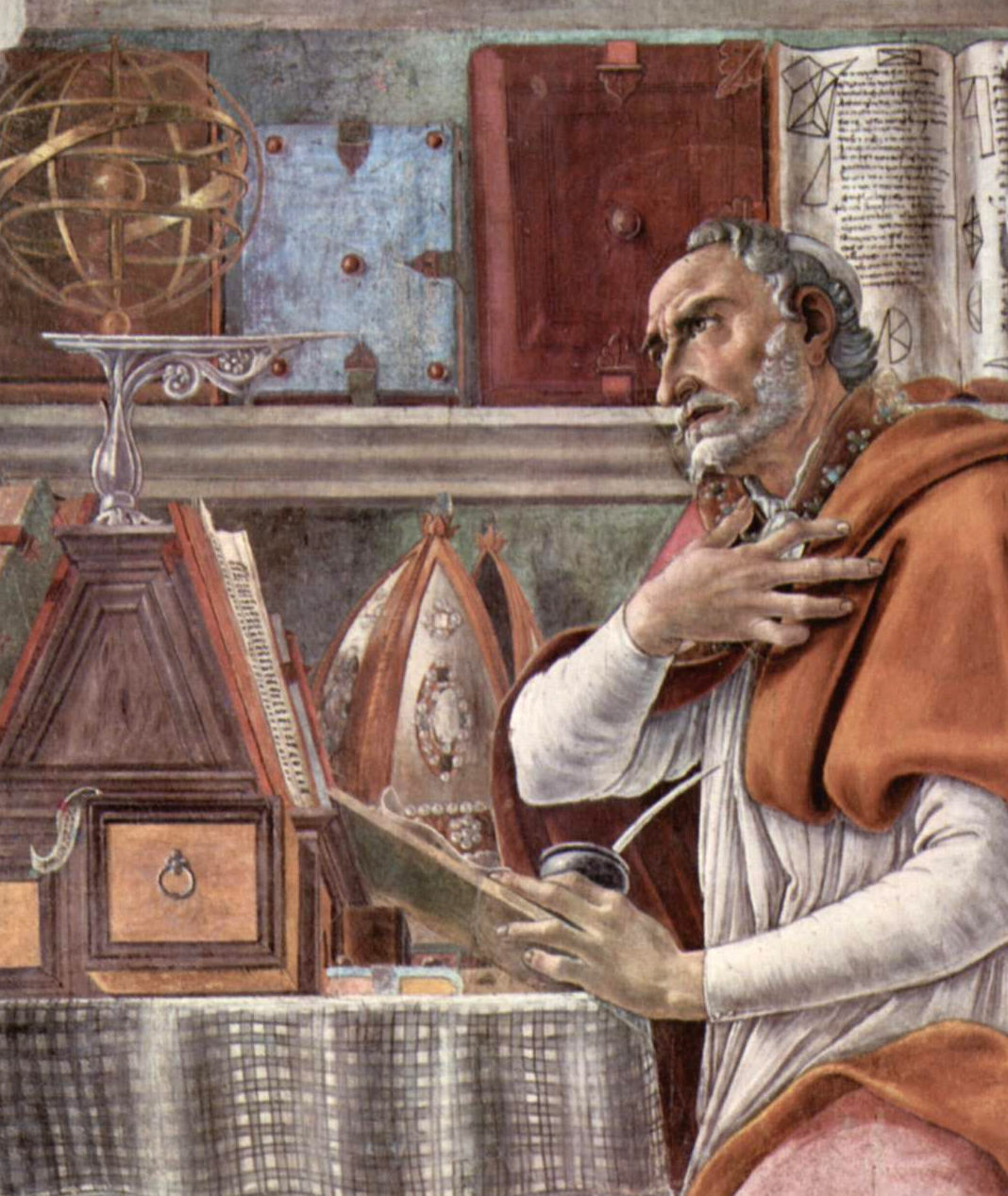
Plain and simple, the position I hold is the position commonly called the “godly line of Seth” view. This position has historically been held by many Protestants, but was most famously championed by Augustine in his City of God. In City of God, Augustine spends the first half of the tome arguing in the negative against Augustine_of_Hippo_Sandro_Botticellithose who had claimed that Rome had fallen as a direct result of her abandonment of the Roman gods for Christianity. Augustine argued that those who worshiped the Greek and Roman gods worshiped demons, while those who worshiped Christ were worshiping the one, true and living God of the universe.

In the second half of this multi-volume work, Augustine develops a biblical theology of Christ. He traces through each book of the Bible a Christocentric hermeneutic of redemptive history. If you’ve never read City of God before, it is worth it just to see how he understands how God has worked through the different epochs of redemptive history to bring about His purposes.

History according to Augustine, more than anything else, is God’s story. However, it is not merely God’s story. History is more precisely the story of how God brings about His redemptive purposes through providentially directing the activities of the city of God and the city of man. From the dawn of creation, God has always had His people, and His people are distinct from all other people on the face of the earth.

Nehemiah Coxe

Nehemiah Coxe picked up this idea of tracing God’s redemptive activity through the word of God when he wrote Covenant Theology: From Adam to Christ. Coxe’s unique contribution was that he demonstrated how God’s redemptive work in redemptive history was uniquely covenantal. Of course, as everyone knows who is familiar with this work, Coxe largely borrowed from Congregationalist John Owen in setting out his framework.

Both Augustine and Coxe subscribe to the “godly line of Seth” view, but we should beware lest we subscribe to a view merely because it is affirmed by a theologian we respect. Our minds and our hearts must be bound to Scripture. We must never elevate a man or a creed on par with Scripture. With that in mind, let us take a look at some Scriptural proof for the “godly line of Seth” view.

Our First Parents

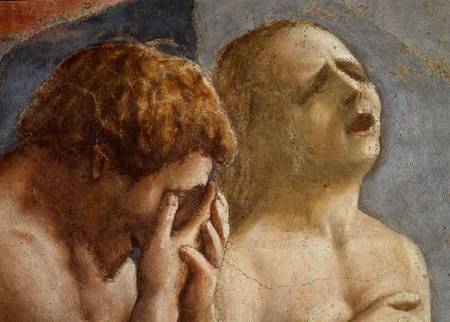
BEN63190In Genesis 1 and 2, we see that Adam and Eve were made holy and happy. They had never sinned, they were naked, and they were unashamed. God had only given them one rule, and that was that they should not eat of the tree of the knowledge of good and evil. As we know well, our first parents did eat of that fruit and, doing so, they plunged all of their progeny into sin and misery.

However, in Genesis 3, God offered mankind some hope. After having conducted His trial and found the man, his wife, and their deceiver guilty, God rendered His verdict. Upon the woman, He placed a curse, that she would have pain in child-rearing. Upon the man, he placed a similar curse, that he would no longer have joy in his labors. Before pronouncing these curses, though, God pronounced a curse on the serpent, a curse that came with hope for mankind.

“And I will put enmity

Between you and the woman,

And between your seed and her seed;

He shall bruise you on the head,

And you shall bruise him on the heel” (Genesis 3:15; NASB).

This pronouncement is what many theologians have labeled the proto-euangelion, which basically means the first gospel proclamation. In it, Adam and Eve were given a promise that one of their descendants would eventually set right all that they had destroyed in their rebellious act. Thus, we can imagine the effect that their oldest son’s fratricidal act would have on them.

Cain, Abel, and Seth

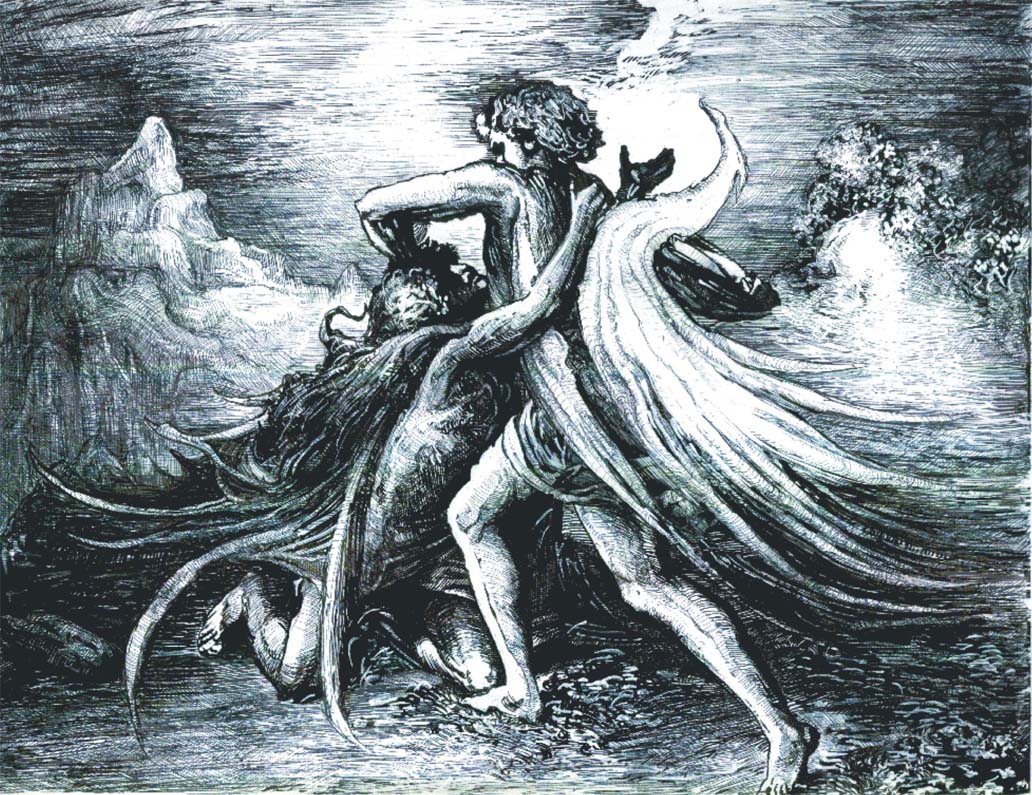
In Genesis 4, we witness the murder of one of Adam’s sons at the hand of his other son, likely the one through whom the promised Seed was expected to Caincome. With this act, Cain cast some doubt over the promise God had made on that dismal day in the garden. Through whom was the promised Seed to come? Certainly not Cain!

The second half of Genesis 4 and Genesis 5 serve as a contrast of sorts. After Cain kills Abel, his lineage is detailed for us in the remainder of chapter 4. It is filled with violent, evil men. Chapter Five, however, reestablishes hope for mankind. Adam and Eve have a third son, Seth, and through him come godly men such as Enoch and Noah. On the arrival of Noah, Bible translators provide for us a chapter break. Yet the story is not over.

Do Not Be Unequally Yoked

Just as mankind’s hopes were dashed at the murder of Abel, so too they were dashed just after the godly line of Seth was established. What Moses tells us is that even this godly line was compromised. In fact, it was so corrupted that God saw fit to destroy the earth with a deluge. How was this godly line of Seth compromised? Through marriage.

Throughout the Bible, God forbade His people from intermarrying with pagans and idolaters. He established godly lines (e.g. Abraham, Isaac, Jacob, Judah, David…) through whom He established His covenants and promises, and through whom He would eventually bring the Seed of Abraham: Christ. The “godly line of Seth” argument is that God did not begin this covenantal headship work with Abraham, but with that promise in Genesis 3.

God has always His people, and those people have always had earthly representatives. Today, the Mediator between God and man is the man Jesus Christ. When one is found to be in the people of God under one of these covenant heads, to marry outside of that line is synonymous with apostasy. It simply is not to be done.

To do so will lead to idolatry and sin, as it did for the Israelites in the days of Balaam and still does in the church today. God’s people are not to be unequally yoked. Rather, we are to remain faithful to the God who called us out from among the nations.

Applications

In addressing the identity of the sons of God in Genesis 6, we have examined the most common interpretation today, given a negative argument against it, and offered a positive argument in favor of my personal understanding of it. This post has already been rather long. Thus, in conclusion to our study, there are just a few applications I’d like to make.

The Analogia Fide

First, we ought always to be mindful of the fact that our interpretation of one text cannot cancel out our interpretation of other texts in the word. We must 46f1a1ed!h_300,id_1999,m_fill,wrecognize that, insofar as the word was written by one divine Author, it cannot contradict itself at any point. So, when the Bible teaches creation as a divine attribute (Psalm 33:6-9; 148:5; Isaiah 43:7; 45:12; Ephesians 3:9), we must recognize the utter blasphemy of attributing creative power to any created being. So, whatever we say about the ‘sons of God’ in Genesis 6, we have no liberty to say that they are angels who created flesh for themselves.

When people take hard to understand passages and use passages that are even harder to understand to try to explain them, there is always the risk of altering very important truths in other parts of the Bible. As such, we need to revive the old hermeneutical principle of analogia fide, or the analogy of the faith. This principle is simple. It asserts that we interpret the less clear parts of Scripture in light of the more clear parts. With this principle as our guide, we will be less likely to try to apply the difficult writings of Peter to the less difficult passage in Genesis 6, obscuring its more rich meaning.

Which of the Angels?

Second, let us glory in our place in creation. When we understand that Christ didn’t go and make proclamation to angels in hell, it allows us to affirm with the author of Hebrews the true goal of the gospel. Christ came to bring many sons to glory, not from the hosts of fallen angels, but from his brothers in the flesh (Hebrews 2:9-13). “For assuredly He does not give help to angels, but He gives help to the [descendant of Abraham” (vs. 16).

Not only is Christ exalted above the angels, but He also secured a place for His brethren above the angels in glory. Our eschatological place in creation has been established by our victorious Savior, and He is not ashamed to call us brothers. What a place of significance this truth affords us. What dignity we have above even the angels!

The God of Promise

promisesThird, let us recognize the fact that God is faithful. Whatsoever He has promised, He will deliver. When Cain killed Abel, God’s promise stood. He provided a way through the godly line of Seth. When Adam died and all seemed lost, within the year God took Enoch demonstrating that He is a God of deliverance. When the godly line of Seth began to intermarry with heathen women and abandon God, He provided an ark of salvation. When God had been silent for hundreds of years, Rome had conquered Israel, and all once again seemed lost, God finally sent the Seed of the woman to crush the head of Satan and deliver His people from their sins.

God has met every promise He ever made. He is the God of promise, and He will remain faithful to the end. Let us glory in our great God of promise!

Who Were the ‘Sons of God’ in Genesis 6? (Application)

In addressing the identity of the sons of God in Genesis 6, I have stated the most common interpretation today, given a negative argument against it, and offered a positive argument in favor of my personal understanding of it. The last couple posts have been rather long for me. Thus, in conclusion to our study, there are just a few applications I’d like to make.

The Analogia Fide

First, we ought always to be mindful of the fact that our interpretation of one text cannot cancel out our interpretation of other texts in the word. We must recognize that, insofar as the word was written by one divine Author, it cannot contradict itself at any point. So, when the Bible teaches creation as a divine attribute (Psalm 33:6-9; 148:5; Isaiah 43:7; 45:12; Ephesians 46f1a1ed!h_300,id_1999,m_fill,w3:9), we must recognize the utter blasphemy of attributing creative power to any created being. So, whatever we say about the ‘sons of God’ in Genesis 6, we have no liberty to say that they are angels who created flesh for themselves.

When people take hard to understand passages and use passages that are even harder to understand to try to explain them, there is always the risk of altering very important truths in other parts of the Bible. As such, we need to revive the old hermeneutical principle of analogia fide, or the analogy of the faith. This principle is simple. It asserts that we interpret the less clear parts of Scripture in light of the more clear parts. With this principle as our guide, we will be less likely to try to apply the difficult writings of Peter to the less difficult passage in Genesis 6, obscuring its more rich meaning.

Which of the Angels?

Second, let us glory in our place in creation. When we understand that Christ didn’t go and make proclamation to angels in hell, it allows us to affirm with the author of Hebrews the true goal of the gospel. Christ came to bring many sons to glory, not from the hosts of fallen angels, but from his brothers in the flesh (Hebrews 2:9-13). “For assuredly He does not give help to angels, but He gives help to the [descendant of Abraham” (vs. 16).

Not only is Christ exalted above the angels, but He also secured a place for His brethren above the angels in glory. Our eschatological place in creation has been established by our victorious Savior, and He is not ashamed to call us brothers. What a place of significance this truth affords us. What dignity we have above even the angels!

The God of Promise

Third, let us recognize the fact that God is faithful. Whatsoever He has promised, He will deliver. When Cain killed Abel, God’s promise stood. He provided a way through the godly line of Seth. When Adam died and all seemed lost, within the year God took Enoch demonstrating that He is a God of deliverance. When the godly line of Seth began to intermarry with heathen women and abandon God, He provided an ark of salvation. When God had been silent for hundreds of years, Rome had conquered Israel, and all once again seemed lost, God finally sent the Seed of the woman to crush the head of Satan and deliver His people from their sins.

God has met every promise He ever made. He is the God of promise, and He will remain faithful to the end. Let us glory in our great God of promise!


Who Were the ‘Sons of God’ in Genesis 6? (Part Three)

In the first two articles I posted on the identity of the sons of God in Genesis 6, I stated the default position of most in the Western church and refuted it with some negative argumentation. In this article, I will now begin to offer a positive argument for the position I hold. As far as I am aware, there are three common positions held on the sons of God in Genesis 6, one of which I will not concern myself for lack of space and time.

Augustine

Plain and simple, the position I hold is the position commonly called the “godly line of Seth” view. This position has historically been held by many Protestants, but was most famously championed by Augustine in his City of God. In City of God, Augustine spends the first half of the tome arguing in the negative against those who had claimed that Rome had fallen as a direct result of her abandonment of the Roman gods for Christianity. Augustine argued that those who worshiped the Greek and Roman gods worshiped demons, while those who worshiped Christ were worshiping the one, true and living God of the universe.

In the second half of this multi-volume work, Augustine develops a biblical theology of Christ. He traces through each book of the Bible a Christocentric hermeneutic of redemptive history. If you’ve never read City of God before, it is worth it just to see how he understands how God has worked through the different epochs of redemptive history to bring about His purposes.

History according to Augustine, more than anything else, is God’s story. However, it is not merely God’s story. History is more precisely the story of how God brings about His redemptive purposes through providentially directing the activities of the city of God and the city of man. From the dawn of creation, God has always had His people, and His people are distinct from all other people on the face of the earth.

Nehemiah Coxe

coxeowen2Nehemiah Coxe picked up this idea of tracing God’s redemptive activity through the word of God when he wrote Covenant Theology: From Adam to Christ. Coxe’s unique contribution was that he demonstrated how God’s redemptive work in redemptive history was uniquely covenantal. Of course, as everyone knows who is familiar with this work, Coxe largely borrowed from Congregationalist John Owen in setting out his framework.

Both Augustine and Coxe subscribe to the “godly line of Seth” view, but we should beware lest we subscribe to a view merely because it is affirmed by a theologian we respect. Our minds and our hearts must be bound to Scripture. We must never elevate a man or a creed on par with Scripture. With that in mind, let us take a look at some Scriptural proof for the “godly line of Seth” view.

Our First Parents

In Genesis 1 and 2, we see that Adam and Eve were made holy and happy. They had never sinned, they were naked, and they were unashamed. God had only given them one rule, and that was that they should not eat of the tree of the knowledge of good and evil. As we know well, our first parents did eat of that fruit and, doing so, they plunged all of their progeny into sin and misery.

However, in Genesis 3, God offered mankind some hope. After having conducted His trial and found the man, his wife, and their deceiver guilty, God rendered His verdict. Upon the woman, He placed a curse, that she would have pain in child-rearing. Upon the man, he placed a similar curse, that he would no longer have joy in his labors. Before pronouncing these curses, though, God pronounced a curse on the serpent, a curse that came with hope for mankind.

“And I will put enmity

Between you and the woman,

And between your seed and her seed;

He shall bruise you on the head,

And you shall bruise him on the heel” (Genesis 3:15; NASB).

This pronouncement is what many theologians have labeled the proto-euangelion, which basically means the first gospel proclamation. In it, Adam and Eve were given a promise that one of their descendants would eventually set right all that they had destroyed in their rebellious act. Thus, we can imagine the effect that their oldest son’s fratricidal act would have on them.

Cain, Abel, and Seth

CainIn Genesis 4, we witness the murder of one of Adam’s sons at the hand of his other son, likely the one through whom the promised Seed was expected to come. With this act, Cain cast some doubt over the promise God had made on that dismal day in the garden. Through whom was the promised Seed to come? Certainly not Cain!

The second half of Genesis 4 and Genesis 5 serve as a contrast of sorts. After Cain kills Abel, his lineage is detailed for us in the remainder of chapter 4. It is filled with violent, evil men. Chapter Five, however, reestablishes hope for mankind. Adam and Eve have a third son, Seth, and through him come godly men such as Enoch and Noah. On the arrival of Noah, Bible translators provide for us a chapter break. Yet the story is not over.

Do Not Be Unequally Yoked

Just as mankind’s hopes were dashed at the murder of Abel, so too they were dashed just after the godly line of Seth was established. What Moses tells us is that even this godly line was compromised. In fact, it was so corrupted that God saw fit to destroy the earth with a deluge. How was this godly line of Seth compromised? Through marriage.

Throughout the Bible, God forbade His people from intermarrying with pagans and idolaters. He established godly lines (e.g. Abraham, Isaac, Jacob, Judah, David…) through whom He established His covenants and promises, and through whom He would eventually bring the Seed of Abraham: Christ. The “godly line of Seth” argument is that God did not begin this covenantal headship work with Abraham, but with that promise in Genesis 3.

God has always His people, and those people have always had earthly representatives. Today, the Mediator between God and man is the man Jesus Christ. When one is found to be in the people of God under one of these covenant heads, to marry outside of that line is synonymous with apostasy. It simply is not to be done.

To do so will lead to idolatry and sin, as it did for the Israelites in the days of Balaam and still does in the church today. God’s people are not to be unequally yoked. Rather, we are to remain faithful to the God who called us out from among the nations.

____________

Having given my negative and positive arguments for the “godly line of Seth” argument, I plan on giving some applications of these truths in my next article.