Studies in The Baptist Catechism: Section One – Authority, Revelation, and Scripture (Q.3)

Q.3: How may we know there is a God?

A. The light of nature in man and the works of God plainly declare there is a God;1 but His Word and Spirit only do it fully and effectually for the salvation of sinners.2

1Romans 1:19-20; Psalm 19:1-3; Acts 17:24

21 Corinthians 2:10; 2 Timothy 3:15-16

I have long taken issue with the use of the terms nature and natural in discussions of God’s divine revelation. To suggest that revelation can be natural is to suggest that it could be something other than divine in origin. Indeed, nothing about divine revelation is natural. What is meant by many theologians when they refer to natural revelation might best be rendered cosmic revelation.

When referring to natural revelation, what is meant is that which God reveals to us about Himself through His created order. However, post-Darwin, the term nature has come to mean something vastly different than what it once meant. Where the pre-moderns may have been referring to the created order when they referenced nature, Charles Darwin and his humanist predecessors have redefined nature as an undirected, impersonal, random order of events and laws in the vast universe. Thus, the Christian sojourning through a modernist society does himself and the Bible a great disservice to persist in the use of the term natural revelation.

The Baptist Catechism uses a similar term to describe one aspect of cosmic revelation (cosmos from ὁ κόσμος, or the created order): “The light of nature in man…” Another way to describe this is the internal witness. The catechism breaks up cosmic revelation into two categories. God’s existence is attested to us by (a) the internal witness of the conscience and (b) the external witness of God’s works of creation and providence.

“because that which is known about God is evident within them; for God made it evident to them. For since the creation of the world His invisible attributes, His eternal power and divine nature, have been clearly seen, being understood through what has been made, so that they are without excuse,” (Romans 1:19-20; NASB).

Notice how Paul writes that what is known about God is evident within His human creatures. This line of reasoning refers to the internal witness of the conscience. Because men know right and wrong, and have an innate sense of justice, we can know that God must exist. We are confronted with this undeniable fact every time we read a news story about a child being victimized. Our hearts cry out for justice. We are aware, deep within ourselves, that love demands a verdict.

We also know that anyone who would pass such a judgment, loving though He may be, must be absolutely perfect in order to render such a verdict. As a result, we are struck with a dilemma. If God exists and loves that child enough to punish her abuser, He must in His infinite perfection punish me for the crimes I have committed against Him. Such an undeniable truth causes people to make all kinds of irrational claims.

The first is the outright denial of God’s existence. God cannot exist, goes the argument, or else I would have to be punished. The second is the denial of absolute truth in the realm of ethics and morality. We cannot rightly deny the existence of absolute truth in medicine or physics, because that would lead to utter insanity on those fields. Absolute truth cannot exist, goes the argument, or else there would be one universal standard of justice under which I must be punished.

All that is left is to outright deny justice or love, which only leads to nihilism and the pure futility of an unlivable life. These are all the mere suppressions of the internal witness to God’s existence. All that is within us screams to us that God exists, therefore absolute truth exists and, with it, love and justice.

“The heavens are telling the glory of God;

And their expanse is declaring the work of His hands.

Day to day pours forth speech,

And night to night reveals knowledge.

There is no speech, nor are there words;

Their voice is not heard,” (Psalm 19:1-3; NASB).

Alongside the internal witness to God’s existence is the external witness. Yes, we live in a fallen world, but it is still a universe that undeniably declares the glory of God. The mere existence and grand design of the created order attests to His great work of creation. The perpetuity of the cosmos generally and of humanity specifically attests to God’s great work of providence. Yet, for all of the telling, for all of the declaring, for all of the pouring forth of speech, and for all the revelation of knowledge, there is no speech and there are no words, for their voice is not heard. Men, in our sin, suppress the truth of God in unrighteousness.

Paul argued for the existence of this great God in his sermon on Mars Hill. He did not waste time giving an over-abundance of evidence or trying to convince these Roman philosophers of the existence of God. Rather, He recognizes that they must know He exists: “The God who made the world and all things in it, since He is Lord of heaven and earth, does not dwell in temples made with hands,” (Acts 17:24; NASB). Paul assumes they have the “light of nature,” that internal witness. He assumes they have looked up at the stars and, perhaps, examined their immediate surroundings and have picked up on the undeniability of God.

Paul’s goal was not to try to argue from a neutral position of, “Perhaps you are right and the Christian God of the Bible does not exist,” to a more Christian position. Paul’s goal was to assert the authority and superiority of the Christian position and to defend that non-neutral position with gentleness and reverence (1Pt. 3:15). Paul understood that they had sufficient witness (both internal and external) to God’s existence. His goal was to remind them of what they already knew and stand firm on it.

Sinful men are accountable for their sinful, foolish denials of God. They are without excuse. What then does cosmic, or general, revelation accomplish? It renders men speechless and excuseless before an eternally holy and just God. This is why we do missions. Some say that men are saved from God’s wrath on the basis of what they do with the light they have been given. If they do not hear the gospel, they may be saved by virtue of the fact that they did not reject it. Were this the case, there would be no reason whatever to do missions.

Rather, the reason we do missions, the reason Christ came as the first Missionary, is because men see the glory and goodness of God in the internal and external witness but, apart from the preaching of the gospel, they cannot turn from their sin and receive the cleansing of the new birth with all that it entails.

“How then will they call on Him in whom they have not believed? How will they believe in Him whom they have not heard? And how will they hear without a preacher?” (Rom. 10:14; NASB).

Men must then have not only the internal and external witness in order to be saved; they must also have the witness of the word of God and His Spirit. Where cosmic revelation falls on ears that cannot hear and eyes that cannot see, God’s word and Spirit open the ears and restore the sight. Where general revelation is only sufficient for the condemnation of men, His special revelation is fully sufficient to save him to the uttermost.

“and that from childhood you have known the sacred writings which are able to give you the wisdom that leads to salvation through faith which is in Christ Jesus. All Scripture is inspired by God and profitable for teaching, for reproof, for correction, for training in righteousness,” (2Tim. 3:15-16; NASB).

However, God’s word alone is not sufficient salvation in the strictest manner of speaking, because God Himself must also attest to it. He does so through His Spirit: “For to us God revealed them through the Spirit; for the Spirit searches all things, even the depths of God,” (1 Corinthians 2:10; NASB). The word of God is merely words on page just like any other words on a page apart from the work of the Holy Spirit to illumine him who reads or hears it.

Studies in The Baptist Catechism: Section One – Authority, Revelation, and Scripture (Q.2)

Q.2: Ought everyone to believe there is a God?

A. Everyone ought to believe there is a God;1 and it is their great sin and folly who do not.2

1Hebrews 11:6

2Psalm 14:1


The world is full of art critics. Everywhere we go, we see people standing in awe of great art. They study it, they marvel at it, and they even try to duplicate it. What they will not do, however, is recognize the existence of the great Artist who gave it birth. This great art of which I speak is the art of creation, and the great Artist, of course, is the Creator. God is not merely an Artist, though. He wears many hats. Like the great Leonardo di Vinci, God assumes the titles of Artist, Engineer, Innovator, Inventor, and a great many others. However, unlike Leonardo, God is the Chief among all others in these fields. He far surpasses all His creatures, as we noted in the previous section.

One great difference between God and all others is that His art, His engineering, His innovation and inventiveness pervades all of His creation. Painters place their signatures in the corners of their paintings. The signature of the Divine is pervasive throughout the vast scope of creation and notable in every detail of every element and atom. God is at once immensely God and intimately God. He is both the God of the stars and the planets (Job 38:31-33; Ps. 8:3; 136:7-9) and the God of our grief and our joy (Mt. 6:25-34).

This God is unavoidable and, as such, He is undeniable. He consumes and pervades all around us and all within us, though He is completely distinct from us. It is at once our familiarity with Him and the odd otherness of Him that bids us recognize Him. This too is by divine design. The signature in the bottom right corner of a painting is not so recognizable because it so readily melds into the motif of the painting. It stands out as different so that it might be recognized, but it is not so different that it does not complement the general beauty of the painting.

In the economy of God’s created order, the highest good for man is that He know God and, as such, honor Him. God’s artful creation, then, does not exist for art’s sake. Rather, God’s artful creation exists to point man to the Artist Himself. As we recognize the art and, more importantly, the great Artist behind the art, we fulfill our great purpose as the only creatures made in His image.

This was the great purpose for which God created man: that we might glorify Him and enjoy Him. However, it is impossible to glorify and enjoy One we do not believe to exist. “And without faith it is impossible to please Him,” (Heb. 11:6a; NASB). Thus, because God loves His creation, He has made Himself known through His creation. God’s existence is evident to all through two distinct witnesses: the internal witness and the external witness.

God reveals Himself internally through our consciences. Each of us has the works of the law written on our hearts from birth (Rom. 2:14-16). None of us can rightly claim ignorance of God before the God who reveals Himself to us through our consciences. None are without excuse, “because that which is known about God is evident within them; for God made it evident to them,” (Rom. 1:19; NASB). We are programmed to have an innate knowledge of God’s existence. It is inescapable.

Furthermore, we are programmed to receive knowledge of God’s existence from our surroundings. “For since the creation of the world His invisible attributes, His eternal power and divine nature, have been clearly seen, being understood through what has been made, so that they are without excuse,” (Rom. 1:20; NASB). The sun, the moon, the stars, the planets, and the world and everything in it all call out to us proclaiming God’s divine artistry.

1The heavens are telling of the glory of God;

And their expanse is declaring the work of His hands.

2Day to day pours forth speech,

And night to night reveals knowledge.

3There is no speech, nor are there words;

Their voice is not heard.

4Their line has gone out through all the earth,

And their utterances to the end of the world.

In them He has placed a tent for the sun,

5Which is as a bridegroom coming out of his chamber;

It rejoices as a strong man to run his course.

6Its rising is from one end of the heavens,

And its circuit to the other end of them;

And there is nothing hidden from its heat,” (Ps. 19:1-6; NASB).

If God is so evident in His creation, then, why do men still deny Him? It is not because they are necessarily convinced that He does not exist. Rather, it is out of a willful, sinful, foolish suppression of the truth that men deny Him. “Sin involved every aspect of man’s personality. All of man’s reactions in every relation in which God had set him were ethical and not merely intellectual; the intellectual itself is ethical,” (Van Til, Defense, 70.). Thus, when a man deceives himself by denying God’s existence, he is acting out of a corrupt heart and committing abominable deeds.

“The fool has said in his heart, ‘There is no God.’

They are corrupt, they have committed abominable deeds;

There is no one who does good,” (Psalm 97:9; NASB).

The default belief of man is not the nonexistence of God, but His existence. Out of the corruption of the fallen heart and mind, unregenerate men suppress the truth of God’s existence: “as it is written, ‘The just shall live by faith.’ For the wrath of God is revealed from heaven against all ungodliness and unrighteousness of men, who suppress the truth in unrighteousness,” (Rom. 1:17b-18; NKJV). The contrast here is between those of faith and those who suppress the truth. “The just shall live by faith,” but the unrighteous and ungodly “suppress the truth in unrighteousness.” Paul means to say that the active suppression of truth required to disbelieve in God is an act of willful rebellion against Him.

Adam and Eve knew of God’s existence, for He walked among them (Gen. 3:10). Godly men of the earliest ages also know God existed and called upon His name (4:26). Men and women of all nations have always known Him, but they do not glorify Him as God (Rom. 1:21). Belief in God, then, is the default (Benjamin Beddome, A Scriptural Exposition of the Baptist Catechism. Solid Ground Christian Books, Birmingham. 2006, pg. 3). The suppression of this belief then is absolute rebellion. This is no mere intellectual exercise. This is an active, willful sinning against the God who reveals Himself to us in His creation.

One of the duties, then, that Christians owe to one another is to spur one another on to greater faith (Heb. 10:23-25). If unbelief is sin, then we should seek how we might aid one another in avoiding it. If I, as an ember in the fire of the church, rely on the other embers to keep me burning, with what zeal should I blow on my fellow embers until I feel the return of the warm glow of their faith in Christ? In the same way, it benefits all members of the church to encourage others in their faith and purity, for it will only reap returns of greater faith and purity in their own lives.

Studies in The Baptist Catechism: Section One – Authority, Revelation, and Scripture (Q.1)

Q.1: Who is the first and chiefest being?

God is the first and chiefest being.1

1Isaiah 44:6; 48:12; Psalm 97:9

In January of 2012, I had the honor of taking a winter course on “The Theology of the Word of Faith Movement” with Justin Peters at Southwestern Baptist Theological Seminary. The class was memorable to me for several reasons. I had been following the career of Mr. Peters for a while with great interest. One night, my wife and I even had the honor of having him into our home and serving him chicken pot pie. I recall sitting in my living room laughing and singing Ray Stevens’ The Mississippi Squirrel Revival together while my wife rolled her eyes.

I also recall one of the first statements he made in front of the class. I recall it because I wrote it down. He said, “Your worship of God will only be as deep as your theology.” Then he said, “Let me rephrase that. Your worship of God will only be as deep as your knowledge of Him.” In making this statement, Mr. Peters was answering one of the most important questions a Christian should ask himself: “Why do I study theology?”

What is theology? Theology, simply put, is the study of God. The word is derived from two Greek terms: θεὸς (ha theos) and ὁ λόγος (ha logos). θεὸς means God or the divine, and ὁ λόγος can be translated word, message, knowledge, and many other similar terms. In modern English usage, –ology (derived from ὁ λόγος) has come to mean “the study of. . .” When combined into one word, then, theology means the study of God.

Why do we study God, though? Well, as Mr. Peters so eloquently stated, we study God so that we might deepen our worship of Him. As The Westminster Catechism teaches, “Man’s chief end is to glorify God, and to enjoy Him forever.” This is why we study theology. This is our end goal in all our study and apprehension of God and the things of God. If a man is to glorify God and enjoy Him, he must first take hold of some knowledge of Him.

A great many people in this world claim a high level of piety, claiming to have reached new heights of spirituality through private contemplation and stimulating conversation. However, if they have not tapped into the actual truth of God as revealed directly from God, all their musings are a mere pooling of spiritual ignorance. They may speak with flowery language and elevated tones, but they have no real knowledge of the One whom they claim to represent. They have speculation. They have imagination. They have fantasies and rhetorical prowess, but they do not have God.

20Where is the wise? Where is the scribe? Where is the disputer of this age? Has not God made foolish the wisdom of this world? 21For since, in the wisdom of God, the world through wisdom did not know God, it pleased God through the foolishness of the message preached to save those who believe. 22For Jews request a sign, and Greeks seek after wisdom; 23but we preach Christ crucified, to the Jews a stumbling block and to the Greeks foolishness, 24but to those who are called, both Jews and Greeks, Christ the power of God and the wisdom of God,” (1Cor. 1:20-24; NKJV).

All proper knowledge of God must have God as its Source. The world will tell us that this is circular reasoning and that we cannot point to God as the authority that establishes His own authority. We must ask in return: “What then stands as the prime authority above God that would be sufficient to establish His authority?” If they answer reason, we must ask what gives reason its authority and, in order to assist them to remain consistent, we must ask that they not use reason to argue for the authority of reason. If they answer evidence, our response is the same. We ask them to prove evidence as a sound authority by which to judge God without the use of evidence.

How is the authority of God different, then, from evidence or reason? While our interpretation of evidence can be flawed and our reason will inevitably fail us, God never fails. Wherever we find God, whether in Scripture, or in nature, or in our own consciences, we find that He always ultimately lines up with what He has spoken about Himself in His word: the Bible. Apart from His word, we are destined to run into error.

“God is the source and fountain of all our knowledge. He possesses an archetypal knowledge of all created things, embracing all the ideas that are expressed in the works of His creation. This knowledge of God is quite different from that of man. While we derive our knowledge from the objects we perceive, He knows them in virtue of the fact that He from eternity determined their being and form,” (Louis Berkhof, Systematic Theology. Eerdman’s Publishing Co, Grand Rapids. 1996, pp. 93-94.).

We have limited knowledge; God has exhaustive knowledge. God knows all things perfectly, fully, and truly. There are many things we know truly. There are many things we know falsely. There are many things that are true that we don’t know. There are many things that are untrue that we don’t know. It is not our place to strive to know all things. “It is totally inconsistent with creatureliness that man should strive for comprehensive knowledge; if it could be attained, it would wipe God out of existence; man would then be God,” (Cornelius Van Til, The Defense of the Faith. P&R Publishing, Phillipsburg, NJ. 2008, pg. 36). Rather than comprehensive knowledge, we ought to strive after the apprehension of true knowledge. We cannot know all things but, by God’s grace, we can know true things.

All that there is to know, including the depths of God Himself, are known by God. “God’s knowledge is primary, and whatever man is to know can only be based upon a reception of what God has originally and ultimately known,” (Greg Bahnsen, Always Ready. Covenant Media Press, Nacogdoches, TX. 2011, pg. 19). Thus, if we are to have any assurance that what we know about God is true, we must receive affirmation of its truthfulness from Him. We must do the impossible and reach into the heavens to pull down truth. Rather, God must condescend to us in order that He might reveal His truth to us.

The Baptist Catechism starts with the question, “Who is the first and chiefest being?” This question is necessary because it starts with the origin of all proper thought about God: God Himself. “God is the first and chiefest being.” This recognition is key. As finite, material creatures, we are incapable of grasping the truth of an infinite, immaterial God (Isa. 55:8-9; Rom. 11:33-36). We are wholly inadequate for these things, unless God graciously enables us. Out of recognition of our human impotence, The Baptist Catechism begins by highlighting our supremely omnipotent God. We are fallen, sinful, finite beings; God is the first and chiefest Being. Thus, we do not start with man, but with God.

In recognizing God as the first and chiefest of beings, we recognize in Him a particular otherness. He is completely unlike all His creatures. Specifically, He is from everlasting to everlasting. He is the only Being without beginning. Thus, He is the only Being who can rightly claim to be both the first and the last, and He does so time and again.

“Thus says the Lord, the King of Israel and his Redeemer, the Lord of hosts:

‘I am the first and I am the last,

And there is no God besides Me,’” (Isa. 44:6; NASB; cf. Isa. 41:4; 48:12; Rev. 1:8; 2:8; 21:6; 22:13).

No creature can lay claim to being first and last over all creation. All of creation has a beginning and, were it God’s design, all creation would have an end. God not only created all things, but He sustains and directs them, too (Col. 1:17). All of creation is God’s creation and, with it, He does as He pleases (Ps. 115:3; 135:6). How shall man stand as a mere spectator of the vast scope of God’s creation and not give Him due honor and praise for all of His mighty works?

God is distinct from all of His creation. However, He is not merely distinct from it in His eternality, His creation, and His providence; He is also distinct from it in His majesty. God is the first Being; He is also the chiefest Being. By this, the catechism means to draw our attention to God’s preeminence over all things.

Our tendency, as fallen creatures, is to worship the creature rather than the Creator (Rom. 1:25). As a Master Artist, God has adorned His creation with His divine signature. We are like art critics who stand in awe of a masterful painting and give credit to the individual brush strokes and arrangements of color rather than to the painter who gave the painting life. Credit for Symphony No. 5 does not go to the individual trumpet blasts, but to Beethoven himself. How much more is the God of creation due His proper exaltation and adoration for the works of His hands?

“For You are the Lord Most High over all the earth;

You are exalted far above all gods,” (Psalm 97:9; NASB).

Let the pagans sing the praises of their false gods, but let our praises of the one true and living God far exceed theirs. Let us exalt Him as the Lord Most High over all the earth! Let us sing with the saints of old:

“Praise God from whom all blessings flow.

Praise Him, all creatures here below.

Praise Him above, ye heavenly hosts.

Praise Father, Son, and Holy Ghost.”

Let our study of theology always stem from a heart of doxology. Let our pursuit of head knowledge always spring from a wealth of heart praise. Let our desire to take in greater truth about God never be to the end of puffing up the student, but that of lifting up the Creator in praise, and adoration, and worthy exaltation. He truly is worthy, for He truly is the first and chiefest of beings. As J.I. Packer writes:

“We need to ask ourselves: What is my ultimate aim and object in occupying my mind with these things? What do I intend to do with my knowledge about God, once I have it? For the fact that we have to face is this: If we pursue theological knowledge for its own sake, it is bound to go bad on us. It will make us proud and conceited. The very greatness of the subject matter will intoxicate us, and we shall come to think of ourselves as a cut above other Christians because of our interest in it and grasp of it; and we shall look down on those whose theological ideas seem to us crude and inadequate and dismiss them as very poor specimens,” (J.I. Packer, Knowing God. IVP Books, Downers Grove, Il. 1993, pg. 21.).

Thinking Critically About Complementarianism

Recently, I’ve finished a 12-part blog series offering, largely, a thoughtful critique on complementarianism. Having been raised as an egalitarian, I had no thought that my inherent disposition toward my role in marriage was ungodly or unbiblical. However, in desiring to have a God-honoring marriage, I spent a lot of time studying the proper role of women and men in marriage, sought advice, read books, etc. I understand and accept that complementarianism is biblically consistent and the God-given design for marriage; however, I still wrestle with some things that complementarians do, generally believe, and sometimes teach.


This blog series largely examines those contestable points from the viewpoint of what Christian egalitarians believe and try to foster in their statement of beliefs, with the hope and intention of promoting more critical thought and precision among complementarians. The latter part of the series offers some very important points that complementarians believe that are absent from egalitarian beliefs, with the hope and intention of also promoting critical thought and self-examination among egalitarians. Finally, the series ends with some lessons that I have learned during my short journey in marriage that may offer some insight and encouragement to other complementarians, mainly women, who are striving to glorify God by fulfilling their own God-given role in marriage.

Part 1: Sliding Into Complementarianism

Part 2: What Do Christian Egalitarians Believe?

Part 3: Egalitarian Beliefs: The Use of Spiritual Gifts

Part 4: Egalitarian Beliefs: Public Recognition

Part 5: Egalitarian Beliefs: Addressing the Sense of Inferiority Among Women

Part 6: Egalitarian Beliefs: Voices in the Home

Part 7: Egalitarian Beliefs: Valuing and Protecting Self in the Marriage

Part 8: Egalitarian Beliefs: Clarifying What We Believe

Part 9: Complementarian Beliefs: Addressing Cultural Influences

Part 10: Complementarian Beliefs: Biblical Consistency

Part 11: Complementarian Beliefs: Tackling the What and Where of the Problem

Part 12: Lessons for the Developing Complementarian Journey


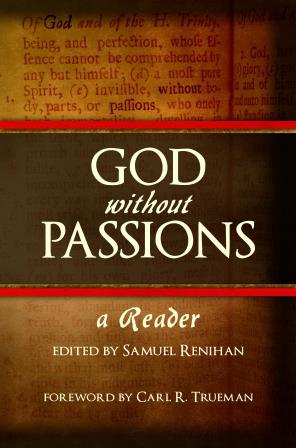
Book Review: “GOD without PASSIONS, a Reader” edited by Samuel Renihan

“One statement here has given rise to many questions. God is said to be ‘without body, parts, or passions.’ The meaning of ‘passions’ is not entirely clear.”

So says Robert Letham about the Westminster Confession of Faith (WCF) in his 2009 book The Westminster Assembly: Reading its Theology in Historical Context. Is it true that “the meaning of ‘passions’ is not entirely clear”?

This is an important question because it is not just the WCF that says God is without passions, but also our own (1689 2nd London Baptist) Confession and all other Reformed Confessions (not to mention this statement is just a part of Classic Theism).

How can this question be answered? Enter:

GodwoPassions_CoverFront_01062015-11

God without Passions: A Reader
Edited by Samuel Renihan
[ RBAP: $14.00 | SGCB $13.75 | AMZ: $20 / £10 ]

This new reader goes to the sources (what better way!?) to answer this important question and clearly show what was meant by confessing that God is without passions.

As the purpose is described in the introduction:

“The primary purpose of the material presented below is to familiarize the reader with sixteenth- and seventeenth-century English language sources pertinent to the doctrine of divine impassibility, particularly for those who confess with the Reformed confessions that God is ‘without body, parts, or passions.’

To do this the editor summons the writings of:

  • four authors from the Reformation (1523-1565) [who themselves summon the church fathers]
  • 20 authors from Early Orthodoxy (1565-1640)
  • 26 authors from High Orthodoxy (1640-1700)
  • seven Particular Baptist authors
  • three Philosophical Works
  • and eight Confessions spanning 1552-1677

Wow! All those works (60+). Sounds a little daunting?

martin_freeman_as_bilbo_ian_mckellan_as_gandalf_the_hobbit_an_unexpected_journey_18alghm-18algjq

like Gandalf to Bilbo

Fear not! Before you dive into all those works the editor, Sam Renihan, explains how he setup the Reader and gives instructions that will guide you through this seemingly daunting reader and doctrine (of Divine Impassibility). Like Gandalf equipping, explaining, and even guiding Bilbo through parts of his journey, Sam helpfully gives you helpful interpretive tools and walks you through some of the difficulties in definitions and diction that may arise by travelling this path. (For a taste of this let me recommend the recent interview I conducted with him.)

Furthermore, all those works may make you think that it is a huge book, but as you dive in you discover that the majority of the works are no more than one or two pages (some just a paragraph or two). The book chimes in at 230 pages, including the Appendix.

At this point comes my only complaint about the book. Sam sought to keep all original spelling, punctuation, and italicization from the sources he transcribed (some exceptions which he explains in the Intro). Overall this is great. However, this means that you may come upon words or Latin which you will be reading for the first time or words that have alternative spellings than what you and I may be use to (e.g. fiftie instead of fifty, Godlie instead of Godly, etc.) This is really very minor as it is easy to figure out what the words mean in context and the alternative spellings just took me a second or two to figure out their modern equivalents. Furthermore, most of the time Latin is used the authors also put their English equivalence. My minor complaint shouldn’t dissuade anyone from reading this, as it really is very very minor and a you read that problem goes away and the book becomes easier and easier to read.

So it isn’t as scary as it seems but why should I read it?

Pastor Tom Chantry has already explained why this is an important work for ARBCA and other Reformed Pastors and churches. So let me explain how it was so very helpful to me and may be helpful to you.

  • It’s Clarifying – Clearly explains what the doctrine of Divine Impassibility is, even in catechetical format at times
  • It Answers Objections – Interacts with the rebuttals to the doctrine that would most likely come into the mind of the average Bible reader, answering many questions that are still being asked today
  • It’s Catholic – Shows the unity of Christian thought on this doctrine throughout church history
  • It’s Exegetical – You can see how some of authors came to their conclusions by exegeting various scriptures from the BIble
  • It’s Doxological – I could write a series of post on this point. Let me just say that this book dives deep in one area of Theology Proper (that is, the teaching about God) and in doing so you are learning more and more about our glorious God. I hope I squelched any fear you had in picking this up to read, but let me now dangle a carrot in front of you and encourage you to read this for your own joy, for your own growth in grace, for an opportunity for your mind to join your whole being in the worship of God.

    As you read this book I hope that you will come away with a greater understanding of what it means when the Bible says that God is holy, God is love, God is _____ etc. The more and more you go through this book the more you will be humbled at your creatureliness, seeing how fickle and fragile your passions are, how they need redeeming, and how holy and perfect all God is and does is!

  • It Matters – You may be thinking, “Boy, this sounds like it is something for philosophers and theologians, wouldn’t Joel Olsteen’s newest best seller help me out more?”. Nay, nay nay nay nay times 1,000! The doctrine of Divine Impassibility is an integral part of theology. As I was reading through this book I was surprised to find how many other issues it touched upon. The promised of God, the Incarnation, who God is, etc.

    Since reading the book it has been like when I first became a Calvinist. You remember, now as you read through your Bible you began to see the sovereignty of God everywhere! Within the past couple weeks I am noticing more and more how this issue relates to so much more than I initially thought, and I am seeing it everywhere. For example, I’ve been going through Covenant Baptist Theological Seminary‘s Doctrine of the Word class [watch it online] and in the intro Dr. Sam Waldron talks about how God’s unchangeable character and how His eternal, unchanging, purposes are related to His revelation, His Word. Reading an upcoming article in JIRBS 2015 I also saw how it was related to other important doctrines (but that isn’t out yet so I won’t go into details.) 🙂

Conclusion:

While it may be true that in our day and age many, themselves, may not be clear on what God without passions means, this book clearly shows that the authors of the historic Reformed confessions, and theologians throughout church history, did in fact know and understand what they meant when they said God is without passions. One may agree or disagree with them, but I don’t see how they can say that it was unclear in writings of old.

May we take up and read and ourselves know this glorious doctrine which strips away what God is not to shows us more and more of what He is in all His glorious perfections.

Sam Renihan Passions Perfections

Veneration of the Saints?

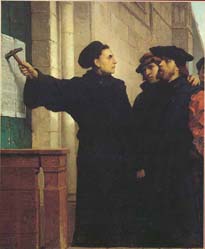
Nearly 500 years ago on October 31, Martin Luther nailed his 95 theses to the door at Castle Church in Wittenberg. In so doing, he stamped out Halloween and paved the way for Reformation Day! Well, hardly, but in evangelical and reformed circles that sometimes seems to be how the story goes. No longer do Christians have to miss out on the fun aspects of All Hallows Eve. Now you and your little ones can dress up like your favorite Reformation character, party like it’s 1517 and eat sanctified sugary sweets. Hurrah!

Now I am not saying that a celebration of the Reformation is wrong. Costumes are fun, parties are enjoyable times of fellowship, and candy is a delicious treat. The decision to refrain from or partake in the festivities of Halloween is also one that should be made thoughtfully (some thoughts are here.) Yet in our celebrations, let’s not forget why October 31 was such a crucial day for Luther to post his theses. For what comes after Halloween should concerned us greatly.

Abuse of indulgences were what prompted Luther to pen his theses. What is an indulgence?

An indulgence is a remission before God of the temporal punishment due to sins whose guilt has already been forgiven, which the faithful Christian who is duly disposed gains under certain prescribed conditions through the action of the Church which, as the minister of redemption, dispenses and applies with authority the treasury of the satisfactions of Christ and the saints.  An indulgence is partial or plenary according as it removes either part or all of the temporal punishment due to sin. The faithful can gain indulgences for themselves or apply them to the dead. (Catechism of the Catholic Church)

The idea that those who have not done enough in this life to merit heaven, but haven’t been too bad to be tormented in hell, may have their waiting period in purgatory shortened or absolved by the aid of the living here on earth, is the reasoning behind indulgences. What is purgatory, you say?

All who die in God’s grace and friendship, but still imperfectly purified, are indeed assured of their eternal salvation; but after death they undergo purification, so as to achieve the holiness necessary to enter the joy of heaven. (Catholic Catechism, #1030)

Luther was upset with the abuses he saw in the selling of indulgences, especially in plenary indulgences.

Contrast these ideas of indulgences and purgatory with the Second London Baptist Confession:

Christ, by his obedience and death, did fully discharge the debt of all those that are justified; and did, by the sacrifice of himself in the blood of his cross, undergoing in their stead the penalty due unto them, make a proper, real, and full satisfaction to God’s justice in their behalf; yet, inasmuch as he was given by the Father for them, and his obedience and satisfaction accepted in their stead, and both freely, not for anything in them, their justification is only of free grace, that both the exact justice and rich grace of God might be glorified in the justification of sinners. (11.3)

Those in Roman Catholicism who have lived “exemplary fidelity to the Lord” receive the title of saint. As such, no one currently living would be called a saint, but a pilgrim. Castle Church (also known as All Saints Church) in Wittenberg was the church to which Luther nailed his theses. It contained a large number of relics that would be exhibited on November 1, or All Saints’ Day. These relics were bits of bone and rope purported to be connected to the life of Christ, the apostles, or the saints. Through viewing these relics indulgences would be granted to the viewer. Many would come out to see these relics, and Luther’s theses would surely be spotted.

Again, compare this idea of special “saints” with the Baptist Confession:

All persons throughout the world, professing the faith of the gospel, and obedience unto God by Christ according unto it, not destroying their own profession by any errors everting the foundation, or unholiness of conversation, are and may be called visible saints; and of such ought all particular congregations to be constituted.(26.2)

If viewing relics were not enough to grant entrance into heaven for deceased loved ones, then the Sunday after gives another chance. That is All Souls’ Day, where prayers are especially offered for those who have died but are not quite in heaven yet. While Luther did not seem to have an issue with praying for the dead, it is important to note that the dead have no need to be prayed for, as they are glorified or in torment.

These practices of the Catholic Church in Luther’s day seem to be a vestige of the past. We delight in the doctrine of justification by faith alone, as well we should. Yet let us remember that those practices of the Roman Catholic Church are still in effect today. All Saints’ Day and All Souls’ Day are back-to-back this year. Many believe in this system of works righteousness. As history has shown, though, the Lord has brought his elect out from Rome before, and will do it again. May we be faithful witnesses of His truth.

As we remember Reformation Day, we remember the heroes of the Reformation. We may admire the brave men, women, and children who professed faith in ages past. Learning about those who endured persecution yet remained stalwart in their belief is an encouragement when battling our own trials. Hebrews 11 gives us examples of the many great deeds of those faithful who have gone before us. Yet it does so to point us to something greater: Jesus.

Therefore, since we have so great a cloud of witnesses surrounding us, let us also lay aside every encumbrance, and the sin that so easily entangles us, and let us run with endurance the race that is set before us, fixing our eyes of Jesus, the author and perfecter of our faith, who for the joy set before Him endured the cross, despising the shame, and has sat down at the right hand of the throne of God. (Hebrews 12:1-2)

Soli Deo Gloria!

Luther95theses

Circumcision and Baptism in Colossians 2

In two recent episodes (here and here) of the CredoCovenant Fellowship, some debate arose regarding the definition of circumcision and baptism in the context of Colossians 2. I found myself in disagreement with Nehemiah Coxe on the meaning of the passage, and decided I’d like to use my bully pulpit to argue my case. I’ve consulted with JD ahead of time so that he might have time to prepare a response.

Nehemiah Coxe seeks to demonstrate in Covenant Theology: From Adam to Christ how Colossians 2 teaches that water baptism replaces fleshly circumcision. He posits that the circumcision referenced in the passage is Christ’s own fleshly circumcision performed in His incarnate infancy. He further insinuates that, water baptism being a symbol pointing to Spirit baptism, we can assume that Paul means for us to recognize that he is in fact calling to mind water baptism. The conclusion to his argument is that water baptism, the symbol representing Spirit baptism, effectively nullifies the Covenant of Circumcision as symbolized in Christ’s circumcision. If you are confused by this argument, you may or may not be helped by reading Coxe’s argument in greater detail on pages 127-130 of Covenant Theology: From Adam to Christ.

The Book We Discussed…

In this post, I would like to argue that what we find in Colossians 2 is not a conclusive statement regarding the nature of fleshly circumcision and the nature of water baptism. Rather, it is the beginning of a much different argument that persists on into the beginning of Colossians 3. In this argument, Paul’s statements evoking circumcision and baptism are best understood to be premises rather than the conclusion.

Paul establishes three premises in his argument (2:8-12), circles back around to further explain his premises (2:13-3:4), and then gives his concluding statements in the form of application (3:5ff).

  • Premise 1 (2:8-11)
  • Premise 2 (2:12a)
  • Premise 3 (2:12b)
  • Further Explanation of Premise 1 (2:13-19)
  • Further Explanation of Premise 2 (2:20-23)
  • Further Explanation of Premise 3 (3:1-4)
  • Concluding Application (3:5ff)

His first premise is the fact that Christ has established Himself as the ultimate authority over all, and particularly in the life of the believer through heart-circumcision (vv. 8-11; cf. 13-19). His second premise is that we have been buried with Christ in spirit-baptism (vs. 12a; cf. 20-23). His third premise is that we have been raised from spiritual death with Him through His resurrection (vs. 12b; cf. 3:1-4). Let’s take these point by point.


For in Him all the fullness of Deity dwells in bodily form, and in Him you have been made complete, and He is the head over all rule and authority; and in Him you were also circumcised with a circumcision made without hands, in the removal of the body of the flesh by the circumcision of Christ (all Scripture citations taken from the New American Standard Bible);

As has been well documented, when Paul wrote to the church at Colossae, he was combating Judaizers and other false teachers (e.g. an early heretical group referred to by scholars as proto-Gnostics) who had added to the law of God and were perverting the teachings of Christ. He wanted to remind his brethren that they were under no yoke or burden but that under which Christ had placed them (Mt. 11:30). In fact, they had been placed under Christ’s yoke, not by rite of Jewish circumcision, but by regeneration—the greater reality:  spiritual circumcision of the heart.

In claiming His full and ultimate authority over all things, Christ is said to exercise His authority in two particular spheres: over creation generally (Col. 1:15-17) and over the church particularly (Col. 1:18-20). It is the second sphere to which Paul here addresses himself. Christ exercises His reign peculiarly in the lives of believers through the indwelling of His Spirit, but this indwelling has a starting point. That starting point is regeneration—the circumcision of the heart (Deut. 10:16; 30:6; Jer. 4:4; Rom. 2:29). After laying out his other two premises, Paul goes on to expound on this argument in verses 16-19:

16Therefore no one is to act as your judge in regard to food or drink or in respect to a festival or a new moon or a Sabbath day— 17things which are a mere shadow of what is to come; but the substance belongs to Christ. 18Let no one keep defrauding you of your prize by delighting in self-abasement and the worship of the angels, taking his stand on visions he has seen, inflated without cause by his fleshly mind, 19and not holding fast to the head, from whom the entire body, being supplied and held together by the joints and ligaments, grows with a growth which is from God.

Christ Himself is the rightful King and Ruler of His church. Therefore, no one else is to attempt to usurp His authority. If anyone attempts to compel his fellow saints to return to the types and shadows or to adopt some form of legalism or asceticism, he is effectively heaving an added burden upon the shoulders of Christ’s subjects. He is removing the delight of Christ’s rulership and replacing it with an extra-biblical, despotic oppression. Christ is King and Ruler over His church and will not share His throne.

But it is not a fleshly circumcision under which we have come, not even (I would argue) Christ’s incarnate fleshly circumcision. Such a notion is not even hinted at in the text. Rather it is that same circumcision under which God’s true people have always come: the circumcision of the heart. Under this circumcision, there are no civil or ceremonial laws that must be obeyed. Likewise, there are no ascetic practices which must be observed. Rather, the true believer passively receives the stamp of God’s approval in Christ upon his heart, and upon his heart the law is written (Jer. 31:33; Heb. 8:10; 10:16) that, in it, he might find his delight (Ps. 1:2; 40:8).


having been buried with Him in baptism,

Paul furthers his argument by calling to mind the doctrine of spirit baptism, a common theme in Paul’s letters (Rom. 6:6; 1Cor. 12:13; Gal. 3:27; Eph. 2:5). In order for Nehemiah Coxe’s argument to remain in tact, he must prove that this text is referring to either water baptism or Spirit baptism of which water baptism is a picture. Obviously,  he would have to make the second argument as (I will demonstrate), Paul is clearly referring to Spirit baptism. The problem is that Coxe does not make an argument that the symbol of Spirit baptism (water baptism) is being referenced here. He merely assumes it. Paul, on the other hand, will go on to make it clear that he is not talking about the physical symbol, but the spiritual reality.

20If you have died with Christ to the elementary principles of the world, why, as if you were living in the world, do you submit yourself to decrees, such as, 21“Do not handle, do not taste, do not touch!” 22(which all refer to things destined to perish with use)—in accordance with the commandments and teachings of men? 23These are matters which have, to be sure, the appearance of wisdom in self-made religion and self-abasement and severe treatment of the body, but are of no value against fleshly indulgence.

When Paul refers to burial in this passage, he is referring to that spiritual reality of our dying in Christ. In a very real sense, we have died and been buried with Him. We have died to sin (Rom. 6:2, 10; 1Pt. 2:24), to the law (Rom. 7:2-6; Gal. 2:19), and to the elementary principles of the world (Col. 2:20). Like a wife whose husband had died in battle, we have been freed and lawfully betrothed to Another. Being dead to sin and the law, they no longer have mastery over us.

Having died to these things, we are no longer to come under their bondage. We have died to the Old Covenant system. Therefore, we are neither to come under the yoke of fleshly circumcision nor the yoke of the civil or ceremonial laws. Likewise, we are no longer in the world, so we ought not to submit to the edicts of man imposed upon our consciences. Our consciences are to be bound ultimately and finally by Scripture alone! This is the first aspect of what the apostle means when he speaks of baptism: our union with Christ in His death and burial.


in which you were also raised up with Him through faith in the working of God, who raised Him from the dead.

The second aspect of Paul’s meaning is like the first: our having been raised with Christ! It is clear in the immediate text that Paul is not referring to water baptism when he says that we are raised “through faith.” This is not true of our water baptism. We are not raised up out of the water through faith, but by the joint efforts of the preachers arms and our abdominal muscles. Further, there is no talk of symbol in the text, so the faithful exegete is not at liberty to assume its presence in the argumentation. The baptism referenced here obviously takes on a spiritual meaning. Paul goes on to explain that meaning in Chapter Three, verses 1-4:

3:1Therefore if you have been raised up with Christ, keep seeking the things above, where Christ is, seated at the right hand of God. 2Set your mind on the things above, not on the things that are on earth. 3For you have died and your life is hidden with Christ in God. 4When Christ, who is our life, is revealed, then you also will be revealed with Him in glory.

Our baptism in Christ: our death, burial, and resurrection in Him, has the intended outcome of a victorious lifestyle lived with the knowledge that Christ was not defeated. Christ was raised, He ascended, and He currently reigns with the Father in heaven. If we have likewise been raised, we likewise have the joy of knowing that we are currently seated in the heavenly places with Him (Eph. 2:6), ruling and reigning with Christ our Brother.

We are no longer to live as slaves, defeated and conquered by the world in which we live. Rather, we are to recognize our true, royal positions as sons of the King of heaven and earth. The contrast here in Paul’s language is not between two covenants: one of fleshly circumcision and the other of water baptism. Instead, the contrast is between slavery to the world and freedom in Christ.


Conclusion

Whatever we may say about fleshly circumcision and water baptism, and the covenants to which they belong, we are not at liberty to argue toward those conclusions from this text. The reason why not is very simple: this text is not arguing for a contrasted understanding between fleshly circumcision and water baptism. This text is talking about Christ’s authority over believers as demonstrated by our heart circumcision (regeneration) and Spirit baptism (union with Christ in His death, burial, and resurrection).

Introducing a Baptist Larger Catechism

Just yesterday, a fellow 1689’r announced that he is working on putting together (in community) a Baptist Larger Catechism.

It has only been in recent years that I discovered the writings, confessions, and catechisms of the original 17th century Particular Baptists. I’ve enjoyed reading through The Baptist Catechism by Benjamin Keach and The Orthodox Catechism by Hercules Collins. Those two catechisms most closely align with the Westminster Shorter Catechism and the Heidelberg Catechism, respectively. What I’ve found interesting is that I haven’t seen a Particular Baptist version of the Westminster Larger Catechism, in which a thorough discussion of credobaptist distinctives have been given in catechetical form. So in my small attempt to pass down sound doctrine and tradition, I have decided to do a Baptist Larger Catechism. So, on a weekly basis, I will post a couple of questions from the catechism that I have completed. I view this as a community project for all other Reformed Baptists who would like to see a Larger Catechism in modern English so if you are interested in assisting in any way, feel free to comment. So, without further ado, here are the first couple of questions of a Larger Baptist Catechism.

Check it out:

Baptists and 2K

2K

Church and State: Hostiles?

In continuing the protracted(apologies for the delay) series on the validity of being a Baptist and Reformed, we have come to the objection made by Laurence Justice concerning the doctrine of church and state. I do think we generally agree that these are two different realms with two different responsibilities before God. I must disagree with his reasoning behind why this cancels the term Reformed for Baptists.  Unfortunately, some of the language used is unhelpful and, once again, historically selective. Let’s deal with each case separately, beginning with the Consantinian argument.

Constantine: Destroyer of Christianity

I don’t know much of history behind Constantine and his role behind calling for unity in the church of the time. Was it for the solidification of his own power as Emperor of Rome? Was it in order to pursue a unified church for the good of the church? It seems to be that both of these are potentially true. Unity is never a bad thing as long as it is unity of the truth of Scripture. Constantine called for an ecumenical council of the Church to lay these disputes to rest. We know this council to be the one that produced the Nicene Creed defending the nature of Christ as fully divine, and defending the Triune nature of the Godhead against Arius and his error that Christ was divine but of a different substance from the Father. This is good that Constantine used his power to call for unity of the Church for it produced the first of the Orthodox Ecumenical Creeds that most of the Christian world to this day holds to. On the other hand, in regards to infant baptism, it appears to be that Constantine used his power to impose 4th century paedobaptist doctrine upon the whole Church. There were a group of people who disagreed with this doctrine(and rightly so). They were persecuted and executed for dissenting with the church and state which were married under Constantine. Was infant baptism the only reason for persecution? Their persecution was certainly related to baptism, but it had less to do with infant baptism than re-baptism. The Donatist controversy was over bishops who had recanted the faith. If a person was baptized(even as an infant) by a bishop who had “fallen away,” then their baptism was invalid. So it placed value on the one baptizing. One’s moral excellence is what gave baptism validity in the sight of the Donatist. The “fall of the Church” is not due to the moral purity of the Church, but due to what the Church believes concerning the Gospel. This sets up the next bit of unhelpful and historically selective language.

Killing Donatists: The Spigot Opened to the River of Blood

This is the same language used by Baptist perpetuists who see church purity in accordance with correct baptism. In other words, those who practiced infant baptism corrupted the church and those who baptized adults kept the church pure. This contains within it the belief that one’s doctrine and practice must be 100% pure in order to be a pure church. The Second London Baptist Confession says that the purest churches are subject to error. What makes up the Kingdom of God is those who believe in Christ and profess His name. One’s practices evidence what one believes concerning the Gospel and a Church that practices credobaptism and not padeobaptism is a more pure church, but it doesn’t mean that God’s people are not among the paedobaptist churches. They are true churches. Their practice needs reforming. We must leave this idea that only moral excellence is what constitutes Christ’s church. We must look for the Church among those who have believed on His name and have been delivered from the kingdom of darkness into the Kingdom of the Beloved Son.

Reformers: Successors to Constantinan Persecution

Did Calvin, Luther, Zwingli, etc. continue with this persecution to the Anabaptists aka Neo-Donatists? Was it the refusal of the Anabaptists to accept the baptism of children what led to their death? Perhaps that was part of it. Many of the Anabaptists did not seek to adhere to any of the laws of the civil magistrate. They believed it was an evil thing that existed and to take part in it was to take part in the works of the evil one. So the Reformers, who saw a closer relation of Church and State, persecuted them not primarily for their rebaptizing of their children, but mainly due to their rebellion against the state in matters of civil disobedience. After all, it was the Munster Anabaptists who took over the city and began a war. They became the face of Anabaptism. I know they were not indicative of the whole of Anabaptism, but they certainly were an example of how rebellion against the state ought not be allowed insofar as it consists of common, civil affairs. The mistake the Reformers made was a similar one to Constantine: that Church and State can coordinate the affairs of humans together.

Baptists: Two Kingdom Theologians

Amen to the first half of Dr. Justice’s final paragraph! The civil magistrate’s duty is not in the sphere of religion or worship. The Church’s duty is not in the sphere of ordering the common affairs of humanity. Baptists believe that Jesus Christ is Lord of the Church and State. So did Augustine, Luther and the rest of the Reformers. Baptists have a separation of the two into a common kingdom and a heavenly kingdom. Here is where I end my applause of the paragraph. The two kingdoms aren’t antagonistic to each other. They have different roles and functions. At times, the state is a friend to the Church when it allows Her to follow Her conscience when it comes to worship. The Church is a friend to the state when it doesn’t impose religious worship on society. The State has a duty to call the church to fidelity insofar as the Church cannot murder, teach kids to be disobedient to parents, commit adultery, steal, covet, or lie. The Church has a duty to call the State to fidelity by calling it to preserve human life, promote marital fidelity, protect private property, etc. Neither can impose its rulings on the other, they can only call each other to righteousness and faithfulness. They aren’t “basically antagonistic” to one another. They can be antagonistic to one another when they infringe upon their proper roles to which God has set them up to carry out. But they are both called by God to carry out their respective roles in relation to each other. It is perfectly acceptable for the Christian to exercise the use of the sword.  We are called by the Apostle Paul to obey and submit to those who are set over us, including the emperor Nero who wields the sword for peace.

That’s the last ramblings of this fellow. Now off to put my 5 month old down for a nap.

Invisible or Visible?

Invisible or Visible?

                As we continue answering “Are Baptists Reformed?” we go from understanding Sola Scriptura, tradition and history to looking at ecclesiology. For those unfamiliar of what ecclesiology is, ecclesiology is the study of the Church. This is another important aspect as to how we should go about understanding tradition and history. What is the Baptist view of Ecclesiology? Today we will give a cursory study of Baptist Ecclesiology.

Now there are points in this section that I will agree with Dr. Justice, and something I think all should agree on. They are at the outset of his section on the Church. He states “that there can be no proper standard for what constitutes the church, but the one set forth in the New Testament, and that the New Testament is not vague or indefinite concerning the church, either as to what it is or where it came from or how it is to be governed.” Also, a “church is a congregation of believers which has been called out of the world and assembles around Jesus Christ and His Word.” Now here is where I begin to wonder whether Dr. Justice begins to pick and choose which Baptists he identifies with, and whether he understands history. These are the 2 main arguments most Baptists who reject the title Reformed make. They are to be understood and, in my humble opinion, corrected. For they are not strong arguments and they need to be held in the light of Scripture and what Baptists have historically believed. He holds a distinction here which isn’t helpful nor accurate. He believes that the Reformers held the Roman Catholic Church was a true church and only needed reforming and that they assumed the baptism and ordination of Rome was still valid. The Reformers assumed that Rome was still a church regarding the Gospel. One’s practices don’t exclude them from being a church, one’s doctrines are primary when considering their ecclesiological status. There’s a difference in being a well ordered church, and a badly ordered one. For Paul in his epistles to the Corinthian church, even with their abysmal practices regarding the Lord’s Table, suing one another, and receiving those with sexual immorality, still considered them a true church. It was to the Galatians that he had sharp words when they were going back to the Law and leaving the Gospel. Even our Lord Jesus Christ to the 7 Churches of Asia still had their lights lit in the lampstand. This was Him considering them true churches. It’s when they left their first love, followed heretical doctrines regarding salvation, etc. that He threatened to remove the light of the Gospel from their lampstand. For Calvin and the Reformers the central issue was and still is the Gospel of Jesus Christ. How does one have right standing before God? By grace alone through faith alone in Christ alone to the glory of God alone with the Scriptures being the alone final authority over God’s people. When Rome finally released their confession at the Council of Trent, the Reformers regarded them as apostate and leaving the true Church of Christ for Rome no longer held to the Biblical Gospel of Jesus Christ. Baptism according even to the Calvinistic Baptists of the 17th Century had no power conveyed by the one administering it.

Here is another point in which I agree with Dr. Justice’s definition of Reformed eccesiology, yet in his following paragraph I realize I disagree with his conclusions about that statement. He says “Reformed people view the church in two ways. They see it as the entire body of the elect. This body, of course, is invisible. They also see it as a local assembly or the aggregate of all local assemblies in a nation or on a continent. As such, the church is visible. So the Reformers believed in a universal, invisible church, and in a more local, visible church.” I would like to add at this point what the 17th Century Baptists wrote in regard to this in the Second London Confession, Chapter 26 paragraph 1 & 2:

  1. “The catholic or universal church, which (with respect to the internal work of the Spirit and truth of grace) may be called invisible, consists of the whole number of the elect, that have been, are, or shall be gathered into one, under Christ, the head thereof; and is the spouse, the body, the fulness of him that filleth all in all.
  2. All persons throughout the world, professing the faith of the gospel, and obedience unto God by Christ according unto it, not destroying their own profession by any errors everting the foundation, or unholiness of conversation, are and may be called visible saints; and of such ought all particular congregations to be constituted.

Paragraph 1 is a verbatim copy of the Westminster Confession, as well as the Savoy (Congregationalist) Confession, with only the bolded italicized text being added by the Particular Baptists. Paragraph 2 is a verbatim copy of the Savoy, with only the bolded italicized words being added. These are generally recognized as Reformed documents. We have Baptists who have quoted and generally agreed with these statements by Reformed people. Which Baptists were they? The Particular Baptists or Calvinistic Baptists. I’m merely pointing out that there were (and still are) those who agreed ecclesiologically with Reformed folk. The Baptists didn’t include infants of believing parents as did the Presbyterians, but they did quote the Congregationalists (paedobaptists themselves). This we will see is the difference ecclesiologically between the Baptists, Congregationalists and Presbyterians. We must admit that at this point there is quite a distinction between the groups. However, the Baptists didn’t reject the catholicity(universality) of the Church. Especially as Calvinistic Baptists they didn’t reject since they view the church as the elect, or in different terms, those for whom Christ died.

This leads us to understand that Covenant Theology was behind their agreement with the Presbyterians. It is also Covenant Theology the distinguished them from their Presbyterian brethren. I need not go too deep into this but simply refer to a couple of books that discuss this difference of Covenant Theology for the Particular Baptists. They are: The Distinctiveness of Baptist Covenant Theology by Pascal Denault, and From Adam to Christ by Nehemiah Coxe. The Baptist view of Covenant Theology kept them from baptizing their children and admitting them into the Covenant of Grace. The circumcision of the heart was what replaced circumcision of the flesh in the Old Testament.

At this point another mistake has been made when it comes to the Baptist view of the Church as relates to Israel and the covenants. Dr. Justice states this, “A basic disagreement between Baptists and Reformed people is the answer to the question, “When did the church begin?” Reformed people believe that Israel was the church in the Old Testament, and the New Testament church is but a continuation of the same body. They teach that the church in the Old and New Testament is founded on the covenant of grace made with Abraham. Baptists, on the other hand, see a radical break between the Testaments instead of a continuation of the Old into the New. They believe that Israel and the New Testament church are two distinctly different bodies, and the Old Testament order of Israel is radically different from the New Testament order of the church.” We need to see two things. One, the Baptists did not see a “radical” break between the Testaments. Two, because they didn’t see a “radical” break, they didn’t view Israel and the Church as two distinct bodies. Let’s deal with the first point. Once again I will have to point you towards Pascal Denault’s book on Baptist Covenant Theology. It is the Baptist view of the covenants that informs their understanding of Israel and the Church. At this point also I would like to ask a question: “Did Christ die only for the Church?” It depends on how you understand the covenants. If you believe that Israel and the Church are two distinctly different bodies, Christ didn’t die for Israel. If you believe there is continuity between the two, Christ died for the elect; Israel in the Old Testament, the Church in the New. This leads to understanding the second point:

  1.  Paul’s words that not all Israel is Israel and that a true Jew is one who is a Jew inwardly, with a circumcision of the heart.
  2. We must also understand that Israel is a type of the Church. They were entrusted with worshiping God, carrying out His commission to them to be a light to the world. They were to be a light to the nations that their borders would be enlarged by creating proper worshipers. They failed in this, Christ succeeded and has given that commission to the Church.

We will come back to this point when we discuss the difference in what many of the Reformers believed concerning baptism. Needless to say, the Particular Baptists of the Second London Confessors agreed with the Reformed Church at this point. Please review the preface and appendix to the Second London Confession and notice the language that they use concerning the “visible Church of God.”

I would also like to add one more observation. It is stated that “Baptists hold with the Scriptures that the New Testament church consists of regenerate persons, while the Reformed see it as also including unregenerate infants, or children of believers. Baptists believe that each church is entirely independent of every other church in all that relates to its government. The church at Jerusalem did not tell the church at Corinth how to operate, and didn’t threaten to excommunicate it when it heard of sinful members of the church at Corinth. Every Baptist church chooses its own pastor and deacons, receives and dismisses its members, and makes its own rules and regulations. Baptists believe with the New Testament that no organization such as a synod or session should tell the local church what to do. The setting up of a centralized authority that claims to speak for the churches and pass laws to the local church has absolutely no New Testament authority.” I agree with much of this. The doctrine of regenerate church membership is a Baptist distinctive. Congregational polity is also one of the distinctives of Baptist church life and doctrine. Each church governs itself, no other church ought to govern another church. But something is stated that needs a little more nuance. The church at Jerusalem didn’t hand down a decision and expect the Corinthian church to do what it said, but the churches all gathered, counseled with one another, and a recommendation was given. This recommendation didn’t excommunicate any church. But it did show that each church didn’t operate entirely independent of one another. Each church had a responsibility to the other churches to have communion, counsel and help given to one another. Interdependence is quite a good word to describe this. This isn’t governance, but a working together to ensure faithfulness and unity to which all of the Body of Christ is called in John 17:20-23. In Ephesians 4, gifts were given to the Church to build up the body of Christ. This reference isn’t exclusively to the local church. The context of Ephesians is the body of Christ, all true believers, Jew and Gentile, one new man, a holy temple. This is written to a local church reminding them of their membership in the one body of Christ through His death and resurrection, bringing together Jew and Gentile. This is a wonderful promise and encouragement to unity in one Lord, one faith, one baptism.

This is a longer post than I intended to write. In summary, one could argue that Covenant Theology is central to one’s ecclesiology and what one believes regarding God’s divine covenants reveals how they understand Israel and the Church. We must see that the Particular Baptists of the 17th Century followed the Reformers and not the General Baptists or Anabaptists in their understanding of the covenants. So we must realize that not all Baptists are created equal. We must be honest and careful with history and with doctrine. An Anabaptist is not a General Baptist nor a Particular Baptist. Nor is a Particular Baptist a General Baptist or Anabaptists. Neither is a General Baptist an Anabaptist nor a Particular Baptist. I will sum everything up in my final post looking at “What Is A Reformed Baptist?” But before that, we must look at the doctrine of Church and state.