Who Were the ‘Sons of God’ in Genesis 6? (Application)

In addressing the identity of the sons of God in Genesis 6, I have stated the most common interpretation today, given a negative argument against it, and offered a positive argument in favor of my personal understanding of it. The last couple posts have been rather long for me. Thus, in conclusion to our study, there are just a few applications I’d like to make.

The Analogia Fide

First, we ought always to be mindful of the fact that our interpretation of one text cannot cancel out our interpretation of other texts in the word. We must recognize that, insofar as the word was written by one divine Author, it cannot contradict itself at any point. So, when the Bible teaches creation as a divine attribute (Psalm 33:6-9; 148:5; Isaiah 43:7; 45:12; Ephesians 46f1a1ed!h_300,id_1999,m_fill,w3:9), we must recognize the utter blasphemy of attributing creative power to any created being. So, whatever we say about the ‘sons of God’ in Genesis 6, we have no liberty to say that they are angels who created flesh for themselves.

When people take hard to understand passages and use passages that are even harder to understand to try to explain them, there is always the risk of altering very important truths in other parts of the Bible. As such, we need to revive the old hermeneutical principle of analogia fide, or the analogy of the faith. This principle is simple. It asserts that we interpret the less clear parts of Scripture in light of the more clear parts. With this principle as our guide, we will be less likely to try to apply the difficult writings of Peter to the less difficult passage in Genesis 6, obscuring its more rich meaning.

Which of the Angels?

Second, let us glory in our place in creation. When we understand that Christ didn’t go and make proclamation to angels in hell, it allows us to affirm with the author of Hebrews the true goal of the gospel. Christ came to bring many sons to glory, not from the hosts of fallen angels, but from his brothers in the flesh (Hebrews 2:9-13). “For assuredly He does not give help to angels, but He gives help to the [descendant of Abraham” (vs. 16).

Not only is Christ exalted above the angels, but He also secured a place for His brethren above the angels in glory. Our eschatological place in creation has been established by our victorious Savior, and He is not ashamed to call us brothers. What a place of significance this truth affords us. What dignity we have above even the angels!

The God of Promise

Third, let us recognize the fact that God is faithful. Whatsoever He has promised, He will deliver. When Cain killed Abel, God’s promise stood. He provided a way through the godly line of Seth. When Adam died and all seemed lost, within the year God took Enoch demonstrating that He is a God of deliverance. When the godly line of Seth began to intermarry with heathen women and abandon God, He provided an ark of salvation. When God had been silent for hundreds of years, Rome had conquered Israel, and all once again seemed lost, God finally sent the Seed of the woman to crush the head of Satan and deliver His people from their sins.

God has met every promise He ever made. He is the God of promise, and He will remain faithful to the end. Let us glory in our great God of promise!
 

Veneration of the Saints?

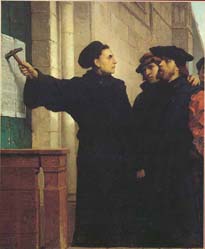
Nearly 500 years ago on October 31, Martin Luther nailed his 95 theses to the door at Castle Church in Wittenberg. In so doing, he stamped out Halloween and paved the way for Reformation Day! Well, hardly, but in evangelical and reformed circles that sometimes seems to be how the story goes. No longer do Christians have to miss out on the fun aspects of All Hallows Eve. Now you and your little ones can dress up like your favorite Reformation character, party like it’s 1517 and eat sanctified sugary sweets. Hurrah!

Now I am not saying that a celebration of the Reformation is wrong. Costumes are fun, parties are enjoyable times of fellowship, and candy is a delicious treat. The decision to refrain from or partake in the festivities of Halloween is also one that should be made thoughtfully (some thoughts are here.) Yet in our celebrations, let’s not forget why October 31 was such a crucial day for Luther to post his theses. For what comes after Halloween should concerned us greatly.

Abuse of indulgences were what prompted Luther to pen his theses. What is an indulgence?

An indulgence is a remission before God of the temporal punishment due to sins whose guilt has already been forgiven, which the faithful Christian who is duly disposed gains under certain prescribed conditions through the action of the Church which, as the minister of redemption, dispenses and applies with authority the treasury of the satisfactions of Christ and the saints.  An indulgence is partial or plenary according as it removes either part or all of the temporal punishment due to sin. The faithful can gain indulgences for themselves or apply them to the dead. (Catechism of the Catholic Church)

The idea that those who have not done enough in this life to merit heaven, but haven’t been too bad to be tormented in hell, may have their waiting period in purgatory shortened or absolved by the aid of the living here on earth, is the reasoning behind indulgences. What is purgatory, you say?

All who die in God’s grace and friendship, but still imperfectly purified, are indeed assured of their eternal salvation; but after death they undergo purification, so as to achieve the holiness necessary to enter the joy of heaven. (Catholic Catechism, #1030)

Luther was upset with the abuses he saw in the selling of indulgences, especially in plenary indulgences.

Contrast these ideas of indulgences and purgatory with the Second London Baptist Confession:

Christ, by his obedience and death, did fully discharge the debt of all those that are justified; and did, by the sacrifice of himself in the blood of his cross, undergoing in their stead the penalty due unto them, make a proper, real, and full satisfaction to God’s justice in their behalf; yet, inasmuch as he was given by the Father for them, and his obedience and satisfaction accepted in their stead, and both freely, not for anything in them, their justification is only of free grace, that both the exact justice and rich grace of God might be glorified in the justification of sinners. (11.3)

Those in Roman Catholicism who have lived “exemplary fidelity to the Lord” receive the title of saint. As such, no one currently living would be called a saint, but a pilgrim. Castle Church (also known as All Saints Church) in Wittenberg was the church to which Luther nailed his theses. It contained a large number of relics that would be exhibited on November 1, or All Saints’ Day. These relics were bits of bone and rope purported to be connected to the life of Christ, the apostles, or the saints. Through viewing these relics indulgences would be granted to the viewer. Many would come out to see these relics, and Luther’s theses would surely be spotted.

Again, compare this idea of special “saints” with the Baptist Confession:

All persons throughout the world, professing the faith of the gospel, and obedience unto God by Christ according unto it, not destroying their own profession by any errors everting the foundation, or unholiness of conversation, are and may be called visible saints; and of such ought all particular congregations to be constituted.(26.2)

If viewing relics were not enough to grant entrance into heaven for deceased loved ones, then the Sunday after gives another chance. That is All Souls’ Day, where prayers are especially offered for those who have died but are not quite in heaven yet. While Luther did not seem to have an issue with praying for the dead, it is important to note that the dead have no need to be prayed for, as they are glorified or in torment.

These practices of the Catholic Church in Luther’s day seem to be a vestige of the past. We delight in the doctrine of justification by faith alone, as well we should. Yet let us remember that those practices of the Roman Catholic Church are still in effect today. All Saints’ Day and All Souls’ Day are back-to-back this year. Many believe in this system of works righteousness. As history has shown, though, the Lord has brought his elect out from Rome before, and will do it again. May we be faithful witnesses of His truth.

As we remember Reformation Day, we remember the heroes of the Reformation. We may admire the brave men, women, and children who professed faith in ages past. Learning about those who endured persecution yet remained stalwart in their belief is an encouragement when battling our own trials. Hebrews 11 gives us examples of the many great deeds of those faithful who have gone before us. Yet it does so to point us to something greater: Jesus.

Therefore, since we have so great a cloud of witnesses surrounding us, let us also lay aside every encumbrance, and the sin that so easily entangles us, and let us run with endurance the race that is set before us, fixing our eyes of Jesus, the author and perfecter of our faith, who for the joy set before Him endured the cross, despising the shame, and has sat down at the right hand of the throne of God. (Hebrews 12:1-2)

Soli Deo Gloria!

Luther95theses

Who Were the ‘Sons of God’ in Genesis 6? (Part Three)

In the first two articles I posted on the identity of the sons of God in Genesis 6, I stated the default position of most in the Western church and refuted it with some negative argumentation. In this article, I will now begin to offer a positive argument for the position I hold. As far as I am aware, there are three common positions held on the sons of God in Genesis 6, one of which I will not concern myself for lack of space and time.

Augustine

Plain and simple, the position I hold is the position commonly called the “godly line of Seth” view. This position has historically been held by many Protestants, but was most famously championed by Augustine in his City of God. In City of God, Augustine spends the first half of the tome arguing in the negative against those who had claimed that Rome had fallen as a direct result of her abandonment of the Roman gods for Christianity. Augustine argued that those who worshiped the Greek and Roman gods worshiped demons, while those who worshiped Christ were worshiping the one, true and living God of the universe.

In the second half of this multi-volume work, Augustine develops a biblical theology of Christ. He traces through each book of the Bible a Christocentric hermeneutic of redemptive history. If you’ve never read City of God before, it is worth it just to see how he understands how God has worked through the different epochs of redemptive history to bring about His purposes.

History according to Augustine, more than anything else, is God’s story. However, it is not merely God’s story. History is more precisely the story of how God brings about His redemptive purposes through providentially directing the activities of the city of God and the city of man. From the dawn of creation, God has always had His people, and His people are distinct from all other people on the face of the earth.

Nehemiah Coxe

coxeowen2Nehemiah Coxe picked up this idea of tracing God’s redemptive activity through the word of God when he wrote Covenant Theology: From Adam to Christ. Coxe’s unique contribution was that he demonstrated how God’s redemptive work in redemptive history was uniquely covenantal. Of course, as everyone knows who is familiar with this work, Coxe largely borrowed from Congregationalist John Owen in setting out his framework.

Both Augustine and Coxe subscribe to the “godly line of Seth” view, but we should beware lest we subscribe to a view merely because it is affirmed by a theologian we respect. Our minds and our hearts must be bound to Scripture. We must never elevate a man or a creed on par with Scripture. With that in mind, let us take a look at some Scriptural proof for the “godly line of Seth” view.

Our First Parents

In Genesis 1 and 2, we see that Adam and Eve were made holy and happy. They had never sinned, they were naked, and they were unashamed. God had only given them one rule, and that was that they should not eat of the tree of the knowledge of good and evil. As we know well, our first parents did eat of that fruit and, doing so, they plunged all of their progeny into sin and misery.

However, in Genesis 3, God offered mankind some hope. After having conducted His trial and found the man, his wife, and their deceiver guilty, God rendered His verdict. Upon the woman, He placed a curse, that she would have pain in child-rearing. Upon the man, he placed a similar curse, that he would no longer have joy in his labors. Before pronouncing these curses, though, God pronounced a curse on the serpent, a curse that came with hope for mankind.

“And I will put enmity

Between you and the woman,

And between your seed and her seed;

He shall bruise you on the head,

And you shall bruise him on the heel” (Genesis 3:15; NASB).

This pronouncement is what many theologians have labeled the proto-euangelion, which basically means the first gospel proclamation. In it, Adam and Eve were given a promise that one of their descendants would eventually set right all that they had destroyed in their rebellious act. Thus, we can imagine the effect that their oldest son’s fratricidal act would have on them.

Cain, Abel, and Seth

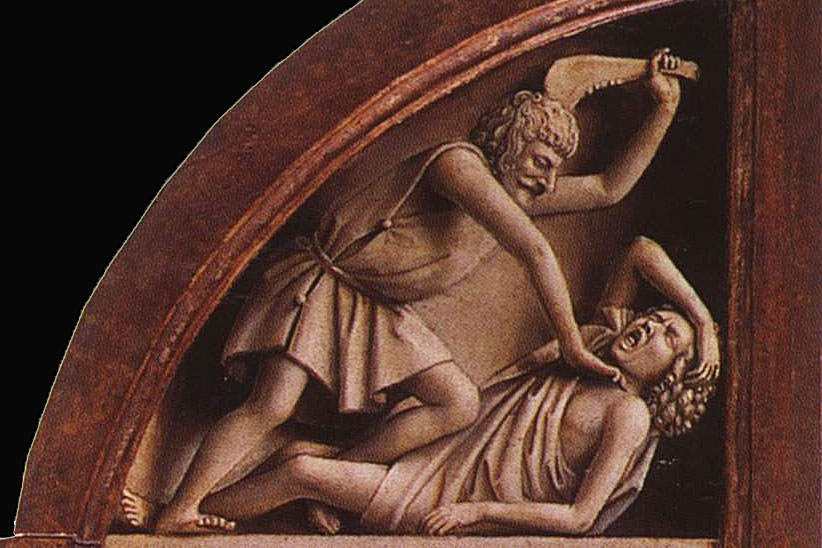
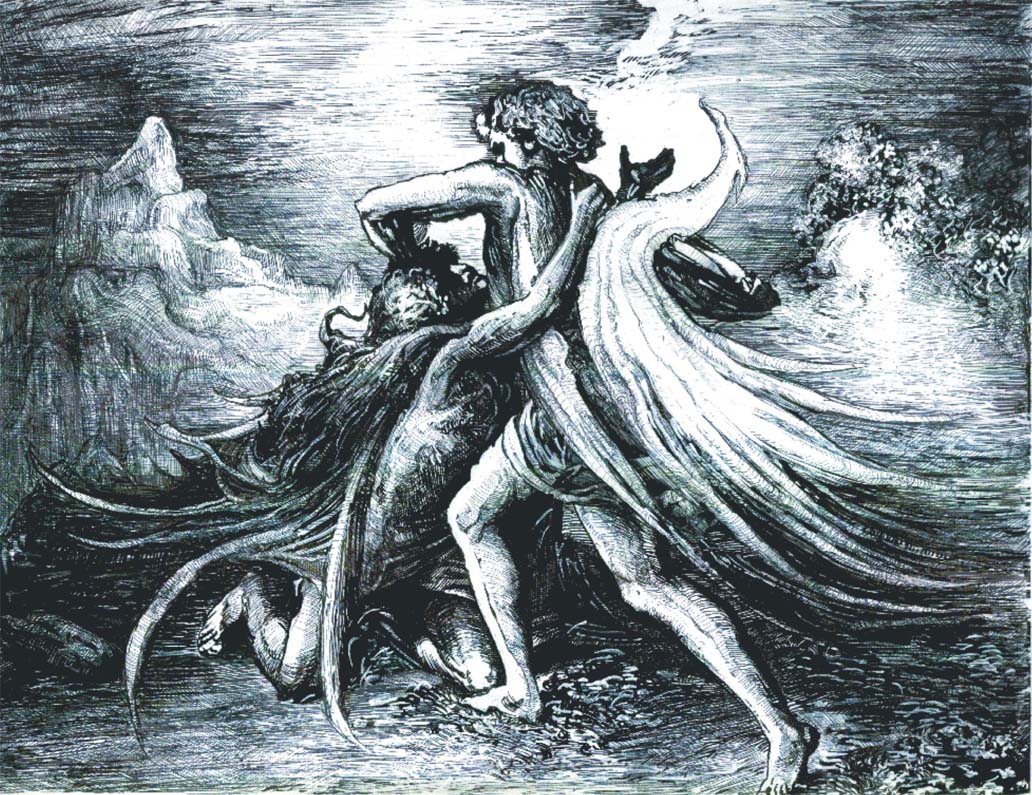
CainIn Genesis 4, we witness the murder of one of Adam’s sons at the hand of his other son, likely the one through whom the promised Seed was expected to come. With this act, Cain cast some doubt over the promise God had made on that dismal day in the garden. Through whom was the promised Seed to come? Certainly not Cain!

The second half of Genesis 4 and Genesis 5 serve as a contrast of sorts. After Cain kills Abel, his lineage is detailed for us in the remainder of chapter 4. It is filled with violent, evil men. Chapter Five, however, reestablishes hope for mankind. Adam and Eve have a third son, Seth, and through him come godly men such as Enoch and Noah. On the arrival of Noah, Bible translators provide for us a chapter break. Yet the story is not over.

Do Not Be Unequally Yoked

Just as mankind’s hopes were dashed at the murder of Abel, so too they were dashed just after the godly line of Seth was established. What Moses tells us is that even this godly line was compromised. In fact, it was so corrupted that God saw fit to destroy the earth with a deluge. How was this godly line of Seth compromised? Through marriage.

Throughout the Bible, God forbade His people from intermarrying with pagans and idolaters. He established godly lines (e.g. Abraham, Isaac, Jacob, Judah, David…) through whom He established His covenants and promises, and through whom He would eventually bring the Seed of Abraham: Christ. The “godly line of Seth” argument is that God did not begin this covenantal headship work with Abraham, but with that promise in Genesis 3.

God has always His people, and those people have always had earthly representatives. Today, the Mediator between God and man is the man Jesus Christ. When one is found to be in the people of God under one of these covenant heads, to marry outside of that line is synonymous with apostasy. It simply is not to be done.

To do so will lead to idolatry and sin, as it did for the Israelites in the days of Balaam and still does in the church today. God’s people are not to be unequally yoked. Rather, we are to remain faithful to the God who called us out from among the nations.

____________

Having given my negative and positive arguments for the “godly line of Seth” argument, I plan on giving some applications of these truths in my next article.

Who Were the ‘Sons of God’ in Genesis 6 (Part Two)

In my last post, I began a series seeking to unearth the identity of the sons of God in Genesis 6. This is my first post by way of argumentation toward that end. In it, I seek to argue in the negative against the most commonly held view of our day: the view that angels created bodies for themselves and procreated with women. As stated in the previous post, there are four main texts from which the proponents of this view derive their argumentation. Today, I will examine these verses and attempt to demonstrate how they fall short of supporting such a view.

Job 1:6

Let us start with the assertion many have made that “sons of God” must mean angels in this text precisely because that is what it means elsewhere, like in Job 1:6. This assertion assumes the idea that biblical words and phrases cannot have multiple meanings and usages. This is not true for any language; words and phrases have multiple usages and meanings, regardless of the language you are examining.

Especially when we are dealing with different authors writing in different eras, we need to take these things into account. Job is largely believed to have been written around the same time Abraham lived. We know nothing whatsoever about its author or common usages of phrases during his time. We do know that Moses, who wrote Genesis, lived hundreds of years after Abraham.

In this span of time, the common vernacular was highly likely to change. Consider the fact that the King James Version of the Bible was codified in the 1600s in Elizabethan English, and its language was considered archaic by many as early as the mid-1800s. Moses might have had angels in mind when he used the designation ‘sons of God.’ The only way to know for sure is to look at his usage of it in the immediate context. We will do so in Part Three of our study.

2Peter 2:4

Angels_and_Demons___by_masianiNext, we have 2Peter 2:4 in which Peter tells us that God did not spare angels when they sinned but cast them into hell. How does this even come close to relating to Genesis 6? Well, in the next verse, Peter alludes to Noah’s generation and the judgment they faced. What we have in 2Peter is the apostle’s warning against false teachers. He draws three illustrations of how God deals with false teachers. He judged the angels, he judged the generation of Noah, he judged Sodom and Gomorrah, and He will judge the false teachers in these last days as well. When understood in context, 2Peter 2 provides no support to the “angels sleeping with humans” view of Genesis 6.

Jude 6

But what about Jude 6? Isn’t that a parallel passage to 2Peter, and doesn’t that talk about angels abandoning spiritual form to take bodies for themselves? Proponents of this view draw from the word τὸ οἰκητήριον, claiming that angels left their bodily dwellings in order to assume new bodies. They attempt to justify this usage by pointing out that the only other usage of the Greek word in question is in 2Corinthians 5:2 is in reference to the Christian’s future, glorified (physical) body.

Actually, BDAG tells us that the term used both in Scripture and in extra-biblical texts to refer to heavenly dwelling places. Thus, it is apparently being used figuratively to refer to the bodies we will receive in heaven in 2Corinthians whereas, in Jude, it is used to refer to the angels’ actual heavenly abode. Jude, then, is not arguing that angels took on flesh; rather, he is warning against false teachers who, like those angels, would be punished by God in the end.

1Peter 3:19-20

Finally, in 1Peter 3:19-20, we see that Christ went and made proclamation to spirits who are now in prison. Who were these spirits? In order to determine their identity, we must back up and look at the context. Peter is writing to his audience about their sufferings and claims that Christ too also suffered and died and was made alive in the Spirit. In this same Spirit, he writes, Christ went and made proclamation to the spirits “who were once disobedient, when the patience of God kept waiting in the days of Noah” (vs. 20a).

If Peter is talking about angels here, we have a big problem. Why would the patience of God be waiting for angels to respond to a Messianic proclamation? “For assuredly He does not give help to angels, but He gives help to the descendant of Abraham” (Hebrews 2:16; NASB). Christ did not come to die for angels, but for men, so what proclamation could he have possibly been making to angels? If it is a message of judgment and not salvation, how is it that this proclamation now correlates to baptism (1Peter 3:21)? No. Christ did not preach to the spirits of enfleshed angels; he preached to the spirits of men.

How then did the Spirit of Christ preach to the men of Noah’s day? Simple. He preached to them through Noah! Noah was a “preacher of righteousness” (2Peter 2:5); he was God’s messenger in his day. When God’s messenger speaks, God speaks. Had Noah’s generation heeded his voice and entered the ark, they would have been saved. In like manner, when we heed the voice of God’s divinely appointed messengers and are immersed into union with Christ, we are saved from the judgment to come.

Conclusion

In my next post, I will finally begin my positive argument for the position I hold on Genesis 6. It will be another long post, because my argument begins in Genesis 3 and moves forward through chapters 4 and 5. I will attempt to demonstrate how, when we interpret Genesis 6 in its proper context, we will come to a drastically different conclusion than have those who hold to the “angels sleeping with humans” view.

Who Were the ‘Sons of God’ in Genesis 6? (Part One)

Of late, I have been leading the 9 to 12 year olds at my church through a discussion of the book of Genesis. When I came to Genesis 6, the question came up that inevitably comes up when surveying this book of the Bible: “Who were the sons of God in Genesis 6?” Now, this was not my first time having studied this text, so the answer came fairly easy for me, but I realize that it is still a hotly debated issue in Evangelicalism. In fact, I recently had an exchange with someone on social media over this topic, and the guy was less than cordial toward me for my stance.

The default position in the Dispensationalist SBC churches I attended as a child was that the sons of God were fallen angels who became like men and procreated with human women, the offspring of which were giant, hybrid creatures called Nephilim. The go-to text for proving this interpretation was always Job 1:6 where Satan (a fallen cherub) is said to have appeared before God “when the sons of God came to present themselves before the Lord” (NASB). The idea seems to be, if a set of words is used in one way over in one book of the Bible, it must be used in the exact same way wherever else it appears.

Of course, the proponents of this view also cited a few verses from the New Testament:

“For if God did not spare angels when they sinned, but cast them into hell and committed them to pits of darkness, reserved for judgment” (2Peter 2:4; NASB).

“And angels who did not keep their own domain, but abandoned their proper abode, He has kept in eternal bonds under darkness for the judgment of the great day” (Jude 6; NASB).

Also…

“in which also He went and made proclamation to the spirits now in prison, who once were disobedient, when the patience of God kept waiting in the days of Noah, during the construction of the ark, in which a few, that is, eight persons, were brought safely through the water” (1Peter 3:19-20; NASB).

Seems like a pretty open-and-shut case, doesn’t it? Hardly. In the next post, we will examine their arguments closer and get into the context of these passages to see whether or not the arguments hold up and are truly supported by the texts here cited.


M’Cheyne Bible Reading Plan: November

November 1


November 2


November 3


November 4


November 5


November 6


November 7


November 8


November 9


November 10


November 11


November 12


November 13


November 14


November 15


November 16


November 17


November 18


November 19


November 20


November 21


November 22


November 23


November 24


November 25


November 26


November 27


November 28


November 29


November 30

The Local Church in Black Spirituality

In continuing this mini-series regarding Black spirituality, the third commonality with Reformed spirituality is a high view of the local church. In other words, a point in which Reformed and traditional Black Christians both hold is that a person cannot truly be spiritual and grow in the Lord if they neglect the local church. This means that church membership is necessary and vital for Christian growth. In regards to the formation of the Church, Chapter 26, Paragraphs 5 and 6 of the 1689 LBCF states

In the exercise of the authority which has been entrusted to Him, the Lord Jesus calls to Himself from out of the world, through the ministry of His Word, by His Spirit, those who are given to Him by His Father, so that they may walk before Him in all the ways of obedience which He prescribes to them in His Word. Those who are thus called, He commands to walk together in particular societies or churches, for their mutual edification, and for the due performance of that public worship, which He requires of them in the world.

The members of these churches are saints because they have been called by Christ, and because they visibly manifest and give evidence of their obedience to that call by their profession and walk. Such saints willingly consent to walk together according to the appointment of Christ, giving themselves up to the Lord and to one another, according to God’s will, in avowed subjection to the ordinances of the Gospel.

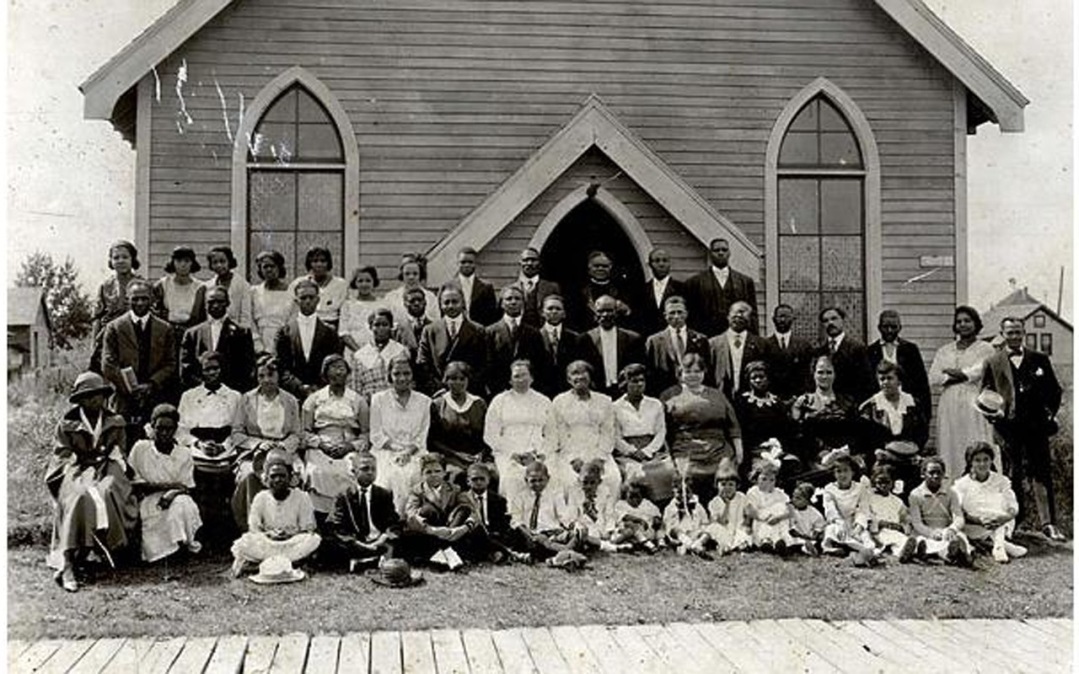
This is a statement in which traditional Black Christians will give a hearty amen to. This is particularly the case since it has been well-established that the Black Church was formed out of necessity, not by convenience. The unfortunate reality is that the historical racism of mainline denominations in the 18th and 19th century established the legitimacy of the Black church. For the purposes of this blog, the necessary formation of the Black church had a very important consequence on how many traditional Black Christians view the local church – namely, that the gospel of Christ should nurture and proclaim the eschatological hope of Christianity.

churchBecause the Black church preached the gospel of hope and developed a robust theological view of suffering, the Black church (as an institution) became the center of the Black community. Historically, the local church was seen as a city of refuge and provided the true hope to those dealing with the numerous difficulties of life. Many Black Christians would agree with the Puritans that this world is a vale of tears, but they praised God that there is “an opening gate of glory at its end”. They realized that there truly was a better and more heavenly country and viewed this current life as a pilgrimage. This was the message that was proclaimed to the Black community and the surrounding world. For traditional Black Christians, the local church (primarily through its preaching and hymnody) nurtured this hope and proclaimed the hope of this gospel to the world. In this way, the local church is the city set on a hill, the light of the world, and the salt of the earth – it offers a glimpse of our eternal state and our eternal inheritance as believers. For a more thorough discussion of this, feel free to listen to Thabiti Anyabwile’s sermon on the contributions of African-American theology.

One of the most upsetting trends in modern expressions of the Black Church is that this richly biblical theology is being replaced by Word of Faith/Prosperity teaching. The theology of suffering, which served as a historical distinctive of Black theology, is being cast aside for such bad teaching, and the impact is that the Black community has grown distrustful of the Black church. In my view, the Black church will only remain relevant as an institution only when it returns back to its roots on the matter.

Another very important aspect of the local church is church membership. In regards to church membership, Chapter 26, Paragraph 7 of the 1689 LBCF states

All believers are bound to join themselves to particular churches when and where they have opportunity so to do, and all who are admitted into the privileges of a church, are also under the censures and government of that church, in accordance with the rule of Christ.

This is a statement that all devout Black Christians believe. Simply put, church membership is a must for any person who calls themselves a Christian. Because the Black church plays such a central role in the community, virtually all Black millennials with Christian parents were raised in the church. By and large, traditional Black parents insist on church participation by not giving their children an option. As children, we served as ushers, choir members, janitors, landscapers, and all sorts of roles, with the intention that we would understand how important the local church is. This helps to explain why Black churches continue to see stable participation from millennials, whereas millennials as a whole are completely abandoning the church as a whole. This also meant that those who did not attend church were considered godless and worldly. This produces a very strong church-world distinction within Black spirituality.

It is at this point where traditional Black spirituality meshes much more with Reformed Baptists rather than Reformed Presbyterians. The concept of covenant children and the purposefully mixed nature of the church fall on deaf ears for many traditional Black Christians. Black parents have no problem telling their children to pray to God concerning various matters, while also confessing that their children aren’t Christians. Black parents have no problem forcing their children to read their Bible, to go to church, or to participate in family devotion. As a child, the most often quoted passage to emphasize the distinction between the true church and the world was 2 Corinthians 6:14-18:

Do not be unequally yoked with unbelievers. For what partnership has righteousness with lawlessness? Or what fellowship has light with darkness? What accord has Christ with Belial? Or what portion does a believer share with an unbeliever? What agreement has the temple of God with idols? For we are the temple of the living God; as God said,” I will make my dwelling among them and walk among them, and I will be their God, and they shall be my people. Therefore, go out from their midst, and be separate from them, says the Lord, and touch no unclean thing; then I will welcome you, and I will welcome you, and I will be a father to you, and you shall be sons and daughters to me, says the Lord Almighty.”

Because the church is seen as the place that God’s people are strengthened and encouraged against the assault from the world, this meant that the Black church met multiple times during the week. When I was converted as a teenager, the church that I attended had morning and evening worship on the Lord’s Day, Wednesday evening Bible study, and Friday evening prayer meeting – and it was expected that you attended (and properly prepared) for all of them. It was also assumed that we would visit churches in our local associations as well whenever important events appeared on the calendar. In a number of ways, a person’s active participation in these services was an indicator of their spiritual health. It was during these activities in which older, mature believers took an interest in young converts like myself – who taught me about the necessity of personal holiness and the significant of the local church. Moreover, the church-world distinction became more pronounced as Black preachers taught unashamedly on the doctrine of hell. We were taught to flee to Christ and His church to escape the condemnation that will occur to the world around us. Thus, the church-world distinction was very black-and-white (no pun intended!).

For these reasons, many modern arguments on the unimportance of the local church is nonsensical to those who grew up in my background. As a new convert, I was taught that it is foolish to separate our personal devotion to the Lord from our commitment to the local church. This is a point in which Reformed Christians and Black Christian can affirm with each other. For the next blog, we will begin to address the significant differences between traditional Black spirituality and Reformed spirituality. We will start with the divergent views concerning the means of grace.

Album Review: Foreknown – Ornithology

I was considering doing a review of Ornithology, Foreknown’s latest album on Humble Beast. Then I came across this review. Enough said. Great album. Check it out.

reelgospel's avatarReel Gospel

by Sam Robinson

Ornithology is a branch of zoology that concerns the study of birds.

Searching Google for the new album from Humble Beast artist Foreknown will produce some surprising results. I’m not sure if there’s ever been an album released that champions birds, or that has used birds to illustrate a much deeper message. Phoenix rapper Foreknown has dropped a real pearler that stands out as the most intelligent album release of the year so far.

One of the reasons that proves Ornithology is so very clever is that Foreknown treads this line between tracks that are downright hilarious, and others that go crazy deep. Although the content of songs varies in nature, there isn’t one track that doesn’t cause you to stop and listen. Foreknown commands attention in his storytelling. But dig deep into this bird’s nest, and you’ll find eggs filled with Biblical truth, encouragement, and challenges…

View original post 665 more words

The Reality of Vanity Fair

…they presently saw a town before them, and the name of the town is Vanity; and at the town there is a fair kept, called Vanity Fair. It is kept all the year long, it beareth the name of Vanity Fair because the town where ’tis kept is lighter than vanity; and also because all that is there sold, or that cometh thither, is vanity. As is the saying of wise, ‘All that cometh is vanity.'” -John Bunyan, Pilgrim’s Progress

In the classic book Pilgrim’s Progress, John Bunyan describes a town named Vanity and the fair that occurs there. Created long ago by Beelzebub, Apollyon, and Legion, the fair in Vanity runs year-round, selling nearly anything imaginable. A cacophony of crowds, noise, sights and smells. There is no way around it: those who wish to travel to the Celestial City must journey through this town and its fair.

Today there is a popular magazine with the name Vanity Fair. Known for its cover photographs of celebrities, the magazine demonstrates that vanity is attractive. The vanities glitter and sparkle; surely, one would think, they contain some substance. Yet look further and see that, like tinsel, a slight puff of wind and such vanities are airborne. One such example is a recent interview in said magazine with actress Jennifer Lawrence. Miss Lawrence, whilst a rising star in Hollywood, had private inappropriate photos hacked and leaked online. When asked about the incident, Lawrence shared her outrage over the theft and offered her justification for having taken such photos:

I was in a loving, healthy, great relationship for four years. It was long distance, and either your boyfriend is going to look at porn or he’s going to look at you.” -Jennifer Lawrence

This is the world’s definition of healthy love. It glitters and sparkles; it is “great”. Yet here comes the puff of wind: the boyfriend will not (or can not) exhibit self-control, so the girlfriend chooses to be a cheapened substitute. All is vanity.

Compare the world’s example of love with how Christ loves his bride:

…Christ also loved the church and gave himself up for her; that He might sanctify her, having cleansed her by the washing of water with the word, that He might present to Himself the church in all her glory, having no spot or wrinkle or any such thing; but that she should be holy and blameless. -Ephesians 5:25-27

The things of this world are fleeting; the Lord is eternal. People and their allegiances constantly change; the Lord’s steadfast love endures forever. Christ, fully God and fully man, gave Himself up for such sinners as those bedazzled by the sights at Vanity Fair. Run from your sins and cling to the One who will never leave you nor forsake you. And for those of us pilgrims just passing through, may we not envy sinners, but live in the fear of the LORD always (Proverbs 23:17).

Your Thoughts on Halloween

On yesterday, I was asked a question that I knew would eventually come up: What do you guys do for Halloween?

Now, I always have a slight smile when I hear this question for two reasons. First, the question amuses me because I’ve only been asked this question around White Christians. This actually wasn’t really a discussion in the Black church. So the fact that this has only been a discussion in predominantly White churches is always amusing to me. Secondly, I’m never sure of the kind of reaction that I’ll receive from the person who is asking me. Some people will thoughtfully consider what I say. Others will be a little dismissive of what I say and talk about how harmless it is. So I always find a mixed bag of responses when it comes to celebrating or acknowledging Halloween.

Last year, my husband and I were exhorted not to be one of those “weird Christians” who ignored the holiday and disengaged ourselves from the rest of the world, but rather we should use the holiday to get to know our neighbors, invite them to church, and possibly present them the gospel. We had never considered ourselves to be “weird” for not participating in the holiday, but we also didn’t think that it was the best venue for presenting the gospel to someone.

In the Reformed crowd, I have heard of people hosting a Reformation party instead of a Halloween in honor of Martin Luther posting his 95 Theses against the practice of indulgences in the Catholic Church. People are asked to dress up as famous reformers (or just wear regular costumes), and they have a party under this reformed banner. In addition, it was at our church home in Louisiana that I first learned about All Hallows Eve (or All Saints Eve and Day) being recognized among Reformed Christians. To my recollection, we didn’t do anything on November 1st, but the day was mentioned.

So, I have heard of many perspectives by now for participation and for transforming the holiday into something that is more God-honoring through the recognition of Church history, but I’m hoping to hear some more thoughtful reasons for participating or against participating in Halloween.

So I wanted to pose a few questions for all of you: What is your stance on Halloween? How did you arrive at that position? Or do you celebrate Reformation history this time of year?