M’Cheyne Bible Reading Plan: January 2

Genesis 2 (NASB, ESV, KJV, HCSB)

Matthew 2 (NASB, ESV, KJV, HCSB)

Ezra 2 (NASB, ESV, KJV, HCSB)

Acts 2 (NASB, ESV, KJV, HCSB)

M’Cheyne Bible Reading Plan: January 1

Genesis 1 (NASB, ESV, KJV, HCSB)

Matthew 1 (NASB, ESV, KJV, HCSB)

Ezra 1 (NASB, ESV, KJV, HCSB)

Acts 1 (NASB, ESV, KJV, HCSB)

Annual Bible Reading, from Guest Blogger: Junior Duran

I didn’t become a Christian until I was 29. When I was growing up in a charismatic Christian household and I had a question about religious beliefs and practices I was told simply, “You just have to have faith.” That response wasn’t good enough for me before I was a Christian and I wasn’t satisfied with it after I became a Christian.

When I was just a few months into the faith I began working in Christian talk radio. The first lesson I learned from the radio personalities were the three rules of bible interpretation:

  1. Context.
  2. Context.
  3. Context.

What is the immediate context of your passage? What is the context of your passage within that specific book? What is the context of the passage within the whole of scripture?

Graeme Goldsworthy lists some approaches to bible reading programs that are “less than helpful”,

  • Bible-reading programmes consisting of unrelated snippets drawn from all parts of Scripture with no obvious connection other than perhaps some loose thematic relationship.
  • Programmes without any perspective on the “big picture” of the history of redemption (salvation history).
  • Strategies that aim at extracting a devotional thought for the day rather than allowing the text to dictate the outcome.
  • Lack of any real hermeneutical guide for the application of texts, especially Old Testament passages.
  • Asking the wrong questions of the text: usually something like, “What does this teach me about myself?’ before asking, ‘How does this passage testify to Christ?’.

[Goldsworthy, Graeme. Gospel-centered Hermeneutics: Foundations and Principles of Evangelical Biblical Interpretation. Downers Grove, IL: IVP Academic, 2006. Print. page 309]

williamtyndale-600Because of principles like these I eventually started reading the The One Year Chronological Bible by Tyndale. Although this is an NIV bible I was later able to get the electronic version for my Laridian Pocket Bible. This enables me to keep the same reading plan while using my preferred bible translation. I’ve been reading through the bible this way for several years.

I want to differentiate between bible reading and bible studying.

I’m not talking about studying the bible, pulling out and comparing commentaries and/or lexicons, or even reading bible study notes. I’m just talking about reading the text. Getting the text into you. Depending on the passage it will take anywhere from five to twenty minutes to finish a day’s readings.

After about my third year of doing this the bible’s big picture began to come into focus. I believe if a person does this it will greatly aide in their discernment and they’ll be able to notice when theologians and commentaries agree or disagree with scripture. Specifically, when a theologian or commentator might concur with one particular scripture passage while possibly contradicting another passage of scripture. Wheat from Chaff, Heat from Light, discernment is important. You can agree with some of what theologians propose in one area while recognizing their inconsistencies in other areas.

Finally, a word about prayer and bible reading. I use the Lord’s Prayer and Psalm 51 as a framework for prayer. Also, since I don’t have time to pray for everything I would like to at one time, I’ve split them out through the week. Here’s my daily prayer and bible reading outline (you might use a notebook).

  • Prayer: Revelation and Illumination (Always pray for understanding before your read the scriptures)
  • Passage: (the text for the day)
  • Principle: (what were some principles learned from the day’s text)
  • Prayer: Confession
    • Petition
      • Restoration and Renewal
      • Submission, Obedience, and Preservation
      • Provision
      • Intercession
    • Deliverance and Protection
      • Sunday: Local Church
      • Monday: Co-Workers
      • Tuesday: Governments
      • Wednesday: Family
      • Thursday: Persecuted Church
      • Friday: Friends
      • Saturday: Neighborhood
    • Adoration and Worship
  • Practice (look for ways to put what you learned today into practice, James 1:22-26)

[ReBlog] Some Thoughts on Reading the Bible in 2015

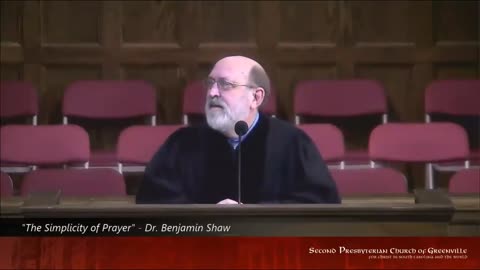
From Dr. Benjamin Shaw

52514103746“This is not another post on Bible reading plans. There are about a thousand different reading plans out there, and I have no intention of adding to the list. What I will say first is that if you really want to read through the Bible in 2015, use a plan that takes you straight through from the beginning to the end. The Bible is one great big fantastic story, and if you’re reading a little here and a little there every day, you lose the plot.

Second, get yourself a Bible for reading. What I mean is that most Bible publishers do everything they can to make it hard to read the Bible. They print it in two columns. They put cross references in there. They put notes at the bottom of the page. They print in different colors, and add pictures and drawings. All of this can be helpful if you’re studying the Bible. But if you’re reading the Bible, it all distracts. When was the last time you picked up a novel that was printed in double columns, or had footnotes, or was printed in different colors, or had cross references? Of course you wouldn’t expect cross references or footnotes in a novel. But the point is that those things distract from the task of reading.” Read more…

ht: Junior “The Big Dippa” Duran

A Working Definition of Evangelism (Revised)

You can see the original Definition here.

_____________


With a view toward making disciples of all peoples and bringing them into covenant with a local church, in which they shall be baptized in the name of the Triune God and taught to obey all Christ commanded, evangelism is the act of worship whereby Spirit-led believers articulate for unbelievers God’s holiness, man’s sin and its wages, Christ’s accomplishment of redemption through His obedience in life, death, and resurrection, and the proper response of sinners: repentance from sin toward God and faith in Jesus Christ alone for salvation.

M’Cheyne Bible Reading Plan: December

December 1


December 2


December 3


December 4


December 5


December 6


December 7


December 8


December 9


December 10


December 11


December 12


December 13


December 14


December 15


December 16


December 17


December 18


December 19


December 20


December 21


December 22


December 23


December 24


December 25


December 26


December 27


December 28


December 29


December 30


December 31

What I’m Not Saying About the Godly Line of Seth

Recently, I posted a four-post argument on my understanding of the identity of the “sons of God” in Genesis 6. Since settling on my view of this passage, I have read several articles from those who hold to the more common view. In these articles there are some misnomers I’d like to address. I think each of these arguments can be reduced down to one very simple assertion: Don’t hear what I’m not saying. Let’s address each one of these misnomers in turn.

I’m not saying that the Sethites were anywhere else referred to in Genesis as ‘sons of God’

Sure, the Sethites are not identified anywhere other than Genesis 6 by Moses as sons of God, but neither are fallen angels. The book of Job alludes to angels being called ‘sons of God,’ but even that assumes a certain interpretation. Think of it this way:

Job was the first book written in the Bible. Hundreds of years later Moses wrote the Pentateuch. Hundreds of years after that the prophets tell us that Satan was actually a guardian cherub in the Garden of Eden. Thus, we must assume that Moses, foreseeing the prophets’ understanding of Satan’s nature, interprets that back into Job and then uses that interpretation to identify fallen angels able to create for themselves bodies capable of procreating with female humans. This hermaneutic is, to say that least, bizarre.

However, for God to designate His remnant people as His children is far from bizarre, even for Moses. In Exodus 4:23 God, through Moses, told Pharaoh, “Let My son go that he may serve Me” (NASB). God is a covenant keeping God, and we with whom He keeps covenant are not His mere subjects. We are His sons (Matthew 5:9; Luke 20:36; Romans 8:14; 9:26; Galatians 3:26; 4:6).

I’m not saying that the Sethites were intrinsically godly

Some call into question the certainty with which we can say that the line of Seth were all godly. I would call that into question as well. In and of himself, no man has ever been completely biblecoffee2_kjekolrighteous. Look at the life of Abraham. He deceived to monarchs and put his wife’s purity on the line to save his own skin, and yet he is called righteous. Look at his nephew Lot. He offered up his daughters to the city, got drunk, and impregnated his daughters, and yet he is called righteous.

By referring to the Sethites as the godly line of Seth, we are not eschewing the fact that we are here referring to sinful men. Beyond any doubt, they were sinful men. However, look at the way that sinful men of God are remembered in the Bible vs. sinful men of the world. The New Testament authors only recall the good in the life of Abraham. They refer to Lot as righteous Lot. They recall only the sins of Balaam, but recall only the faith of Rahab the harlot.

So, what is the difference between the godly and the ungodly in a world where all have sinned and fallen short? The difference is a difference of covenant and perseverance. Those who are in covenant with God, though they may sin (even scandalously), through repentance and perseverance, they will be called godly. They will be called sons of God!

I’m not saying that all who are called ‘sons of God’ persevere

Obviously, not all of the Sethites persevered to the end. There is always a certain level of corruption among God’s people. There will always be wheat among the tares. However, God always has His remnant. For the Sethites, the corruption reached so far that, by the time of the flood, the only remnant left was Noah and his immediate family. There were times in the life of the nation of Israel when there were only 7,000 who had not bowed the knee to Baal.

To say that a people of God is godly in the Bible is not necessarily to say that all of them do all things with all godliness at all times. That notion is simply preposterous. If that were the case, why in the world would Paul tell Titus that God’s grace enables us to live godly lives (Titus 2:12)? Why on earth would Peter say that God rescues the godly (2Peter 2:9)? None of us is perfect. We all fall short in many ways. So, to say that the Sethites were godly is not to say that they were perfect or that they persevered to the end. It is simply to say that they were God’s people at that time.

By the time of Noah, they obviously had come to be very corrupt, just as did the nation of Israel before the dispersion and Judah before the exile. That is the point, though. Even though men may fail, God always keeps His promises. He promised a Messiah that would crush the serpent’s head and, though men may fail us every time, God will remain faithful to His promises. God preserved His chosen Seed through Noah, even though the line of Seth eventually failed.

I will not concede that the daughters of men are the daughters of all mankind

Some have also pointed out that “daughters of men” seems to be used to refer generally to the female offspring of all men, not just those of the Cainites. When placed in contrast to the sons of God, though, it is not hard to understand that two very distinct groups are being referenced here. It is much like the use of the two Adams in 1Corinthians 15.

The first Adam became a living soul, but the last Adam (Christ) became a life-giving spirit (vs. 45). Therefore, “as in Adam all die, so also in Christ all will be made alive” (vs. 22; NASB). Does Paul mean here that every individual in Christ has been or will be made alive? Of course he doesn’t. What he is teaching is that there are two types of men. There are those who are in Adam and, therefore, dead in their trespasses and sins, and there are those who are in Christ, who have been raised with Him to walk in newness of life.

Sometimes the biblical authors used general, universal-sounding terms to designate one group, but then mark them out as not being general and universal by contrasting them with a more specific group. That is what Paul was doing when he wrote 1Corinthians 15, and that is what Moses is doing when he speaks of the daughters of men in Genesis 6. The daughters of men are best understood when contrasted with the sons of God. They are those who follow after the precepts of men rather than the precepts of God. So, when God’s chosen people went after them, they committed a great evil in the sight of the Lord.

Who Were the ‘Sons of God’ in Genesis 6? (Application)

In addressing the identity of the sons of God in Genesis 6, I have stated the most common interpretation today, given a negative argument against it, and offered a positive argument in favor of my personal understanding of it. The last couple posts have been rather long for me. Thus, in conclusion to our study, there are just a few applications I’d like to make.

The Analogia Fide

First, we ought always to be mindful of the fact that our interpretation of one text cannot cancel out our interpretation of other texts in the word. We must recognize that, insofar as the word was written by one divine Author, it cannot contradict itself at any point. So, when the Bible teaches creation as a divine attribute (Psalm 33:6-9; 148:5; Isaiah 43:7; 45:12; Ephesians 46f1a1ed!h_300,id_1999,m_fill,w3:9), we must recognize the utter blasphemy of attributing creative power to any created being. So, whatever we say about the ‘sons of God’ in Genesis 6, we have no liberty to say that they are angels who created flesh for themselves.

When people take hard to understand passages and use passages that are even harder to understand to try to explain them, there is always the risk of altering very important truths in other parts of the Bible. As such, we need to revive the old hermeneutical principle of analogia fide, or the analogy of the faith. This principle is simple. It asserts that we interpret the less clear parts of Scripture in light of the more clear parts. With this principle as our guide, we will be less likely to try to apply the difficult writings of Peter to the less difficult passage in Genesis 6, obscuring its more rich meaning.

Which of the Angels?

Second, let us glory in our place in creation. When we understand that Christ didn’t go and make proclamation to angels in hell, it allows us to affirm with the author of Hebrews the true goal of the gospel. Christ came to bring many sons to glory, not from the hosts of fallen angels, but from his brothers in the flesh (Hebrews 2:9-13). “For assuredly He does not give help to angels, but He gives help to the [descendant of Abraham” (vs. 16).

Not only is Christ exalted above the angels, but He also secured a place for His brethren above the angels in glory. Our eschatological place in creation has been established by our victorious Savior, and He is not ashamed to call us brothers. What a place of significance this truth affords us. What dignity we have above even the angels!

The God of Promise

Third, let us recognize the fact that God is faithful. Whatsoever He has promised, He will deliver. When Cain killed Abel, God’s promise stood. He provided a way through the godly line of Seth. When Adam died and all seemed lost, within the year God took Enoch demonstrating that He is a God of deliverance. When the godly line of Seth began to intermarry with heathen women and abandon God, He provided an ark of salvation. When God had been silent for hundreds of years, Rome had conquered Israel, and all once again seemed lost, God finally sent the Seed of the woman to crush the head of Satan and deliver His people from their sins.

God has met every promise He ever made. He is the God of promise, and He will remain faithful to the end. Let us glory in our great God of promise!