A Reformed Baptist Perspective on Public Theology – The Incarnate Lord (Part III)

You can read earlier posts in this series by clicking on the links below:

Discontinuity

As we continue in our examination of the life and teaching of our incarnate Lord, let us recall the fact that Christ’s primary mission was not that of social change. Rather, His primary goal was that of redeeming His bride (the church). However, given the fact that His bride is a multi-ethnic and multi-national bride, this work of redemption came with some very real implications for public theology because of some very real discontinuities with God’s former dealings with His covenant people.

Christ-centric Worship

The first among these discontinuities was the change of worship from being ethnocentric (for the Jews only) and geocentric (in Zion only) to being Christ-centric. Consider our Lord’s interaction with the woman at the well:

“The woman said to Him, ‘Sir, I perceive that You are a prophet. Our fathers worshiped in this mountain, and you people say that in Jerusalem is the place where men ought to worship.’ Jesus said to her, ‘Woman, believe Me, an hour is coming when neither in this mountain nor in Jerusalem will you worship the Father. You worship what you do not know; we worship what we know, for salvation is from the Jews. But an hour is coming, and now is, when the true worshipers will worship the Father in spirit and truth; for such people the Father seeks to be His worshipers. God is spirit, and those who worship Him must worship in spirit and truth,’” (John 4:19-24; NASB).

In moving the center of worship from a people group or a location, our Lord mobilized the gospel. It was no longer a fixed temple, but was now a movable tabernacle. It was no longer bound up within borders and bloodlines, but now extended into the far reaches of the earth and was made effectual for saving men of all stripes. The church was now poised to penetrate through the barriers erected in relationships between Jew and Greek (ethnicity), slave and free, male and female (Gal. 3:28), and even Greeks and barbarians (tribes, tongues, and nationalities; see Rom. 1:14). The fact that our worship of God is Christ-centric rather than ethnocentric or geocentric will help us to make sense of the public theology of the apostles as we move forward in our study.

The CredoCovenant

Another shackle that our Lord shook off in order to mobilize the church was that of unbelievers within the covenant community. Christ interacted with many a Jewish leader who had been born Jewish, who could doubtless trace their genealogies back to kings and prophets, and who had doubtless received the covenant sign as an infant. Yet, He referred to them as whitewashed tombs. Why? Because of their unbelief. God’s people are marked by their belief in Christ, not their bloodlines, their ethnicities, or their nationalities. Jesus did not say, “Permit the children to come to the baptismal waters.” Rather, He said, “Permit the children to come to Me; do not hinder them; for the kingdom of God belongs to such as these. Truly I say to you, whoever does not receive the kingdom of God like a child will not enter it at all,” (Mk. 10:14-15; NASB).

As Christians, our public theology should start in the home. We are daily to bring our children to Christ and bid them repent and believe on the Lord, for it is only those such as believe who are truly in the New Covenant community.

“‘But this is the covenant which I will make with the house of Israel after those days,’ declares the Lord, ‘I will put My law within them and on their heart I will write it; and I will be their God, and they shall be My people. They will not teach again, each man his neighbor and each man his brother, saying, ‘Know the Lord,’ for they will all know Me, from the least of them to the greatest of them,’ declares the Lord, ‘for I will forgive their iniquity, and their sin I will remember no more,’” (Jer. 31:33-34; NASB).

This is one reason Reformed Baptists see no inconsistency with our view of the Covenant and family worship. We are bid by our Lord to permit our children to come to Him in the hopes that, in so doing, they will receive the kingdom of God. It is no different than Presbyterians who allow unbelievers to enter their public worship in the hopes that, singing the hymns and hearing the preached word, they might “receive the kingdom of God like a child.” And having received the kingdom of God, “They will not teach again, each man his neighbor and each man his brother, saying, ‘Know the Lord,’ for they will all know Me, from the least of them to the greatest of them.” Every member a believer, our Covenant is a CredoCovenant.

One New Man

Belief is the entrance into the Covenant not only for children, but also for the world. Let us recall that a dividing wall once existed between Jew and Gentile, the circumcision and the “uncircumcision,” those who were near and those who were far off (Eph. 2:11-18). Through faith, the two have become one new man, the seed of Abraham (Gal. 3:16-17; 28-29), one tree comprised of both natural and engrafted branches (Rom. 11:16-24).

This teaching did not begin with the apostles. It was there in seed form in the ministry of Christ. Already, in the earthly ministry of our Lord, He was breaking down barriers between ethnicities for the furtherance of His gospel. This point is important. Christ did not break down cultural barriers for the sake of mere social reform. Christ broke down cultural barriers for the sake of expanding His kingdom in a lost and dying world.

This is one reason the fixation on the part of many Dispensationalists on Jesus’ ethnicity is so disturbing. They make much of the fact that Jesus was of Jewish descent, but that gets the order of precedence backward. The Messiah does not get His identity from the Jews; rather, the Jews were meant to find their identity in the Messiah.

Christ Breaking Down Barriers

The woman at the well understood this fact. When Christ demolished the idea of geocentric worship, telling her that the time had come when men would worship in spirit and truth rather than on this mountain or that mountain, her thoughts automatically went to the Messiah:

“The woman said to Him, ‘I know that Messiah is coming’ (who is called Christ). ‘When He comes, He will tell us all things.’
Jesus said to her, ‘I who speak to you am He,’” (John 4:25-26; NKJV).

Even a half-breed Samaritan woman of questionable morals understood that discontinuity would accompany the coming Messiah. In this one interaction, Christ breaks down geocentric, ethnocentric, and gender barriers. It is no surprise that Christ’s disciples were baffled to find him talking alone with a woman upon their return from the village, let alone a Samaritan “dog.”

Tellingly, this was not the only instance in which Christ broke down barriers between ethnicities in His teaching and practice. It was a major point of the parable of the Prodigal Son, which very interestingly parallels the book of Jonah (Lk. 15:11-32; cf. Jon. 4:1-11). It was also a major point in the parable of the Good Samaritan (Lk. 10:25-37). We also see Christ making much of the ethnicity of a Canaanite mother of the demon-possessed girl just before he praises her for her great faith (Mt. 15:21-28).

Jesus did not have to cast out her daughter’s demons, nor did He have to heal the centurion’s servant (Mt. 8:5-13). “Whatever the Lord pleases He does, In heaven and in earth, In the seas and in all deep places,” (Ps. 135:6; NKJV). It pleased Christ to shake the cultural foundations of the ancient world in order that the dividing wall between Jew and Gentile might crumble and men and women of every tribe, tongue, and nation might become one new man in Christ Jesus.

Conclusion

Given the discontinuities we have cited, God’s people do not fight to establish His kingdom on this earth. That is not to say that we do not work within our individual spheres of influence to effect change in this world, but our national allegiance is now other-worldly. We are like the exiles of the Old Testament. We have gone from a geocentric, ethnocentric worship to a worship that looks to the new heavens and the new earth where we will worship with the saints triumphant from every tribe, tongue, and nationality, and where we will see God face-to-face, and He will walk among His people.

Our place here today is to spread the gospel and to see that as many as possible receive the kingdom of God. Thus, we must strive to use the Law to prick the consciences of the lost and to prepare them, as a tutor, for the work of the gospel on their hearts. Thus, our marching orders are to take both the Law and the Gospel into a lost and dying world that the Spirit might convict them through the Law and convince them by the Gospel.

A Reformed Baptist Perspective on Public Theology – The Incarnate Lord (Part II)

You can read earlier posts in this series by clicking on the links below:

Continuity

As we consider the life and teaching of our incarnate Lord, let us keep at the forefront of our minds the fact that Christ’s primary mission was not that of social change. Rather, His primary goal was that of redeeming His bride (the church). However, given the fact that His relationship with His bride is a covenant relationship, this work of redemption came with some very real implications for Covenant Theology.

Whether referring to the saints of the Old or of the New Testament, 17th century Particular Baptists designated them the Church. The radical divide presented in Dispensationalism between ethnic, national Israel and the Church would not only have been absolutely foreign to our Particular Baptist forefathers. It would have been downright abhorrent. Insofar as the saints of the Old Testament period believed on Yahweh alone for their righteous standing before God, they were truly circumcised of the heart.

Continuity through General Equity

There was no sense, in the Old Testament, in which man was saved by the Law or in which he could merit his own salvation. There were consequences built into the civil law that provided for the regulation of proper conduct within God’s covenant community then just as there are consequences built into the New Testament policy of church discipline for the regulation of proper conduct within God’s covenant community today. Whether it was a matter of corporal punishment in the nation of Israel or excommunication from the ranks of the New Covenant church, the requirement of three or more witnesses is the same.

As such, our incarnate Lord made clear that the Civil Law of national Israel was given as a shadow of the greater reality of church discipline in Christ. In this sense, Christ did not abolish the Civil and Ceremonial Law so much as make application from them to local congregations. In so doing, Christ did not use the greater reality of national Jewish law to point to shadows in the New Covenant church. Rather, the Civil and Ceremonial Laws were given as shadows in order that they might highlight the greater reality of church discipline in Christ. This is the Reformation principle known as “general equity.” The letter of the Old Covenant law is no longer binding on the Christian church, but the eternal, moral principles behind them are.

“To them also he gave sundry judicial laws, which expired together with the state of that people, not obliging any now by virtue of that institution; their general equity only being of moral use,” (The Baptist Confession, 19.4).

Why, though, does church discipline exist? Church discipline exists in order that Christ may present His bride to His Father as pure, spotless, and without blemish. This is not to say that we will be sinlessly perfect in this life. We will not obtain perfection until glory. However, it does mean that we will be distinguished from the world.

God’s Set Apart People

One of the reasons Israel was given the Civil and Ceremonial Laws was to distinguish her from the surrounding nations. They were told that they were to be different from the nations around them who sacrificed their children to their false gods (Lev. 20:2-5). In giving them this instruction, Moses did not assume that Israel would automatically be enticed to go and sacrifice their babies to Molech. Rather, it would be over time, as they allowed for more and more syncretism over the years, they would eventually find little difference between them and their pagan neighbors, even sacrificing their babies on the altar (1Kgs. 11:7; 2Kgs. 23:10; Jer. 32:35).

In the same way, one of the reasons church discipline has been given to the church is to distinguish her from the world. “Therefore ‘Come out from among them And be separate, says the Lord. Do not touch what is unclean, And I will receive you,’” (2Cor. 6:17; NKJV). Our Lord told His disciples that the world would hate them just as they hated Him (John 15:18). An essential mark of Christ’s disciples is that they will be set apart (sanctified) from the world. Christ’s true disciples will be distinguished by a Bible-centered worldview (John 17:17).

As such, the social ills that plague our society (e.g. racism, chauvinism, divorce, etc.) ought all to be issues addressed in church discipline. We are not here calling for the knee-jerk excommunication of such as commit these sins. Rather, we are calling for the biblical practice of church discipline to be applied in these cases.

Biblical Church Discipline

The biblical practice of church discipline is four-fold. It starts with what has come to be known as formative church discipline. That is the discipline of the Spirit applied to the hearts and minds of church members as they sit under the regular preaching of God’s word. Of course, if the Spirit is to discipline His people through the preached word on these matters, pastors have a duty to preach the whole counsel of God (Acts 20:27). This means that, where opportunity arises in the text to address racism, chauvinism, abortion, homosexuality, divorce, etc., pastors must seize these opportunities and emphasize the biblical standard in their preaching of the word.

Where sins of this nature persist within the body in spite of the preached word, they must be addressed in a much more personal space. The Bible regularly exhorts the body toward personal admonition (Rom. 15:14; Col. 3:16; 2Thess. 3:15; Tit. 2:4; 3:10). According to our Lord, there are three phases to personal admonition: (1) go to your brother in private and, if he listens to you, you have won your brother; (2) if he does not listen to you, take another brother with you so that, by the word of two or more witnesses, every matter may be established; and (3) if he still does not listen to you, take the matter before the church (see Mt. 18:15-20).

We must remember, anytime we discuss church discipline, that it was given for the purity of the church. Again, the church is to be pure; the church is to be set apart from the world. As such, as we have already stated, the world will hate us.

God’s Hated People

Of course, God’s people have always been hated by the world. We have always been hated, because we have always been set apart by His word (John 17:14, 17). We have also been hated because of the work of the devil. Our Lord told the Jewish leaders of His day that they were of their father: the devil (John 8:44). It was because the Jewish leaders were sons of Satan, the brood of vipers (Mt. 3:7), that they murdered the prophets (Mt. 23:29-36). In the same way, our Lord told His disciples that they would be dragged before rulers by the Jewish leaders of their day (Mt. 5:11-12; 23:34).

Does this mean that we are to shun the Jews and the world at large? Should we retreat into monasteries never to be heard from again? No. Rather, our Lord gave us a commission to be His witnesses “both in Jerusalem, and in all Judea and Samaria, and even to the remotest part of the earth,” (Acts 1:8b; NASB). Through the book of Acts and the epistles we will see, both in practice and in teaching, that the apostles had a heart for both the Jews and the Gentiles. They both taught and practiced taking the gospel “to the Jew first and also to the Greek,” (Rom. 1:16b; NASB). It was through the incremental expansion of God’s covenant people into every tribe, tongue, and nation, as seen in Acts, that God broke down the dividing wall of hostility that once existed between God’s Israelite covenant people and the nations around them (Eph. 2:11-22). In the same way, the world will hate us as long as their hearts remain unchanged by the gospel.

We will conclude in our next post by examining the discontinuities between the two epochs divided by our Lord’s incarnation.

A Reformed Baptist Perspective on Public Theology – The Incarnate Lord (Part I)

I realize it’s been a while since our last post on Public Theology. That’s because it was agreed ahead of time that I’d do this next series and, with two full-time jobs and a young family, anything from me will be slow coming. Enough about me, though. You can read the last post in this series here, or just pick up in your reading below. Enjoy.

Introduction

In the last two posts in our series on public theology, we examined the approaches to public theology employed by two notable prophets: John the Baptist and Amos. There are many approaches to the relationship between the Old Testament and the New Testament. Some argue for more radical discontinuity between the two epochs than others. Regardless of what approach we take to entering this discussion, Reformed Baptists must not deny the the existence of discontinuity between them.

For instance, Reformed Baptists overwhelmingly affirm the cessation of the theocratic relationship between God and the ethnic, geographically-identified nation of Israel (see The Baptist Confession, 19.4). With the cessation of this relationship, Gentiles were grafted into the covenant community of God and men ceased worshipping God “on this mountain or that mountain,” worshipping Him instead in truth and in spirit (John 4:19-24). This was certainly a massive shift. God’s people went from a covenant nation comprised of both believers and unbelievers primarily of one particular ethnicity and nationality to covenant communities (churches) comprised only of believers (a credocovenant relationship) from all ethnic groups and nations. The question is whether this shift simultaneously represented a shift in approach to public theology. Certainly, it must have.

In the remainder of our posts, we will attempt to determine the nature and extent of the shift in public theology that occurred between the Old Testament and the New Testament. In the next two posts, we will look to our incarnate Lord and His approach to public theology while on this earth. Particularly, we will examine His approach to public theology during the period known as His incarnation.

First, we must recognize the fact that Christ, in the New Testament, is distinguished from His forerunners. He was different from the prophets who preceded Him.

God, after He spoke long ago to the fathers in the prophets in many portions and in many ways, in these last days has spoken to us in His Son, whom He appointed heir of all things, through whom also He made the world (Hebrews 1:1-2; NASB).

Though Christ was different from the prophets that preceded Him, we also recognize that Christ came as the antitypical Prophet, Priest, and King. By this, we mean that the prophets, priests, and kings of Israel were types of the Christ to come. They foreshadowed Him in the roles they filled within the nation of Israel. As such, the roles to which they were called, and the laws governing those roles, point to the role Christ was to play. Hence, the author of Hebrews writes, “God. . . in these last days has spoken to us in His Son.”

This assertion is of paramount importance. The God of Israel, the immutable God of the Holy Scriptures, the God who spoke through the prophets of old, is the same God who spoke to us through His Son Jesus Christ. We must assume, then, that there must be some great continuity between the prophets and the Prophet. In the next two posts, we will examine both: the continuity and the discontinuity.

A Working Definition of Evangelism (Revised)

You can see the original Definition here.

_____________


With a view toward making disciples of all peoples and bringing them into covenant with a local church, in which they shall be baptized in the name of the Triune God and taught to obey all Christ commanded, evangelism is the act of worship whereby Spirit-led believers articulate for unbelievers God’s holiness, man’s sin and its wages, Christ’s accomplishment of redemption through His obedience in life, death, and resurrection, and the proper response of sinners: repentance from sin toward God and faith in Jesus Christ alone for salvation.

What I’m Not Saying About the Godly Line of Seth

Recently, I posted a four-post argument on my understanding of the identity of the “sons of God” in Genesis 6. Since settling on my view of this passage, I have read several articles from those who hold to the more common view. In these articles there are some misnomers I’d like to address. I think each of these arguments can be reduced down to one very simple assertion: Don’t hear what I’m not saying. Let’s address each one of these misnomers in turn.

I’m not saying that the Sethites were anywhere else referred to in Genesis as ‘sons of God’

Sure, the Sethites are not identified anywhere other than Genesis 6 by Moses as sons of God, but neither are fallen angels. The book of Job alludes to angels being called ‘sons of God,’ but even that assumes a certain interpretation. Think of it this way:

Job was the first book written in the Bible. Hundreds of years later Moses wrote the Pentateuch. Hundreds of years after that the prophets tell us that Satan was actually a guardian cherub in the Garden of Eden. Thus, we must assume that Moses, foreseeing the prophets’ understanding of Satan’s nature, interprets that back into Job and then uses that interpretation to identify fallen angels able to create for themselves bodies capable of procreating with female humans. This hermaneutic is, to say that least, bizarre.

However, for God to designate His remnant people as His children is far from bizarre, even for Moses. In Exodus 4:23 God, through Moses, told Pharaoh, “Let My son go that he may serve Me” (NASB). God is a covenant keeping God, and we with whom He keeps covenant are not His mere subjects. We are His sons (Matthew 5:9; Luke 20:36; Romans 8:14; 9:26; Galatians 3:26; 4:6).

I’m not saying that the Sethites were intrinsically godly

Some call into question the certainty with which we can say that the line of Seth were all godly. I would call that into question as well. In and of himself, no man has ever been completely biblecoffee2_kjekolrighteous. Look at the life of Abraham. He deceived to monarchs and put his wife’s purity on the line to save his own skin, and yet he is called righteous. Look at his nephew Lot. He offered up his daughters to the city, got drunk, and impregnated his daughters, and yet he is called righteous.

By referring to the Sethites as the godly line of Seth, we are not eschewing the fact that we are here referring to sinful men. Beyond any doubt, they were sinful men. However, look at the way that sinful men of God are remembered in the Bible vs. sinful men of the world. The New Testament authors only recall the good in the life of Abraham. They refer to Lot as righteous Lot. They recall only the sins of Balaam, but recall only the faith of Rahab the harlot.

So, what is the difference between the godly and the ungodly in a world where all have sinned and fallen short? The difference is a difference of covenant and perseverance. Those who are in covenant with God, though they may sin (even scandalously), through repentance and perseverance, they will be called godly. They will be called sons of God!

I’m not saying that all who are called ‘sons of God’ persevere

Obviously, not all of the Sethites persevered to the end. There is always a certain level of corruption among God’s people. There will always be wheat among the tares. However, God always has His remnant. For the Sethites, the corruption reached so far that, by the time of the flood, the only remnant left was Noah and his immediate family. There were times in the life of the nation of Israel when there were only 7,000 who had not bowed the knee to Baal.

To say that a people of God is godly in the Bible is not necessarily to say that all of them do all things with all godliness at all times. That notion is simply preposterous. If that were the case, why in the world would Paul tell Titus that God’s grace enables us to live godly lives (Titus 2:12)? Why on earth would Peter say that God rescues the godly (2Peter 2:9)? None of us is perfect. We all fall short in many ways. So, to say that the Sethites were godly is not to say that they were perfect or that they persevered to the end. It is simply to say that they were God’s people at that time.

By the time of Noah, they obviously had come to be very corrupt, just as did the nation of Israel before the dispersion and Judah before the exile. That is the point, though. Even though men may fail, God always keeps His promises. He promised a Messiah that would crush the serpent’s head and, though men may fail us every time, God will remain faithful to His promises. God preserved His chosen Seed through Noah, even though the line of Seth eventually failed.

I will not concede that the daughters of men are the daughters of all mankind

Some have also pointed out that “daughters of men” seems to be used to refer generally to the female offspring of all men, not just those of the Cainites. When placed in contrast to the sons of God, though, it is not hard to understand that two very distinct groups are being referenced here. It is much like the use of the two Adams in 1Corinthians 15.

The first Adam became a living soul, but the last Adam (Christ) became a life-giving spirit (vs. 45). Therefore, “as in Adam all die, so also in Christ all will be made alive” (vs. 22; NASB). Does Paul mean here that every individual in Christ has been or will be made alive? Of course he doesn’t. What he is teaching is that there are two types of men. There are those who are in Adam and, therefore, dead in their trespasses and sins, and there are those who are in Christ, who have been raised with Him to walk in newness of life.

Sometimes the biblical authors used general, universal-sounding terms to designate one group, but then mark them out as not being general and universal by contrasting them with a more specific group. That is what Paul was doing when he wrote 1Corinthians 15, and that is what Moses is doing when he speaks of the daughters of men in Genesis 6. The daughters of men are best understood when contrasted with the sons of God. They are those who follow after the precepts of men rather than the precepts of God. So, when God’s chosen people went after them, they committed a great evil in the sight of the Lord.

Who Were the ‘Sons of God’ in Genesis 6? (Full)

Read my four-part series on the “sons of God” in Genesis 6 here, here, here, and here, or read it in full below. Also, check out my follow-up article, What I’m Not Saying About the Godly Line of Seth.

____________________

Of late, I have been leading the 9 to 12 year olds at my church through a discussion of the book of Genesis. When I came to Genesis 6, the question came up that inevitably comes up when surveying this book of the Bible: “Who were the sons of God in Genesis 6?” Now, this was not my first time having studied this text, so the answer came fairly easy for me, but I realize that it is still a hotly debated issue in Evangelicalism. In fact, I recently had an exchange with someone on social media over this topic, and the guy was less than cordial toward me for my stance.

The Fallen Angels View

The default position in the Dispensationalist SBC churches I attended as a child was that the sons of God were fallen angels who became like men and procreated with human women, the offspring of which were giant, hybrid creatures called Nephilim. The go-to text for proving this interpretation was always Job 1:6 where Satan (a fallen cherub) is said to have appeared before God “when the sons of God came to present themselves before the Lord” (NASB). The idea seems to be, if a set of words is used in one way over in one book of the Bible, it must be used in the exact same way wherever else it appears.

Of course, the proponents of this view also cited a few verses from the New Testament:

“For if God did not spare angels when they sinned, but cast them into hell and committed them to pits of darkness, reserved for judgment” (2Peter 2:4; NASB).

“And angels who did not keep their own domain, but abandoned their proper abode, He has kept in eternal bonds under darkness for the judgment of the great day” (Jude 6; NASB).

Also…

“in which also He went and made proclamation to the spirits now in prison, who once were disobedient, when the patience of God kept waiting in the days of Noah, during the construction of the ark, in which a few, that is, eight persons, were brought safely through the water” (1Peter 3:19-20; NASB).

Refutation

Seems like a pretty open-and-shut case, doesn’t it? Hardly. Let’s examine their arguments closer and get into the context of these passages to see whether or not the arguments hold up and are truly supported by the texts here cited.

Job 1:6

Let us start with the assertion many have made that “sons of God” must mean angels in this text precisely because that is what it means elsewhere, like in Job 1:6. This assertion assumes the idea that biblical words and phrases cannot have multiple meanings and usages. This is not true for any language; words and phrases have multiple usages and meanings, regardless of the language you are examining.

Especially when we are dealing with different authors writing in different eras, we need to take these things into account. Job is largely believed to have been written around the same time Abraham lived. We know nothing whatsoever about its author or common usages of phrases during his time. We do know that Moses, who wrote Genesis, lived hundreds of years after Abraham.

In this span of time, the common vernacular was highly likely to change. Consider the fact that the King James Version of the Bible was codified in the 1600s in Elizabethan English, and its language was considered archaic by many as early as the mid-1800s. Moses might have had angels in mind when he used the designation ‘sons of God.’ The only way to know for sure is to look at his usage of it in the immediate context. We will do so in Part Three of our study.

2Peter 2:4

Angels_and_Demons___by_masianiNext, we have 2Peter 2:4 in which Peter tells us that God did not spare angels when they sinned but cast them into hell. How does this even come close to relating to Genesis 6? Well, in the next verse, Peter alludes to Noah’s generation and the judgment they faced. What we have in 2Peter is the apostle’s warning against false teachers. He draws three illustrations of how God deals with false teachers. He judged the angels, he judged the generation of Noah, he judged Sodom and Gomorrah, and He will judge the false teachers in these last days as well. When understood in context, 2Peter 2 provides no support to the “angels sleeping with humans” view of Genesis 6.


Jude 6

But what about Jude 6? Isn’t that a parallel passage to 2Peter, and doesn’t that talk about angels abandoning spiritual form to take bodies for themselves? Proponents of this view draw from the word τὸ οἰκητήριον, claiming that angels left their bodily dwellings in order to assume new bodies. They attempt to justify this usage by pointing out that the only other usage of the Greek word in question is in 2Corinthians 5:2 is in reference to the Christian’s future, glorified (physical) body.

Actually, BDAG tells us that the term used both in Scripture and in extra-biblical texts to refer to heavenly dwelling places. Thus, it is apparently being used figuratively to refer to the bodies we will receive in heaven in 2Corinthians whereas, in Jude, it is used to refer to the angels’ actual heavenly abode. Jude, then, is not arguing that angels took on flesh; rather, he is warning against false teachers who, like those angels, would be punished by God in the end.

1Peter 3:19-20

Finally, in 1Peter 3:19-20, we see that Christ went and made proclamation to spirits who are now in prison. Who were these spirits? In order to determine their identity, we must back up and look at the context. Peter is writing to his audience about their sufferings and claims that Christ too also suffered and died and was made alive in the Spirit. In this same Spirit, he writes, Christ went and made proclamation to the spirits “who were once disobedient, when the patience of God kept waiting in the days of Noah” (vs. 20a).

If Peter is talking about angels here, we have a big problem. Why would the patience of God be waiting for angels to respond to a Messianic proclamation? “For assuredly He does not give help to angels, but He gives help to the descendant of Abraham” (Hebrews 2:16; NASB). Christ did not come to die for angels, but for men, so what proclamation could he have possibly been making to angels? If it is a message of judgment and not salvation, how is it that this proclamation now correlates to baptism (1Peter 3:21)? No. Christ did not preach to the spirits of enfleshed angels; he preached to the spirits of men.

How then did the Spirit of Christ preach to the men of Noah’s day? Simple. He preached to them through Noah! Noah was a “preacher of righteousness” (2Peter 2:5); he was God’s messenger in his day. When God’s messenger speaks, God speaks. Had Noah’s generation heeded his voice and entered the ark, they would have been saved. In like manner, when we heed the voice of God’s divinely appointed messengers and are immersed into union with Christ, we are saved from the judgment to come.

The Godly Line of Seth

Now, we’ve examined the identity of the sons of God in Genesis 6, stating the default position of most in the Western church and refuting it with some negative argumentation. Let us now begin to offer a positive argument for the position I hold. As far as I am aware, there are three common positions held on the sons of God in Genesis 6, one of which I will not concern myself for lack of space and time.

Augustine

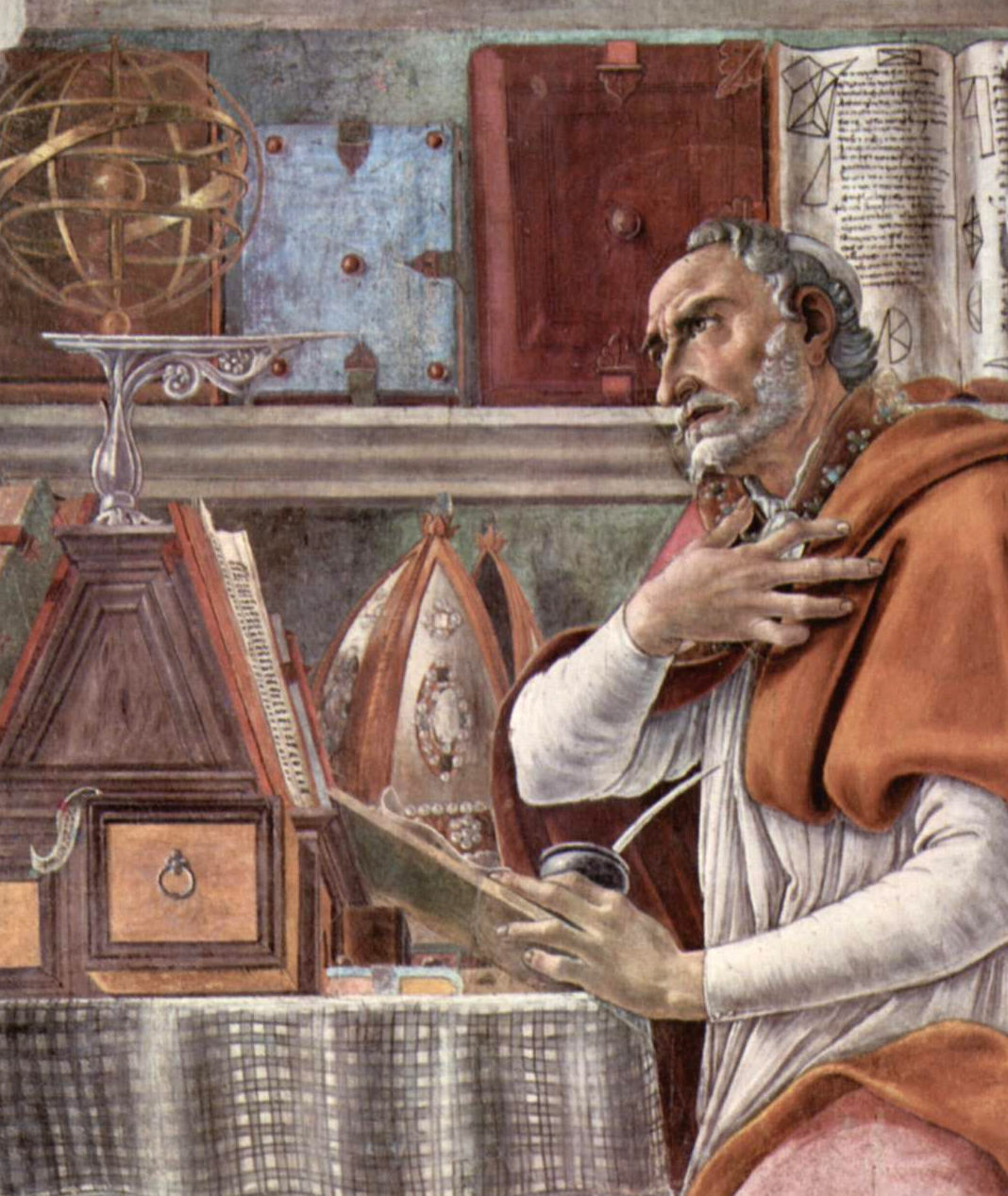
Plain and simple, the position I hold is the position commonly called the “godly line of Seth” view. This position has historically been held by many Protestants, but was most famously championed by Augustine in his City of God. In City of God, Augustine spends the first half of the tome arguing in the negative against Augustine_of_Hippo_Sandro_Botticellithose who had claimed that Rome had fallen as a direct result of her abandonment of the Roman gods for Christianity. Augustine argued that those who worshiped the Greek and Roman gods worshiped demons, while those who worshiped Christ were worshiping the one, true and living God of the universe.

In the second half of this multi-volume work, Augustine develops a biblical theology of Christ. He traces through each book of the Bible a Christocentric hermeneutic of redemptive history. If you’ve never read City of God before, it is worth it just to see how he understands how God has worked through the different epochs of redemptive history to bring about His purposes.

History according to Augustine, more than anything else, is God’s story. However, it is not merely God’s story. History is more precisely the story of how God brings about His redemptive purposes through providentially directing the activities of the city of God and the city of man. From the dawn of creation, God has always had His people, and His people are distinct from all other people on the face of the earth.

Nehemiah Coxe

Nehemiah Coxe picked up this idea of tracing God’s redemptive activity through the word of God when he wrote Covenant Theology: From Adam to Christ. Coxe’s unique contribution was that he demonstrated how God’s redemptive work in redemptive history was uniquely covenantal. Of course, as everyone knows who is familiar with this work, Coxe largely borrowed from Congregationalist John Owen in setting out his framework.

Both Augustine and Coxe subscribe to the “godly line of Seth” view, but we should beware lest we subscribe to a view merely because it is affirmed by a theologian we respect. Our minds and our hearts must be bound to Scripture. We must never elevate a man or a creed on par with Scripture. With that in mind, let us take a look at some Scriptural proof for the “godly line of Seth” view.

Our First Parents

BEN63190In Genesis 1 and 2, we see that Adam and Eve were made holy and happy. They had never sinned, they were naked, and they were unashamed. God had only given them one rule, and that was that they should not eat of the tree of the knowledge of good and evil. As we know well, our first parents did eat of that fruit and, doing so, they plunged all of their progeny into sin and misery.

However, in Genesis 3, God offered mankind some hope. After having conducted His trial and found the man, his wife, and their deceiver guilty, God rendered His verdict. Upon the woman, He placed a curse, that she would have pain in child-rearing. Upon the man, he placed a similar curse, that he would no longer have joy in his labors. Before pronouncing these curses, though, God pronounced a curse on the serpent, a curse that came with hope for mankind.

“And I will put enmity

Between you and the woman,

And between your seed and her seed;

He shall bruise you on the head,

And you shall bruise him on the heel” (Genesis 3:15; NASB).

This pronouncement is what many theologians have labeled the proto-euangelion, which basically means the first gospel proclamation. In it, Adam and Eve were given a promise that one of their descendants would eventually set right all that they had destroyed in their rebellious act. Thus, we can imagine the effect that their oldest son’s fratricidal act would have on them.

Cain, Abel, and Seth

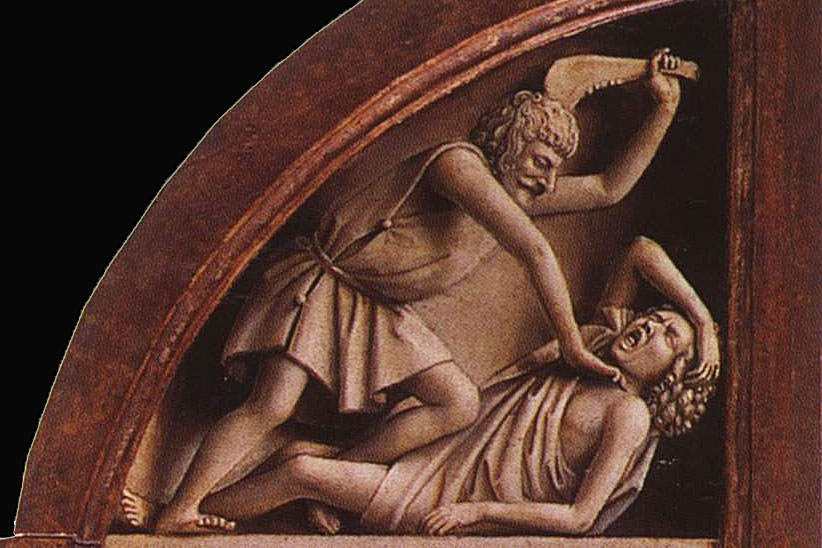
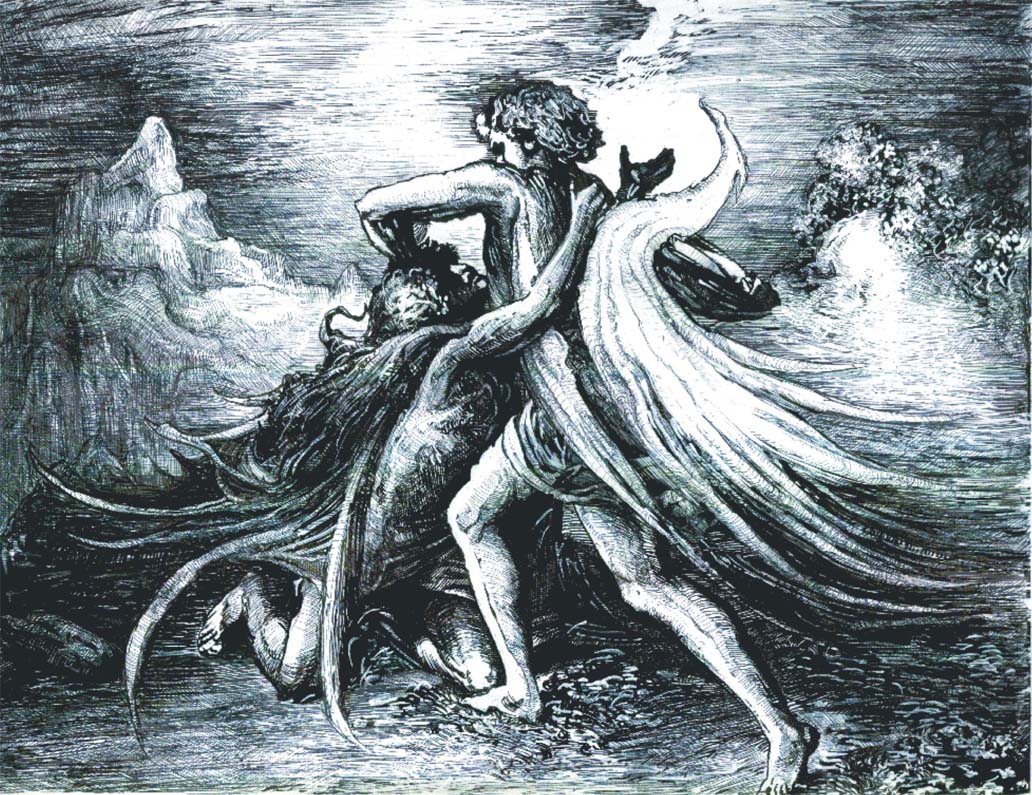
In Genesis 4, we witness the murder of one of Adam’s sons at the hand of his other son, likely the one through whom the promised Seed was expected to Caincome. With this act, Cain cast some doubt over the promise God had made on that dismal day in the garden. Through whom was the promised Seed to come? Certainly not Cain!

The second half of Genesis 4 and Genesis 5 serve as a contrast of sorts. After Cain kills Abel, his lineage is detailed for us in the remainder of chapter 4. It is filled with violent, evil men. Chapter Five, however, reestablishes hope for mankind. Adam and Eve have a third son, Seth, and through him come godly men such as Enoch and Noah. On the arrival of Noah, Bible translators provide for us a chapter break. Yet the story is not over.

Do Not Be Unequally Yoked

Just as mankind’s hopes were dashed at the murder of Abel, so too they were dashed just after the godly line of Seth was established. What Moses tells us is that even this godly line was compromised. In fact, it was so corrupted that God saw fit to destroy the earth with a deluge. How was this godly line of Seth compromised? Through marriage.

Throughout the Bible, God forbade His people from intermarrying with pagans and idolaters. He established godly lines (e.g. Abraham, Isaac, Jacob, Judah, David…) through whom He established His covenants and promises, and through whom He would eventually bring the Seed of Abraham: Christ. The “godly line of Seth” argument is that God did not begin this covenantal headship work with Abraham, but with that promise in Genesis 3.

God has always His people, and those people have always had earthly representatives. Today, the Mediator between God and man is the man Jesus Christ. When one is found to be in the people of God under one of these covenant heads, to marry outside of that line is synonymous with apostasy. It simply is not to be done.

To do so will lead to idolatry and sin, as it did for the Israelites in the days of Balaam and still does in the church today. God’s people are not to be unequally yoked. Rather, we are to remain faithful to the God who called us out from among the nations.

Applications

In addressing the identity of the sons of God in Genesis 6, we have examined the most common interpretation today, given a negative argument against it, and offered a positive argument in favor of my personal understanding of it. This post has already been rather long. Thus, in conclusion to our study, there are just a few applications I’d like to make.

The Analogia Fide

First, we ought always to be mindful of the fact that our interpretation of one text cannot cancel out our interpretation of other texts in the word. We must 46f1a1ed!h_300,id_1999,m_fill,wrecognize that, insofar as the word was written by one divine Author, it cannot contradict itself at any point. So, when the Bible teaches creation as a divine attribute (Psalm 33:6-9; 148:5; Isaiah 43:7; 45:12; Ephesians 3:9), we must recognize the utter blasphemy of attributing creative power to any created being. So, whatever we say about the ‘sons of God’ in Genesis 6, we have no liberty to say that they are angels who created flesh for themselves.

When people take hard to understand passages and use passages that are even harder to understand to try to explain them, there is always the risk of altering very important truths in other parts of the Bible. As such, we need to revive the old hermeneutical principle of analogia fide, or the analogy of the faith. This principle is simple. It asserts that we interpret the less clear parts of Scripture in light of the more clear parts. With this principle as our guide, we will be less likely to try to apply the difficult writings of Peter to the less difficult passage in Genesis 6, obscuring its more rich meaning.

Which of the Angels?

Second, let us glory in our place in creation. When we understand that Christ didn’t go and make proclamation to angels in hell, it allows us to affirm with the author of Hebrews the true goal of the gospel. Christ came to bring many sons to glory, not from the hosts of fallen angels, but from his brothers in the flesh (Hebrews 2:9-13). “For assuredly He does not give help to angels, but He gives help to the [descendant of Abraham” (vs. 16).

Not only is Christ exalted above the angels, but He also secured a place for His brethren above the angels in glory. Our eschatological place in creation has been established by our victorious Savior, and He is not ashamed to call us brothers. What a place of significance this truth affords us. What dignity we have above even the angels!

The God of Promise

promisesThird, let us recognize the fact that God is faithful. Whatsoever He has promised, He will deliver. When Cain killed Abel, God’s promise stood. He provided a way through the godly line of Seth. When Adam died and all seemed lost, within the year God took Enoch demonstrating that He is a God of deliverance. When the godly line of Seth began to intermarry with heathen women and abandon God, He provided an ark of salvation. When God had been silent for hundreds of years, Rome had conquered Israel, and all once again seemed lost, God finally sent the Seed of the woman to crush the head of Satan and deliver His people from their sins.

God has met every promise He ever made. He is the God of promise, and He will remain faithful to the end. Let us glory in our great God of promise!

Who Were the ‘Sons of God’ in Genesis 6? (Application)

In addressing the identity of the sons of God in Genesis 6, I have stated the most common interpretation today, given a negative argument against it, and offered a positive argument in favor of my personal understanding of it. The last couple posts have been rather long for me. Thus, in conclusion to our study, there are just a few applications I’d like to make.

The Analogia Fide

First, we ought always to be mindful of the fact that our interpretation of one text cannot cancel out our interpretation of other texts in the word. We must recognize that, insofar as the word was written by one divine Author, it cannot contradict itself at any point. So, when the Bible teaches creation as a divine attribute (Psalm 33:6-9; 148:5; Isaiah 43:7; 45:12; Ephesians 46f1a1ed!h_300,id_1999,m_fill,w3:9), we must recognize the utter blasphemy of attributing creative power to any created being. So, whatever we say about the ‘sons of God’ in Genesis 6, we have no liberty to say that they are angels who created flesh for themselves.

When people take hard to understand passages and use passages that are even harder to understand to try to explain them, there is always the risk of altering very important truths in other parts of the Bible. As such, we need to revive the old hermeneutical principle of analogia fide, or the analogy of the faith. This principle is simple. It asserts that we interpret the less clear parts of Scripture in light of the more clear parts. With this principle as our guide, we will be less likely to try to apply the difficult writings of Peter to the less difficult passage in Genesis 6, obscuring its more rich meaning.

Which of the Angels?

Second, let us glory in our place in creation. When we understand that Christ didn’t go and make proclamation to angels in hell, it allows us to affirm with the author of Hebrews the true goal of the gospel. Christ came to bring many sons to glory, not from the hosts of fallen angels, but from his brothers in the flesh (Hebrews 2:9-13). “For assuredly He does not give help to angels, but He gives help to the [descendant of Abraham” (vs. 16).

Not only is Christ exalted above the angels, but He also secured a place for His brethren above the angels in glory. Our eschatological place in creation has been established by our victorious Savior, and He is not ashamed to call us brothers. What a place of significance this truth affords us. What dignity we have above even the angels!

The God of Promise

Third, let us recognize the fact that God is faithful. Whatsoever He has promised, He will deliver. When Cain killed Abel, God’s promise stood. He provided a way through the godly line of Seth. When Adam died and all seemed lost, within the year God took Enoch demonstrating that He is a God of deliverance. When the godly line of Seth began to intermarry with heathen women and abandon God, He provided an ark of salvation. When God had been silent for hundreds of years, Rome had conquered Israel, and all once again seemed lost, God finally sent the Seed of the woman to crush the head of Satan and deliver His people from their sins.

God has met every promise He ever made. He is the God of promise, and He will remain faithful to the end. Let us glory in our great God of promise!


Who Were the ‘Sons of God’ in Genesis 6? (Part Three)

In the first two articles I posted on the identity of the sons of God in Genesis 6, I stated the default position of most in the Western church and refuted it with some negative argumentation. In this article, I will now begin to offer a positive argument for the position I hold. As far as I am aware, there are three common positions held on the sons of God in Genesis 6, one of which I will not concern myself for lack of space and time.

Augustine

Plain and simple, the position I hold is the position commonly called the “godly line of Seth” view. This position has historically been held by many Protestants, but was most famously championed by Augustine in his City of God. In City of God, Augustine spends the first half of the tome arguing in the negative against those who had claimed that Rome had fallen as a direct result of her abandonment of the Roman gods for Christianity. Augustine argued that those who worshiped the Greek and Roman gods worshiped demons, while those who worshiped Christ were worshiping the one, true and living God of the universe.

In the second half of this multi-volume work, Augustine develops a biblical theology of Christ. He traces through each book of the Bible a Christocentric hermeneutic of redemptive history. If you’ve never read City of God before, it is worth it just to see how he understands how God has worked through the different epochs of redemptive history to bring about His purposes.

History according to Augustine, more than anything else, is God’s story. However, it is not merely God’s story. History is more precisely the story of how God brings about His redemptive purposes through providentially directing the activities of the city of God and the city of man. From the dawn of creation, God has always had His people, and His people are distinct from all other people on the face of the earth.

Nehemiah Coxe

coxeowen2Nehemiah Coxe picked up this idea of tracing God’s redemptive activity through the word of God when he wrote Covenant Theology: From Adam to Christ. Coxe’s unique contribution was that he demonstrated how God’s redemptive work in redemptive history was uniquely covenantal. Of course, as everyone knows who is familiar with this work, Coxe largely borrowed from Congregationalist John Owen in setting out his framework.

Both Augustine and Coxe subscribe to the “godly line of Seth” view, but we should beware lest we subscribe to a view merely because it is affirmed by a theologian we respect. Our minds and our hearts must be bound to Scripture. We must never elevate a man or a creed on par with Scripture. With that in mind, let us take a look at some Scriptural proof for the “godly line of Seth” view.

Our First Parents

In Genesis 1 and 2, we see that Adam and Eve were made holy and happy. They had never sinned, they were naked, and they were unashamed. God had only given them one rule, and that was that they should not eat of the tree of the knowledge of good and evil. As we know well, our first parents did eat of that fruit and, doing so, they plunged all of their progeny into sin and misery.

However, in Genesis 3, God offered mankind some hope. After having conducted His trial and found the man, his wife, and their deceiver guilty, God rendered His verdict. Upon the woman, He placed a curse, that she would have pain in child-rearing. Upon the man, he placed a similar curse, that he would no longer have joy in his labors. Before pronouncing these curses, though, God pronounced a curse on the serpent, a curse that came with hope for mankind.

“And I will put enmity

Between you and the woman,

And between your seed and her seed;

He shall bruise you on the head,

And you shall bruise him on the heel” (Genesis 3:15; NASB).

This pronouncement is what many theologians have labeled the proto-euangelion, which basically means the first gospel proclamation. In it, Adam and Eve were given a promise that one of their descendants would eventually set right all that they had destroyed in their rebellious act. Thus, we can imagine the effect that their oldest son’s fratricidal act would have on them.

Cain, Abel, and Seth

CainIn Genesis 4, we witness the murder of one of Adam’s sons at the hand of his other son, likely the one through whom the promised Seed was expected to come. With this act, Cain cast some doubt over the promise God had made on that dismal day in the garden. Through whom was the promised Seed to come? Certainly not Cain!

The second half of Genesis 4 and Genesis 5 serve as a contrast of sorts. After Cain kills Abel, his lineage is detailed for us in the remainder of chapter 4. It is filled with violent, evil men. Chapter Five, however, reestablishes hope for mankind. Adam and Eve have a third son, Seth, and through him come godly men such as Enoch and Noah. On the arrival of Noah, Bible translators provide for us a chapter break. Yet the story is not over.

Do Not Be Unequally Yoked

Just as mankind’s hopes were dashed at the murder of Abel, so too they were dashed just after the godly line of Seth was established. What Moses tells us is that even this godly line was compromised. In fact, it was so corrupted that God saw fit to destroy the earth with a deluge. How was this godly line of Seth compromised? Through marriage.

Throughout the Bible, God forbade His people from intermarrying with pagans and idolaters. He established godly lines (e.g. Abraham, Isaac, Jacob, Judah, David…) through whom He established His covenants and promises, and through whom He would eventually bring the Seed of Abraham: Christ. The “godly line of Seth” argument is that God did not begin this covenantal headship work with Abraham, but with that promise in Genesis 3.

God has always His people, and those people have always had earthly representatives. Today, the Mediator between God and man is the man Jesus Christ. When one is found to be in the people of God under one of these covenant heads, to marry outside of that line is synonymous with apostasy. It simply is not to be done.

To do so will lead to idolatry and sin, as it did for the Israelites in the days of Balaam and still does in the church today. God’s people are not to be unequally yoked. Rather, we are to remain faithful to the God who called us out from among the nations.

____________

Having given my negative and positive arguments for the “godly line of Seth” argument, I plan on giving some applications of these truths in my next article.

Why Mark Jones Is Right… and Wrong

Jones-Mark-HigherRes

Mark Jones

Let me be the first (perhaps not) Baptist to admit that Mark Jones was spot on in many regards in his post “A Plea for Realism”:Are Presbyterians Christians? It seems to me that Mark Jones is simply calling for a little intellectual honesty from us Baptists. Well, allow me to humor him.

I certainly agree that, if we do not allow unbaptized believers to take communion, that should include those who have been “baptized” in a way that we believe to be unbiblical and, thus, no baptism at all. If a paedobaptist came to my church who refused to be baptized post-confession due to having been sprinkled as an infant, we would not allow him to be a member, so why would we allow him to take communion? Baptism, in every Christian tradition, has historically preceded communion. Baptism preceding communion is both a historical and a biblical view. On this point, most Baptists and Presbyterians agree.

Therefore, for me to dissuade my Presbyterian friends from taking communion in my local church, I am not saying they are not Christians so much as that they have not followed biblical mandate in regard to the order of the sacraments. That is, baptism precedes communion. On this point, they would obviously disagree with me, because they hold to a different understanding of baptism. However, for Baptists to cave on this issue and allow for unbaptized Presbyterians (and that’s what we think they are) to take communion, we would be going against our confession’s definition of true baptism.

However, we are not alone in this stance. Presbyterians must take issue with at least some Baptists taking communion in their churches. Just this week, I listened to a somewhat refreshing episode of Reformed Forum in which Jim Cassidy admitted that Baptist parents are in sin who do not baptize their infants in keeping with a Presbyterian view of baptism. I think this is the only consistent Presbyterian view and, as such, I don’t see how Baptist parents can take communion in Presbyterian churches, unless Presbyterians encourage people in open, unrepentant sin to take communion.

ctc-album300Either way, both traditions have an issue when it comes to what Jones calls “catholicity” and baptism. Neither one of us can deny that we see the other as being disobedient to our Lord’s ordinance of baptism. Are Baptists inconsistent to call their Presbyterian friends Christians? Not quite as inconsistent, I would argue, as those Presbyterian churches that allow consistently Baptist parents to take communion.

So, perhaps the proper way to respond to our Presbyterian friends when they try to corner us on these issues is not to bend over backward to try to be ecumenical. Perhaps, the best response is to affirm them where they are correct, but demonstrate how they have to answer the same questions regarding their sacramentology. None of us are immune. At a certain level, each believe the other (credos and paedos) is disobedient at a certain level, and that must stand as a guard to the communion table at some point.

See also Tom Hicks’ response to Jones’ article. Michael Haykin has also chimed in, and Jones has offered his critique of Haykins’ response here.

Circumcision and Baptism in Colossians 2

In two recent episodes (here and here) of the CredoCovenant Fellowship, some debate arose regarding the definition of circumcision and baptism in the context of Colossians 2. I found myself in disagreement with Nehemiah Coxe on the meaning of the passage, and decided I’d like to use my bully pulpit to argue my case. I’ve consulted with JD ahead of time so that he might have time to prepare a response.

Nehemiah Coxe seeks to demonstrate in Covenant Theology: From Adam to Christ how Colossians 2 teaches that water baptism replaces fleshly circumcision. He posits that the circumcision referenced in the passage is Christ’s own fleshly circumcision performed in His incarnate infancy. He further insinuates that, water baptism being a symbol pointing to Spirit baptism, we can assume that Paul means for us to recognize that he is in fact calling to mind water baptism. The conclusion to his argument is that water baptism, the symbol representing Spirit baptism, effectively nullifies the Covenant of Circumcision as symbolized in Christ’s circumcision. If you are confused by this argument, you may or may not be helped by reading Coxe’s argument in greater detail on pages 127-130 of Covenant Theology: From Adam to Christ.

The Book We Discussed…

In this post, I would like to argue that what we find in Colossians 2 is not a conclusive statement regarding the nature of fleshly circumcision and the nature of water baptism. Rather, it is the beginning of a much different argument that persists on into the beginning of Colossians 3. In this argument, Paul’s statements evoking circumcision and baptism are best understood to be premises rather than the conclusion.

Paul establishes three premises in his argument (2:8-12), circles back around to further explain his premises (2:13-3:4), and then gives his concluding statements in the form of application (3:5ff).

  • Premise 1 (2:8-11)
  • Premise 2 (2:12a)
  • Premise 3 (2:12b)
  • Further Explanation of Premise 1 (2:13-19)
  • Further Explanation of Premise 2 (2:20-23)
  • Further Explanation of Premise 3 (3:1-4)
  • Concluding Application (3:5ff)

His first premise is the fact that Christ has established Himself as the ultimate authority over all, and particularly in the life of the believer through heart-circumcision (vv. 8-11; cf. 13-19). His second premise is that we have been buried with Christ in spirit-baptism (vs. 12a; cf. 20-23). His third premise is that we have been raised from spiritual death with Him through His resurrection (vs. 12b; cf. 3:1-4). Let’s take these point by point.


For in Him all the fullness of Deity dwells in bodily form, and in Him you have been made complete, and He is the head over all rule and authority; and in Him you were also circumcised with a circumcision made without hands, in the removal of the body of the flesh by the circumcision of Christ (all Scripture citations taken from the New American Standard Bible);

As has been well documented, when Paul wrote to the church at Colossae, he was combating Judaizers and other false teachers (e.g. an early heretical group referred to by scholars as proto-Gnostics) who had added to the law of God and were perverting the teachings of Christ. He wanted to remind his brethren that they were under no yoke or burden but that under which Christ had placed them (Mt. 11:30). In fact, they had been placed under Christ’s yoke, not by rite of Jewish circumcision, but by regeneration—the greater reality:  spiritual circumcision of the heart.

In claiming His full and ultimate authority over all things, Christ is said to exercise His authority in two particular spheres: over creation generally (Col. 1:15-17) and over the church particularly (Col. 1:18-20). It is the second sphere to which Paul here addresses himself. Christ exercises His reign peculiarly in the lives of believers through the indwelling of His Spirit, but this indwelling has a starting point. That starting point is regeneration—the circumcision of the heart (Deut. 10:16; 30:6; Jer. 4:4; Rom. 2:29). After laying out his other two premises, Paul goes on to expound on this argument in verses 16-19:

16Therefore no one is to act as your judge in regard to food or drink or in respect to a festival or a new moon or a Sabbath day— 17things which are a mere shadow of what is to come; but the substance belongs to Christ. 18Let no one keep defrauding you of your prize by delighting in self-abasement and the worship of the angels, taking his stand on visions he has seen, inflated without cause by his fleshly mind, 19and not holding fast to the head, from whom the entire body, being supplied and held together by the joints and ligaments, grows with a growth which is from God.

Christ Himself is the rightful King and Ruler of His church. Therefore, no one else is to attempt to usurp His authority. If anyone attempts to compel his fellow saints to return to the types and shadows or to adopt some form of legalism or asceticism, he is effectively heaving an added burden upon the shoulders of Christ’s subjects. He is removing the delight of Christ’s rulership and replacing it with an extra-biblical, despotic oppression. Christ is King and Ruler over His church and will not share His throne.

But it is not a fleshly circumcision under which we have come, not even (I would argue) Christ’s incarnate fleshly circumcision. Such a notion is not even hinted at in the text. Rather it is that same circumcision under which God’s true people have always come: the circumcision of the heart. Under this circumcision, there are no civil or ceremonial laws that must be obeyed. Likewise, there are no ascetic practices which must be observed. Rather, the true believer passively receives the stamp of God’s approval in Christ upon his heart, and upon his heart the law is written (Jer. 31:33; Heb. 8:10; 10:16) that, in it, he might find his delight (Ps. 1:2; 40:8).


having been buried with Him in baptism,

Paul furthers his argument by calling to mind the doctrine of spirit baptism, a common theme in Paul’s letters (Rom. 6:6; 1Cor. 12:13; Gal. 3:27; Eph. 2:5). In order for Nehemiah Coxe’s argument to remain in tact, he must prove that this text is referring to either water baptism or Spirit baptism of which water baptism is a picture. Obviously,  he would have to make the second argument as (I will demonstrate), Paul is clearly referring to Spirit baptism. The problem is that Coxe does not make an argument that the symbol of Spirit baptism (water baptism) is being referenced here. He merely assumes it. Paul, on the other hand, will go on to make it clear that he is not talking about the physical symbol, but the spiritual reality.

20If you have died with Christ to the elementary principles of the world, why, as if you were living in the world, do you submit yourself to decrees, such as, 21“Do not handle, do not taste, do not touch!” 22(which all refer to things destined to perish with use)—in accordance with the commandments and teachings of men? 23These are matters which have, to be sure, the appearance of wisdom in self-made religion and self-abasement and severe treatment of the body, but are of no value against fleshly indulgence.

When Paul refers to burial in this passage, he is referring to that spiritual reality of our dying in Christ. In a very real sense, we have died and been buried with Him. We have died to sin (Rom. 6:2, 10; 1Pt. 2:24), to the law (Rom. 7:2-6; Gal. 2:19), and to the elementary principles of the world (Col. 2:20). Like a wife whose husband had died in battle, we have been freed and lawfully betrothed to Another. Being dead to sin and the law, they no longer have mastery over us.

Having died to these things, we are no longer to come under their bondage. We have died to the Old Covenant system. Therefore, we are neither to come under the yoke of fleshly circumcision nor the yoke of the civil or ceremonial laws. Likewise, we are no longer in the world, so we ought not to submit to the edicts of man imposed upon our consciences. Our consciences are to be bound ultimately and finally by Scripture alone! This is the first aspect of what the apostle means when he speaks of baptism: our union with Christ in His death and burial.


in which you were also raised up with Him through faith in the working of God, who raised Him from the dead.

The second aspect of Paul’s meaning is like the first: our having been raised with Christ! It is clear in the immediate text that Paul is not referring to water baptism when he says that we are raised “through faith.” This is not true of our water baptism. We are not raised up out of the water through faith, but by the joint efforts of the preachers arms and our abdominal muscles. Further, there is no talk of symbol in the text, so the faithful exegete is not at liberty to assume its presence in the argumentation. The baptism referenced here obviously takes on a spiritual meaning. Paul goes on to explain that meaning in Chapter Three, verses 1-4:

3:1Therefore if you have been raised up with Christ, keep seeking the things above, where Christ is, seated at the right hand of God. 2Set your mind on the things above, not on the things that are on earth. 3For you have died and your life is hidden with Christ in God. 4When Christ, who is our life, is revealed, then you also will be revealed with Him in glory.

Our baptism in Christ: our death, burial, and resurrection in Him, has the intended outcome of a victorious lifestyle lived with the knowledge that Christ was not defeated. Christ was raised, He ascended, and He currently reigns with the Father in heaven. If we have likewise been raised, we likewise have the joy of knowing that we are currently seated in the heavenly places with Him (Eph. 2:6), ruling and reigning with Christ our Brother.

We are no longer to live as slaves, defeated and conquered by the world in which we live. Rather, we are to recognize our true, royal positions as sons of the King of heaven and earth. The contrast here in Paul’s language is not between two covenants: one of fleshly circumcision and the other of water baptism. Instead, the contrast is between slavery to the world and freedom in Christ.


Conclusion

Whatever we may say about fleshly circumcision and water baptism, and the covenants to which they belong, we are not at liberty to argue toward those conclusions from this text. The reason why not is very simple: this text is not arguing for a contrasted understanding between fleshly circumcision and water baptism. This text is talking about Christ’s authority over believers as demonstrated by our heart circumcision (regeneration) and Spirit baptism (union with Christ in His death, burial, and resurrection).