M’Cheyne Bible Reading Plan: January 5

Genesis 5 (NASB, ESV, KJV, HCSB)

Matthew 5 (NASB, ESV, KJV, HCSB)

Ezra 5 (NASB, ESV, KJV, HCSB)

Acts 5 (NASB, ESV, KJV, HCSB)

M’Cheyne Bible Reading Plan: January 2

Genesis 2 (NASB, ESV, KJV, HCSB)

Matthew 2 (NASB, ESV, KJV, HCSB)

Ezra 2 (NASB, ESV, KJV, HCSB)

Acts 2 (NASB, ESV, KJV, HCSB)

M’Cheyne Bible Reading Plan: January 1

Genesis 1 (NASB, ESV, KJV, HCSB)

Matthew 1 (NASB, ESV, KJV, HCSB)

Ezra 1 (NASB, ESV, KJV, HCSB)

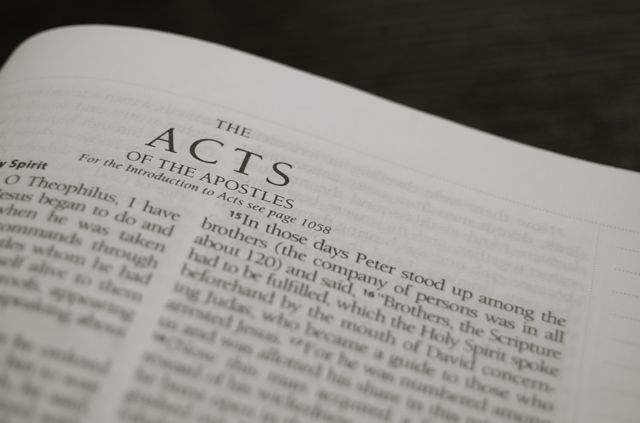
Acts 1 (NASB, ESV, KJV, HCSB)

Annual Bible Reading, from Guest Blogger: Junior Duran

I didn’t become a Christian until I was 29. When I was growing up in a charismatic Christian household and I had a question about religious beliefs and practices I was told simply, “You just have to have faith.” That response wasn’t good enough for me before I was a Christian and I wasn’t satisfied with it after I became a Christian.

When I was just a few months into the faith I began working in Christian talk radio. The first lesson I learned from the radio personalities were the three rules of bible interpretation:

  1. Context.
  2. Context.
  3. Context.

What is the immediate context of your passage? What is the context of your passage within that specific book? What is the context of the passage within the whole of scripture?

Graeme Goldsworthy lists some approaches to bible reading programs that are “less than helpful”,

  • Bible-reading programmes consisting of unrelated snippets drawn from all parts of Scripture with no obvious connection other than perhaps some loose thematic relationship.
  • Programmes without any perspective on the “big picture” of the history of redemption (salvation history).
  • Strategies that aim at extracting a devotional thought for the day rather than allowing the text to dictate the outcome.
  • Lack of any real hermeneutical guide for the application of texts, especially Old Testament passages.
  • Asking the wrong questions of the text: usually something like, “What does this teach me about myself?’ before asking, ‘How does this passage testify to Christ?’.

[Goldsworthy, Graeme. Gospel-centered Hermeneutics: Foundations and Principles of Evangelical Biblical Interpretation. Downers Grove, IL: IVP Academic, 2006. Print. page 309]

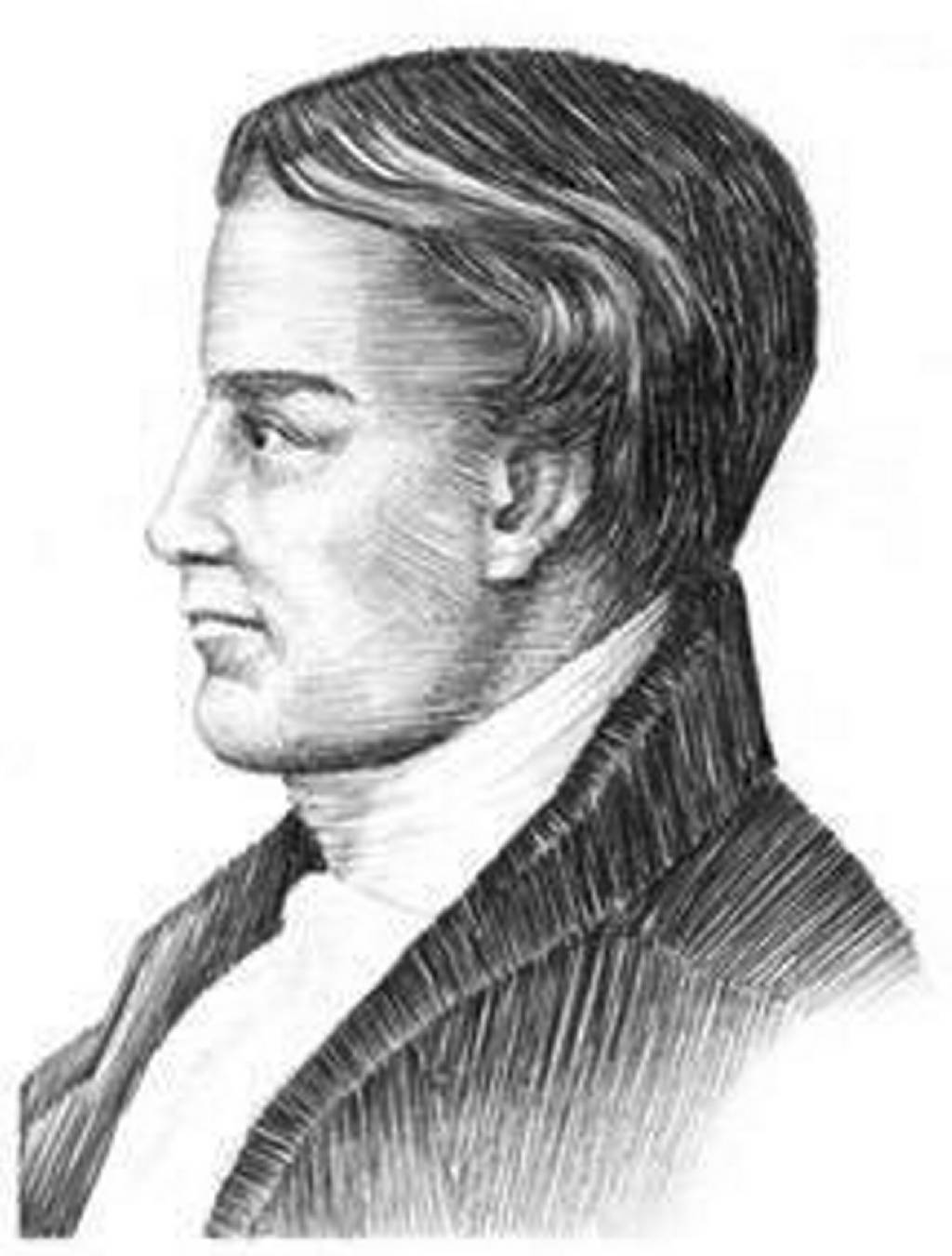
williamtyndale-600Because of principles like these I eventually started reading the The One Year Chronological Bible by Tyndale. Although this is an NIV bible I was later able to get the electronic version for my Laridian Pocket Bible. This enables me to keep the same reading plan while using my preferred bible translation. I’ve been reading through the bible this way for several years.

I want to differentiate between bible reading and bible studying.

I’m not talking about studying the bible, pulling out and comparing commentaries and/or lexicons, or even reading bible study notes. I’m just talking about reading the text. Getting the text into you. Depending on the passage it will take anywhere from five to twenty minutes to finish a day’s readings.

After about my third year of doing this the bible’s big picture began to come into focus. I believe if a person does this it will greatly aide in their discernment and they’ll be able to notice when theologians and commentaries agree or disagree with scripture. Specifically, when a theologian or commentator might concur with one particular scripture passage while possibly contradicting another passage of scripture. Wheat from Chaff, Heat from Light, discernment is important. You can agree with some of what theologians propose in one area while recognizing their inconsistencies in other areas.

Finally, a word about prayer and bible reading. I use the Lord’s Prayer and Psalm 51 as a framework for prayer. Also, since I don’t have time to pray for everything I would like to at one time, I’ve split them out through the week. Here’s my daily prayer and bible reading outline (you might use a notebook).

  • Prayer: Revelation and Illumination (Always pray for understanding before your read the scriptures)
  • Passage: (the text for the day)
  • Principle: (what were some principles learned from the day’s text)
  • Prayer: Confession
    • Petition
      • Restoration and Renewal
      • Submission, Obedience, and Preservation
      • Provision
      • Intercession
    • Deliverance and Protection
      • Sunday: Local Church
      • Monday: Co-Workers
      • Tuesday: Governments
      • Wednesday: Family
      • Thursday: Persecuted Church
      • Friday: Friends
      • Saturday: Neighborhood
    • Adoration and Worship
  • Practice (look for ways to put what you learned today into practice, James 1:22-26)

[ReBlog] Some Thoughts on Reading the Bible in 2015

From Dr. Benjamin Shaw

52514103746“This is not another post on Bible reading plans. There are about a thousand different reading plans out there, and I have no intention of adding to the list. What I will say first is that if you really want to read through the Bible in 2015, use a plan that takes you straight through from the beginning to the end. The Bible is one great big fantastic story, and if you’re reading a little here and a little there every day, you lose the plot.

Second, get yourself a Bible for reading. What I mean is that most Bible publishers do everything they can to make it hard to read the Bible. They print it in two columns. They put cross references in there. They put notes at the bottom of the page. They print in different colors, and add pictures and drawings. All of this can be helpful if you’re studying the Bible. But if you’re reading the Bible, it all distracts. When was the last time you picked up a novel that was printed in double columns, or had footnotes, or was printed in different colors, or had cross references? Of course you wouldn’t expect cross references or footnotes in a novel. But the point is that those things distract from the task of reading.” Read more…

ht: Junior “The Big Dippa” Duran

Who Were the ‘Sons of God’ in Genesis 6? (Part Three)

In the first two articles I posted on the identity of the sons of God in Genesis 6, I stated the default position of most in the Western church and refuted it with some negative argumentation. In this article, I will now begin to offer a positive argument for the position I hold. As far as I am aware, there are three common positions held on the sons of God in Genesis 6, one of which I will not concern myself for lack of space and time.

Augustine

Plain and simple, the position I hold is the position commonly called the “godly line of Seth” view. This position has historically been held by many Protestants, but was most famously championed by Augustine in his City of God. In City of God, Augustine spends the first half of the tome arguing in the negative against those who had claimed that Rome had fallen as a direct result of her abandonment of the Roman gods for Christianity. Augustine argued that those who worshiped the Greek and Roman gods worshiped demons, while those who worshiped Christ were worshiping the one, true and living God of the universe.

In the second half of this multi-volume work, Augustine develops a biblical theology of Christ. He traces through each book of the Bible a Christocentric hermeneutic of redemptive history. If you’ve never read City of God before, it is worth it just to see how he understands how God has worked through the different epochs of redemptive history to bring about His purposes.

History according to Augustine, more than anything else, is God’s story. However, it is not merely God’s story. History is more precisely the story of how God brings about His redemptive purposes through providentially directing the activities of the city of God and the city of man. From the dawn of creation, God has always had His people, and His people are distinct from all other people on the face of the earth.

Nehemiah Coxe

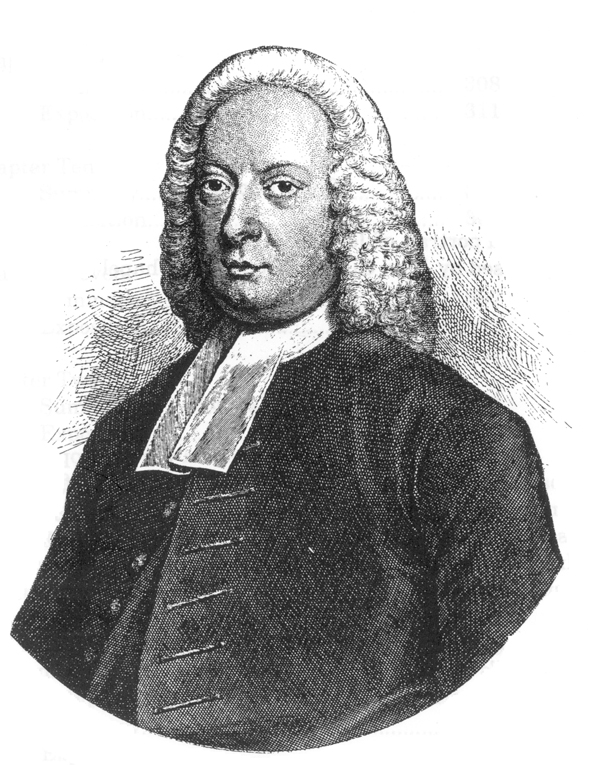
coxeowen2Nehemiah Coxe picked up this idea of tracing God’s redemptive activity through the word of God when he wrote Covenant Theology: From Adam to Christ. Coxe’s unique contribution was that he demonstrated how God’s redemptive work in redemptive history was uniquely covenantal. Of course, as everyone knows who is familiar with this work, Coxe largely borrowed from Congregationalist John Owen in setting out his framework.

Both Augustine and Coxe subscribe to the “godly line of Seth” view, but we should beware lest we subscribe to a view merely because it is affirmed by a theologian we respect. Our minds and our hearts must be bound to Scripture. We must never elevate a man or a creed on par with Scripture. With that in mind, let us take a look at some Scriptural proof for the “godly line of Seth” view.

Our First Parents

In Genesis 1 and 2, we see that Adam and Eve were made holy and happy. They had never sinned, they were naked, and they were unashamed. God had only given them one rule, and that was that they should not eat of the tree of the knowledge of good and evil. As we know well, our first parents did eat of that fruit and, doing so, they plunged all of their progeny into sin and misery.

However, in Genesis 3, God offered mankind some hope. After having conducted His trial and found the man, his wife, and their deceiver guilty, God rendered His verdict. Upon the woman, He placed a curse, that she would have pain in child-rearing. Upon the man, he placed a similar curse, that he would no longer have joy in his labors. Before pronouncing these curses, though, God pronounced a curse on the serpent, a curse that came with hope for mankind.

“And I will put enmity

Between you and the woman,

And between your seed and her seed;

He shall bruise you on the head,

And you shall bruise him on the heel” (Genesis 3:15; NASB).

This pronouncement is what many theologians have labeled the proto-euangelion, which basically means the first gospel proclamation. In it, Adam and Eve were given a promise that one of their descendants would eventually set right all that they had destroyed in their rebellious act. Thus, we can imagine the effect that their oldest son’s fratricidal act would have on them.

Cain, Abel, and Seth
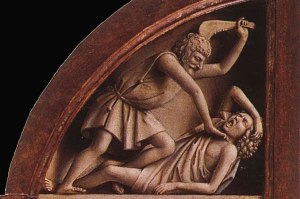
CainIn Genesis 4, we witness the murder of one of Adam’s sons at the hand of his other son, likely the one through whom the promised Seed was expected to come. With this act, Cain cast some doubt over the promise God had made on that dismal day in the garden. Through whom was the promised Seed to come? Certainly not Cain!

The second half of Genesis 4 and Genesis 5 serve as a contrast of sorts. After Cain kills Abel, his lineage is detailed for us in the remainder of chapter 4. It is filled with violent, evil men. Chapter Five, however, reestablishes hope for mankind. Adam and Eve have a third son, Seth, and through him come godly men such as Enoch and Noah. On the arrival of Noah, Bible translators provide for us a chapter break. Yet the story is not over.

Do Not Be Unequally Yoked

Just as mankind’s hopes were dashed at the murder of Abel, so too they were dashed just after the godly line of Seth was established. What Moses tells us is that even this godly line was compromised. In fact, it was so corrupted that God saw fit to destroy the earth with a deluge. How was this godly line of Seth compromised? Through marriage.

Throughout the Bible, God forbade His people from intermarrying with pagans and idolaters. He established godly lines (e.g. Abraham, Isaac, Jacob, Judah, David…) through whom He established His covenants and promises, and through whom He would eventually bring the Seed of Abraham: Christ. The “godly line of Seth” argument is that God did not begin this covenantal headship work with Abraham, but with that promise in Genesis 3.

God has always His people, and those people have always had earthly representatives. Today, the Mediator between God and man is the man Jesus Christ. When one is found to be in the people of God under one of these covenant heads, to marry outside of that line is synonymous with apostasy. It simply is not to be done.

To do so will lead to idolatry and sin, as it did for the Israelites in the days of Balaam and still does in the church today. God’s people are not to be unequally yoked. Rather, we are to remain faithful to the God who called us out from among the nations.

____________

Having given my negative and positive arguments for the “godly line of Seth” argument, I plan on giving some applications of these truths in my next article.

Interracial Marriage and the Ordinary Means of Grace

This past week, I had the privilege of teaching the 9-12 year old class at my church. We are going through the Bible, piece by piece, and discussing each section. This week our discussion was on Genesis 6-11. Now, I understand that there are multiple orthodox views on who the sons of God were in Genesis 6. I exposed the kids to three, but only argued for the one I think to be best supported by the text: the godly line of Seth view.

When holding to this view, the question naturally arises, “What was the big deal with the sons of God marrying daughters of men?” A little context goes a long way in understanding how this is a problem. When Moses wrote the Pentateuch (the first five books of the Bible), the people of Israel were on the plains of interracial-marriageMoab awaiting their conquest of the land of Canaan (Numbers 22:1). There, God commanded them through Moses not to intermarry with the Canaanites (Deuteronomy 7:3-4).

I recall one time at a training exercise in the Army being asked by a guy where the Bible forbids interracial marriage. He wanted to know so that he could discourage his daughter from marrying outside her race. In fact, the Bible nowhere forbids interracial marriage for the sake of keeping people of different skin colors from joining together in matrimony. What it did forbid in Deuteronomy 7:3-4 was interfaith marriage. The Israelites were forbidden from taking foreign wives because they would entice them to follow after false gods.

In my estimation, the best understanding of the sons of God intermarrying with the daughters of men in Genesis 6 is that they were being led away from God by these women. What is interesting is that, when I asked the kids if the Bible anywhere explicitly forbids interracial marriage, they unanimously agreed that it does not. When I asked them why God forbid people in the Bible from marrying foreigners, they agreed that it was because they would entice them to follow false gods.

I bring all this up not to brag on how smart our children are at my church. Rather, I wanted to highlight the fact that the ordinary means of grace are sufficient for helping our churches, and even our the children in our churches, deal with the major issues that the church will face in our culture. The church does not have to resort to conducting a complete reset of its worship service or starting up a multi-culturalist project in order to be the church.

These children came to a right understanding of this deeply important cultural issue by partaking of the ordinary means of Bible reading. They have sat under the preached word week-in and week-out, they have sung psalms, hymns, and spiritual songs that promote biblical truth, and we as a church have regularly prayed over their souls for the better part of their lives. What the church needs is to commit itself to the ordinary means of grace and expect that this will be the medium through which God will perform His extraordinary, transformative work in the lives of believers both personally and corporately. What she does not need is a multi-culturalist agenda pushing for extra-biblical traditions to be added to the means God has ordained for the dispensing of His grace.