M’Cheyne Bible Reading Plan: January 7

Genesis 7 (NASB, ESV, KJV, HCSB)

Matthew 7 (NASB, ESV, KJV, HCSB)

Ezra 7 (NASB, ESV, KJV, HCSB)

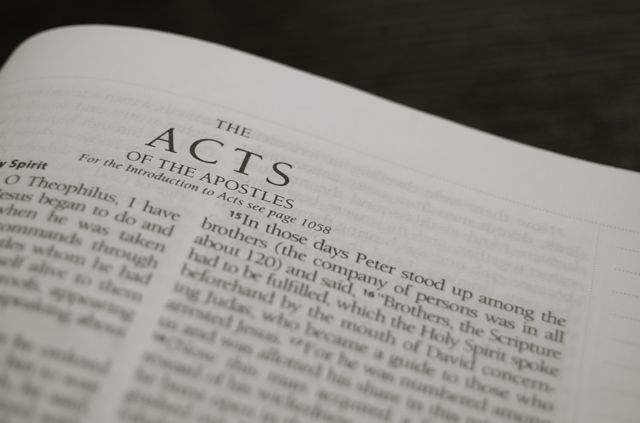
Acts 7 (NASB, ESV, KJV, HCSB)

Syncretism in Black Spirituality

In my last blog, I mentioned that Reformed spirituality places a strong emphasis on our inseparable union with Christ and our abiding communion with Christ. A classic statement of this concept can be found in Calvin’s Institutes, Volume 2, Part 16

We see that our whole salvation and all its parts are comprehended in Christ (Acts 4:12). We should therefore take care not to derive the least portion of it from anywhere else. If we seek salvation we are taught by the very name of Jesus that it is ‘of Him’ [1 Cor. 1:30]. If we seek any other gifts of the Spirit, they will be found in His anointing. If we seek strength, it lies in His dominion, if purity, in His conception; if gentleness, it appears in His birth. For by His birth He was made like us in all respects [Hebrews 2:17] that He might learn to feel our pain [Hebrews 5:2]. If we seek redemption, it lies in His passion; if acquittal, in His condemnation; if remission of the curse, in His cross [Galatians 3:13]; if satisfaction, in His sacrifice; if purification, in His blood; if reconciliation, in His descent into hell; if mortification of the flesh, in His tomb; if newness of life, in His resurrection; if immortality, in the same; if inheritance of the Heavenly Kingdom, in His entrance into heaven; if protection, if security, if abundant supply of all blessings, in His Kingdom; if untroubled expectation of judgment, in the power given to Him to judge. In short, since rich store of every kind of good abounds in Him, let us drink our fill from this fountain and from no other.

This is probably one of the best paragraphs that a Christian can read. However, it raises an important question: How does one “drink our fill from this fountain”? How does one have true abiding communion with God? For Reformed spirituality, this is usually done through the means of grace. However, it is here where we have another major difference between traditional Black spirituality and Reformed spirituality. In regards to this question, it is my contention that there is much syncretism associated with many forms of traditional Black spirituality. In particular, communion with God is usually synonymous with personal worship experiences and personal encounters with God for many Black Christians.

Now, this is not a trend that is unique to Black Christians. Multiple books, such as Christless Christianity by Michael Horton, discuss this overemphasis on subjectivism, but in most mainline denominations, this is relatively recent phenomenon (within 1 or 2 generations at most). For traditional Black Christianity, this emphasis seems to have existed from the very beginnings of the Black Church. In the book Experiencing the Truth: Bringing the Reformation to the African-American Church, Ken Jones posits that the new spirituality of Black Christians (as well as the old spirituality of traditional Black Christians) has its roots what is called the “invisible institution”. In short, the invisible institution refers to the secret gatherings of slaves on the plantations, away from the watchful eye of the master (for a more exhaustive discussion of this topic, see this page). There were many things worth appreciating about the invisible institution. In particular, the slaves took what they learned from their masters, and in the confines of the invisible institution, contextualized it to nurture a deep-rooted faith and hope. However, there were many other issues that were deeply concerning – the chief of which was a deliberate syncretism between the Christian orthodoxy (promoted by their slave masters) and the elements of their native religions. Thus, the invisible institution probably contained genuine Christian converts as well as practitioners of the altered forms of older religions. W.E.B DuBois, in his work The Souls of Black Folk, made a similar conclusion as well:

Thus, as bard, physician, judge, and priest, within the narrow limits allowed by the slave system, rose the Negro preacher, and under him the first Afro-American institution, the Negro church. This church was not at first by any means Christian nor definitely organized; rather, it was an adaptation of mingling of heathen rites among the members of each plantation, and roughly designated as Voodoism. Association with the masters, missionary effort and motives of expediency gave these rites an early veneer of Christianity, and after the lapse of many generations the Negro Church became Christian.

What made Black Christians flock to public visible Church was the revivalism of the First and Second Great Awakening. In describing revival meetings in the First Great Awakening, Ken Jones writes

The zeal sometimes manifest in great emotional displays associated with the revival meetings, including bodily convulsions, caught the attention of the slaves. Edwards, Whitefield, and Tennent were all surprised to see Negroes attending these meetings. This emotionally charged atmosphere was not typical of what took place in the white churches they attended with their masters, but it was reminiscent of worship in the invisible institution. This made the black slaves feel (perhaps for the first time) more a part of what was going on. Shouting and crying out loud, which would have been frowned on in the white church proper, as now done openly, as black and white listeners were moved by the praying and preaching.

The spontaneous expressiveness fostered by the revivalist preaching led to an enormous increase of African public commitment to the Christian faith. The ecstasy experienced in traditional slave worship could now be publicly affirmed as authentically Christian at the same time. This helps to also explain why Black Christians traditionally clustered to Baptist and Methodist denominations. The Anglicans and Presbyterians usually taught the slaves the Ten Commandments, the Apostles’ Creed, and the Lord’s Prayer, whereas the revivalist preacher (usually in Baptist and Methodist denominations) helped them to feel the weight of sin, to imagine the threats of hell, and to accept Christ as their only Savior. The revivalist atmosphere and preaching style of the revivals in attracting slaves to openly embrace Christianity cannot be overstated.

51

This historical backdrop helps to explain the particular style of Black preaching and Black worship, but most importantly, it helps to explain how the mode of Black spirituality differs from Reformed spirituality. For many Black Christians, communion with God becomes synonymous with “encountering with God and His presence” and “getting into the Spirit”. Communion with God becomes synonymous with our personal worship experience and feeling His presence. For many Black Christians, the mark of true communion with God is that “I come to the garden alone… and the joy we share as we tarry there, none other has ever known.” There are some very popular gospel songs that illustrate this point such as My Worship is for Real and Let the Lord Minister to You. This also means that the truly “deep and spiritual” Christian is the one who has had the most extravagant divine visitations and the one associated with “signs and wonders”.

Therefore, when a Reformed Christian criticizes this approach to worship and communion with God, this is not simply a matter of doctrinal differences. Rather, this is a collision of spiritual worldviews. The approach of centering our communion with God based on our mountaintop encounters with His presence is at odds with the Reformed mode of spirituality. This means that Reformed spirituality is foreign to and a direct challenge to this worldview. This contrast is particularly exaggerated within the Black Pentecostal tradition. Many Reformed believers ask me why African-Americans seem to flock towards various strands of Pentecostalism across the globe. To me, the chief reason why is because Pentecostalism has always fit this spiritual worldview. As Conrad Mbewe has stated in multiple occasions (see here and here), various forms of charismaticism do not critically challenge this worldview and thus permits (and at some times promotes) syncretism among Black and African Christians.

Because communion with God is emphasized without paying sufficient attention to how we are united to Christ, many Black Christians also hold superstitious views concerning the “spiritual realm”. In this worldview, a demonic realm sits in between the believer and God and unless the believer knows how to “gain victory” over the demonic realm, they will not have true fellowship with God. This type of doctrine is expressed in multiple different ways, such as in the doctrine of soul ties, generational curses, and pleading the blood of Jesus. Ultimately, this means that the Christian does not rest and rejoice in the union with Christ, but it means that the believer must “tap into the spiritual realm” to find their rest in Christ. To me, it is this syncretism that stands as the largest barrier between Reformed and Black spirituality. For some, addressing this issue is the same as asking Black Christians to accept “Euro-American theology”. We can debate various individual doctrines one by one, but until this gap is addressed, there will still be a separation between the two communities. In the next blog, I will discuss the last significant difference between Reformed and traditional Black spirituality: the role of the Christian mind.
 

Giving in the Order of Worship (Part One)

Earlier this year our church underwent several changes. First, we ordained two new deacons (we now have three). Second, we ordained a new elder (we now have two). Third, we instituted a time of giving in our order of worship. There were several considerations that contributed to our decision to start “passing the plate.” The following are just a few:

Giving as a Command

One of the big questions commonly asked of Calvinists is how they reconcile their soteriology with the Bible’s exhortations to evangelize. There are many different angles from which Calvinists approach this issue, but ultimately, they will unanimously end up hitting on the big one: we are commanded to evangelize. The same is true for giving. We give because we are commanded to give in the Bible.

In 1Corinthians 16:1-2, Paul orders the church in Corinth to regularly take up offerings on the Lord’s Day. He had not only given this command to the church at Corinth, but had also given it to the churches in Galatia. The specific occasion for this command was a famine that had come upon the church in Jerusalem, but notice that Paul does not have them take up a one-time “love offering” to help meet the need in Jerusalem. Rather, he had them take up regular offerings. This was so that the flock would not be pressed for funds when he came to them to collect the money. Rather, out of their regular givings, they would have compiled a large sum that they would have been unlikely to raise with a single offering. The work of the church requires regular giving. Churches cannot function without it.

Passing the Plate 01Throughout the Old Testament, God’s people are commanded to bring their gifts to the Lord. Even the sacrifices are referred to as gifts in some passages (Numbers 18:11; cf. Hebrews 5:1). The Magi brought gifts to Christ as an act of worship when He was a young child (Matthew 2:11). These commands to give are reiterated by the author of Hebrews when he says:

“And do not neglect doing good and sharing, for with such sacrifices God is pleased.” (Hebrews 13:16; NASB).

Such doing good and sharing is reminiscent of the early church in Acts 2 who shared all things in common and gave to anyone as he had need (vv. 44-45). So, if anyone asks why we should give, there may be many answers we can give. However, if all those were to fall by the wayside, we would still have the command given us in Scripture. Let us not withhold our gifts from the Lord who has so graciously given all things to us.

Giving as an Act of Worship

Another issue that was raised in our discussions about giving was the fact that pretty much any sermon you will find on subject of giving will inevitably make reference to the fact that giving in the Bible is an act of worship. In Matthew 6:1-4, Jesus gives instructions on worship through giving. He instructs those listening to His sermon to give in such a way that only they and God know how much was given. The point is that the gift is meant to be a theocentric act, not an act to draw attention upon oneself. We give out of worship toward God, not out of a desire to bring glory to ourselves.

This was the sin of Ananias and Sapphira. Ananias and Sapphira, having seen that others like Joseph of Cyprus (Acts 4:36-37) were selling land and giving to God, sold their land and gave only a portion of the proceeds. When they brought the portion to the apostles, they were asked why they lied. The land belonged to them, Peter said. As long as they owned it, it was theirs with which they could do what they wanted. They chose to sell the property and give some of the proceeds from it in order to bring glory to themselves (Acts 5:1-16). The act of giving is an act of worship to God, not to self.

Before we decided to include giving in the order of worship, we had always had an offering box in the back of the room. This box made giving the only act of worship at our church that was not included in the order of worship. It took the corporate sense out of this one act of worship and made it individualistic. Thus, I and others argued that, if we were going to call giving an act of worship, it should be included in the corporate worship service.

_________

In the next article, I will discuss three more arguments for giving in the order of worship: giving as a teaching tool (for our children), giving as a blessing to the giver, and giving as an act of stewardship.

Another Reformed Newbie: Part 3

In my last post, I reflected on great things that I learned from my Black Baptist church upbringing that have benefited me as I’ve become more reformed in my faith. But, I unfortunately learned a lot of things (I’ll call it ‘Black spirituality’) in the Black church that I am still unlearning at times. So I want to highlight some of those things here, and I know for sure that my husband will be writing on this topic soon. So, this will be pretty brief.

Hearing God and Personal Maturity

I have plenty of stories I could tell you that fit under this category, but I won’t amuse you with the details. Basically, in my church, it was normal for people to hear the audible voice of God (yes, I did say audible) and have visions and dreams. It was so normal that it gave the impression (and verification) that you were truly a child of God and were more mature in your Christian walk. So if you couldn’t readily say, “God told me……..” or “God revealed to me that………” then you were not really progressing and you may want to check if you were really His child.

As you can imagine, I questioned my salvation for years because I didn’t really have those experiences. I knew it wasn’t right to fake it, and I always prayed for God to reveal Himself to me. But I never seemed to have the same experiences that other people I knew had. So in my mind, I was an ‘inferior’ Christian, or at least a really immature one. Eventually, I did learn (influence of Reformed theology from my future husband when we were friends) that those things were not normal at all to regular Christians, and if they are normal to a person, then they may need to change their diet and get their blood pressure checked more regularly.

Being Called to the Ministry

Long story short, my Black church experience taught me that virtually anyone could be called to the ministry, which isn’t bad in itself. The bad part is that my experience also taught me that you could not refute or disagree with anyone who felt personally called to the ministry because you don’t know what God has told them.

Now, witnessing my mom feel personally convinced that she was supposed to be in ministry and eventually become ordained though plenty of people disagreed is probably what brought this to my attention in the first place. But the effect of my mom’s ordination was that I saw countless women (and men) become “ordained” for lots of things in the church because they felt they had inward calls. And basically, it appeared that there was no verification process to that at all.

Unfortunately, this worsened when I went to college in Atlanta. I saw all kinds of 18 and 19 year olds ordained as ministers, bishops, and even apostles! (That’s what happens when you attend a historically Black college in the South) And you could not tell them that they were not called. Even as they engaged in sexual sins and other obvious transgressions, they were “anointed” by God to walk in their calling. We were just exhorted to pray for them and continue to “speak life” to them.

Worshipping God

The last major thing that I want to mention here is on the subject of worshipping God. Growing up in the Black church, I never saw anything wrong with a “praise break” in the middle of service. I mean, in my mind, God is just that good that sometimes you should literally stop everything to praise Him. I remember as a child seeing my cousin’s grandmother take off running almost every Sunday whenever she couldn’t hold it in any longer. We would make bets amongst ourselves on how many times she would run a loop around the sanctuary in her 4 inch heels all the time!

And then, you would also have those who could speak in tongues busting out all over the place. From lay people in the middle of service to the soloist and my mom, you could find handkerchiefs waving, random utterances of tongues that all strangely sounded similar, people doing their little praise jigs, and people falling out across the floor under the anointing every Sunday morning. I guess if I could sum up the theme of the worship service that everyone seemed to hold, it would be Jeremiah 20:9:

If I say, “I will not mention him, or speak any more in his name,” there is in my heart as it were a burning fire shut up in my bones, and I am weary with holding it in, and I cannot.

Now, we all know that this verse was taken way out of context, but it was the justification I’ve heard all of my life. So I hope you were able to have a good laugh on this post. Fortunately, this is about the end of my own Reformed journey. I am still learning a lot every week, but as I mentioned, I am still working on reconciling a lot of things that I learned over the years with the Reformed faith. As a Black woman, I can tell you that systematically rejecting your religious traditions, especially when they are held closely by your family, is not an easy task. So, hopefully I can write a little more on what I’m coming to understand better in the future. Thanks for reading!

CCF Episode Seven: The Ecclesiastical Benefits of Creeds and Confessions

CredoCovPodcastMaster

In this episode, JD and Billy sit down with Pastor Jason Delgado, Junior “Big Dippa” Duran, Rene Del Rio, and Jack DiMarco to discuss the last few chapters from The Creedal Imperative by Carl Trueman. Featuring music from Katy Bowser and Odd Thomas.

MP3 Download | stream:

Subscribe to future podcasts and leave us a review on iTunes: RSS | iTunes


The book we’re going through:

Creedal Imperative

The Creedal Imperative
by Carl R. Trueman

We’d love your participation. Contact us with your comments and questions about the book’s contents:

Longing for Egypt: Discontentment with the Ordinary Means of Grace

Lately, in considering the continuationist movement in Evangelicalism, I have begun to wonder if what lies at root of the movement is not a discontentment with the ordinary means of grace. One thing that is not often considered is the fact that such an emphasis on the extraordinary, emotions-based revelry that passes as worship in many churches today encourages in the mind of the average congregant a dissatisfaction with the means God has ordained for the edification and sanctification of His saints. Let me state this clearly: True worship is that which leads the worshiper to find his joy and satisfaction in God’s weekly, incremental, ordinary means of grace. Does God sometimes work through lightening bolts to jolt His saints into greater obedience and faith? Sure. Will God work outside of the ordinary means of grace to bring us to the places He wills for us to be? Certainly. Do we have any right to require anything more than His ordinary, week-by-week, incremental dealings with us? Absolutely not! Let us be content with the manna we have received for this day and repent of our longings for the food of Egypt.

LBCF of 1677/1689 – Chapter Twenty-Seven, Of the Communion of the Saints

1. All saints that are united to Jesus Christ, their head, by his Spirit, and faith, although they are not made thereby one person with him, have fellowship in his graces, sufferings, death, resurrection, and glory; and, being united to one another in love, they have communion in each others gifts and graces, and are obliged to the performance of such duties, public and private, in an orderly way, as do conduce to their mutual good, both in the inward and outward man.
( 1 John 1:3; John 1:16; Philippians 3:10; Romans 6:5, 6; Ephesians 4:15, 16; 1 Corinthians 12:7; 1 Corinthians 3:21-23; 1 Thessalonians 5:11, 14; Romans 1:12; 1 John 3:17, 18; Galatians 6:10 )

2. Saints by profession are bound to maintain an holy fellowship and communion in the worship of God, and in performing such other spiritual services as tend to their mutual edification; as also in relieving each other in outward things according to their several abilities, and necessities; which communion, according to the rule of the gospel, though especially to be exercised by them, in the relation wherein they stand, whether in families, or churches, yet, as God offereth opportunity, is to be extended to all the household of faith, even all those who in every place call upon the name of the Lord Jesus; nevertheless their communion one with another as saints, doth not take away or infringe the title or propriety which each man hath in his goods and possessions.
( Hebrews 10:24, 25; Hebrews 3:12, 13; Acts 11:29, 30; Ephesians 6:4; 1 Corinthians 12:14-27; Acts 5:4; Ephesians 4:28 )