M’Cheyne Bible Reading Plan: December

December 1


December 2


December 3


December 4


December 5


December 6


December 7


December 8


December 9


December 10


December 11


December 12


December 13


December 14


December 15


December 16


December 17


December 18


December 19


December 20


December 21


December 22


December 23


December 24


December 25


December 26


December 27


December 28


December 29


December 30


December 31

Trappings of Tradition

It’s the most wonderful time of the year! Or is it?

The Facebook page “Boycott Shopping on Thanksgiving Day” has 10,000 likes.  Apparently, if you shop on Thanksgiving, you are forcing people to have to work and needlessly keeping them from their families. The right thing to do, according to the page, is to rest on that day, focus on giving thanks for what you have, and don’t frequent stores that offer unnecessary services. If I step into CVS for some of their ECB deals Thanksgiving night, am I a cruel, heartless being?

When Thanksgiving appears, Christmas isn’t too far behind. I have not watched “Kirk Cameron’s Saving Christmas“, but I did read the discussion guide here. Part of Question 7 states,

Our children need to taste and see and hear that we are children of this King. Our traditions are one of the primary ways that this amazing reality is communicated from generation to generation. Embrace all of the gift giving, the advent calendars, the Christmas Eve dinners, and everything else that communicates that ‘The Earth is the Lord’s, and all it contains’ in concrete and embodied ways.”

Blogs and discussion groups abound with ideas on what to do for Advent, claiming that by doing these things I will create meaningful memories for my children. If I don’t fill my kids with sugar and deck them halls with red, green, silver or blue, have I deprived my children forever?

Is there something wrong with you if you don’t follow tradition?

Growing up Roman Catholic, my family knew how to celebrate in the winter months. The advent wreath was brought out and the candles lit every evening at supper whilst we sang “O Come, O Come, Emmanuel.” Stockings were hung on the stairway on December 5th, as St. Nicholas would come the next day bringing some toys, an ornament, tangerines and walnuts. The next week we trekked to the Christmas tree farm to pick out the tree and lug it home. While it was being decorated, other Christmas ornaments were hung on red velvet ribbons tacked to the top of the bow window, and a nativity (or two) would be arranged. A few presents would be placed under the tree at Christmas Eve, and all would be allowed to open one. The next morning, more presents would appear under the tree from Santa Claus. We would open some, pause and go to Mass, then come back to finish reveling in what we received. Twelve days later was the feast of the epiphany, or Three Kings’ Day.  Whoever bit into the walnut hidden in a cupcake was crowned that year’s king.

Later when I became a Christian, married, and had children of my own, the traditions of my youth hovered before me like the ghost of Christmas past. What traditions should I keep? How was I going to ensure my kids had a Christmas full of wonder and magic? When could I get everyone still enough for a photo for the cards? Wouldn’t I be Puritanical if I didn’t celebrate the season?

If this time of year brings an undue amount of pressure for you, here is a sanity-saving tip that I have come to know: if a holiday event brings you stress and pressure, then don’t do it.

Let me repeat: if a holiday event brings you stress and pressure, then don’t do it!

It is truly that simple. Breaking the trappings of tradition can be difficult, but once done, the freedom is thrilling. The doctrine of Christian liberty is such a precious doctrine to study. Usually we hear it summoned as a defense for various holiday celebrations. Yet let’s remember that it also offers freedom from holiday celebrations.

 God alone is Lord of the conscience, and hath left it free from the doctrines and commandments of men which are in any thing contrary to his Word, or not contained in it. So that to believe such doctrines, or obey such commands out of conscience, is to betray true liberty of conscience; and the requiring of an implicit faith, and absolute and blind obedience, is to destroy liberty of conscience and reason also. -LBCF 21.2

So if you want to exercise good stewardship on Thanksgiving by shopping, do so without guilt. Christmas presents do not have to be around a tree, it may be advantageous to avoid mentioning Advent, and children are able to wonder at the Incarnation without a nativity. (Besides how nativities violate the 2nd Commandment, but that’s a post for another day.) Most Puritan children probably grew up just fine without even celebrating Christmas.

In our family, we might decorate a tree this season; we haven’t done it every year. My children enjoy receiving presents, but they will be the first to tell you Santa Claus is not real. And if I get to it, we’ll send a newsletter to friends and family. It’s not a big deal. After all, traditions come and go, but the Word of the Lord lasts forever.

*****

Christmas_Cookies2

For a thorough treatment exploring Christian liberty and the Christmas issue, listen to Al Martin’s series on Christian Liberty and Christmas.


[Announcement] M’Cheyne Wrap-Up

Digibron1As is the case with much of what I post on this site (The Baptist Confession, The Baptist Catechism, A Catechism for Boys and Girls, etc.), I have undertaken the project of posting Robert Murray M’Cheyne’s Bible Reading Plan primarily for the benefit of my own personal study. However, if the Lord so ordains that it would be a blessing to more than just me, how rewarding that would be. With that in mind, I simply would like to announce that the final post of the M’Cheyne Plan will be published in just a few short days. Be on the look out for it, and let your friends know about it so that they might read along with us in 2015.

Visitors in the Potter’s House

In January 2012, I took a class taught by Justin Peters at Southwestern Baptist Theological Seminary entitled “Theology of the Word of Faith Movement.” One of the assignments we were given was to attend a Word of Faith church or conference in the area and write an essay detailing our experience.. I chose to attend T.D. Jakes’ church in Dallas: The Potter’s House. The article to follow is the substance of the essay I submitted.

__________

I attend a church that rents space in another church’s building, so we alternate our service times with them. We usually meet at three o’clock in the afternoon on Sundays. On March 25, 2012, I woke up earlier than I’ve woken up on a Sunday in years. At 8:30am, I found myself having coffee with my friend John, a graduate of Dallas Theological Seminary and a fellow member at my church. He had agreed to go with me to visit The Potter’s House, the home church of Bishop T.D. Jakes, a well known prosperity preacher and Oneness Pentecostal. What we witnessed that day was baffling to put it lightly. At times, the “service” was theatrical. At times, it was compelling. At times, it was confusing. However, at no point would I classify what was transpiring before my eyes as true, godly worship from God’s people.

From the Car to the Pew

John and I rode together from the diner to The Potter’s House. Having attended predominantly black churches growing up, John had made a point to visit Jakes’ church early on in his seminary career. So, I decided early on to take all my cues from him. However, it had been a few years since he first visited the church so, as he would later tell me, there were many things that caught even him by surprise.

The parking lot was on the other side of the street and, as with many mega-churches today, they had quite a few men out in the parking lot directing traffic. Like sheep, we were directed through every turn until we found our parking spot. Emerging from the passenger side of John’s vehicle, the first thing I noticed was the amount of skin and tight dresses that marked the average female attendee. I had to keep my eyes on John and focus hard on our discussion the whole way to the church in order to remain pure in thought. In hushed tones, we discussed cultural and geographical standards of modesty until we got to the front door of the church building.

T.D. JakesWalking through the glass double doors, the first thing that struck me was the likeness the building shared with a convention center or concert hall. The walls were carpeted and there were men in suits standing near the doors leading into the main sanctuary who looked as though they were there to check tickets. To the far right of the lobby area was the bookstore. John told me that the last time he was at The Potter’s House he visited the bookstore, and it was full of nothing but Jakes’ books and DVDs. He insisted that we go and see if it had changed at all since his last visit.

I will say that I was struck by the sheer amount of T.D. Jakes merchandise that lined the walls and filled the displays, especially his new book Let It Go. There were other authors represented in the store, though. Interestingly, there were quite a few copies of Voddie Baucham’s book What He Must Be …If He Wants to Marry My Daughter on one shelf. Voddie Baucham recently appeared on James White’s podcast The Dividing Line where he explained how he had backed out of his commitment to participate in James MacDonald’s The Elephant Room 2 conference, because he did not want to be seen as endorsing another panel member: T.D. Jakes. Although Voddie Baucham does not endorse Bishop Jakes’ teachings, it appears Jakes endorses his. Exiting the store, I felt the urge to check my pockets and make sure I had not accidently placed any merchandise in them as I passed through the scanner while being stared down by a foreboding security guard.

What Transpired Over the Next Two Hours

Upon entering the main sanctuary, John insisted we sit on the far back pew. As we slid in, he said, “I’m going to sit down,” with a look on his face that suggested, “You can do whatever you want to do, but I’m not participating in any of this mess.” As I had already been doing, I followed his cue and sat down. Little did I know, but what I was to witness over the next two hours was nothing short of chaos. There was no real structure to the service, at least not one of which anyone not in leadership could have been aware.

The service began with a woman, obviously worked up into a sweat, leading the people through a high-intensity, heavy-breathing, over-dramatic prayer thing. I say “thing” because it was not quite as apparent that she was praying to God as much as she was putting on a show for the people. The people seemed to love it though, as they were just as worked up as she was. She then commenced to lead the people through some announcements until she was suddenly interrupted by Bishop Jakes, at which point she grabbed her notes and out of an almost worshipful show of reverence toward Jakes shuffled off the stage not to be seen again for the rest of the service.

The Potter's House of Dallas, Inc.The announcement that prompted Jakes’ interestingly timed interruption was the announcement of his latest movie. He picked this particular service to announce that he would soon release a follow-up to his first movie Woman, Thou Art Loosed. He explained that it would not be a sequel, but the second in a long series of unrelated stories that showcase the trials and victories of “real” people. He lamented that no movies being released today show people struggling with the things with which the people he knows struggle. Suddenly, the lights went dim, and a trailer for the movie was shown. After the trailer, the people erupted in fanatical applause.

Next was the praise and worship time which was hard to follow because, again, the person of God was not the unmistakable focus of the praise and worship, except perhaps in word. There were dancers who looked more Hindu than Christian as they twirled and waved silken scarves in the air. Those leading the singing seemed more concerned with performing for the people than leading them in worship and admiration of God. Sadly, I cannot say that there was any element in this spectacle to which I had not already been exposed in Southern Baptist mega-churches. Nevertheless, I would argue that, wherever this type of performance exists, it is not God-honoring worship. By about the fifth song, John leaned over to me and said, “Have we really been here an hour already?” Later, he would explain that he was dismayed at the lack of emphasis on the word of God. We had been at “church” for an hour, and the word of God had not been referenced even once.

The real chaos did not begin to ensue, however, until Jakes took the pulpit. He preached from one of Jesus’ parables: the parable of the wicked servant from Matthew 18:21-35. He used this passage to argue that Christians must forgive if they hope to be forgiven. In essence, he argued that Christians ought to behave a certain way in order to incur the same from God. This type of theology is at the heart of the Word / Faith movement. At the heart of the movement is the desire to get God to do what one wants God to do. Thus, their sermons are more like a series of “how-tos” than an actual explanation of the word of God. Throughout the message, as Jakes weaved in and out of stories and emotional pleas, the organ played in the background, the people were in and out of their seats and, at times, men and women were seen running up and down the aisles with banners and blankets waving in the air over their heads.

Perhaps the most heretical moment in the entire service was the taking of the collection. At this point, the prosperity gospel was put on full display. Jakes assured his people that their sufferings and hardships were directly linked with their lack of giving. Also of note was the fact that it was perhaps the most ordered part of the service encouraging the people to participate in blatant, open, emotional shows of penitence and worship.

Conclusion

Jakes is perhaps one of the most dangerous of all the Word / Faith teachers, because he has mastered packaging his product in a somewhat evangelical package. His preaching is nothing you will not hear in some of the least discerning of Baptist churches. His style of worship is nothing that one should not expect when attending African-American churches of all stripes: Pentecostal, Baptist, non-denominational, etc. However, he has still neither repented of his Modalistic teachings nor denied the orthodoxy of those who teach the same. Similarly, he has not forsaken the damnable prosperity gospel, but rather teaches it openly. This was truly an eye-opening experience.

Black Spirituality and Reformed Spirituality, a Comparison (Full)

church

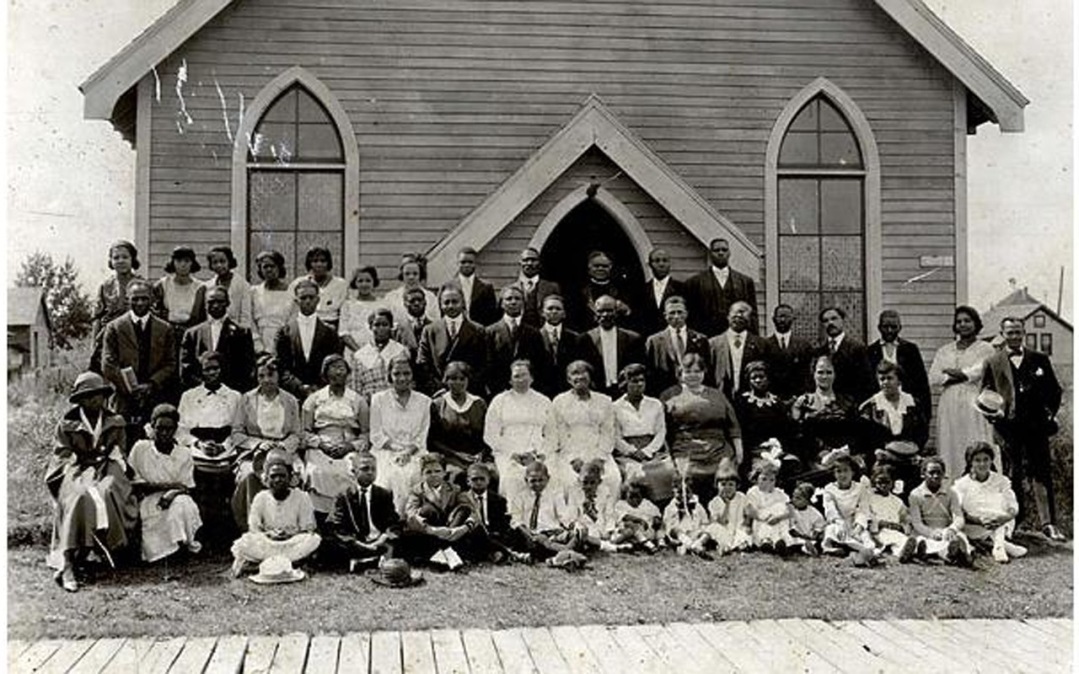
Recently, I’ve finished a blog series which compared the spirituality of traditional, devout Black Christians to Reformed spirituality. The goal of this mini-series was to answer the following question: Why aren’t there more Black Reformed Christians? The central thesis of this series is that diverging views of Christian spirituality is the essential reason why devout Black Christians generally are not in Reformed churches. In other words, the mode and nature of traditional Black spirituality is quite different than Reformed spirituality. In the blog series, I addressed the commonalities and differences between traditional Black spirituality and Reformed spirituality. This post breaks up that series into six basic parts.

Part I: Points of Agreement

Part II: Points of Disagreement

The Mind in Black Spirituality

In the last blog, I mentioned that syncretism was perhaps the largest barrier between Reformed and Black spirituality. The final blog post in the series is perhaps the most personal for me and has been the reason that I have not been able to be a member at a predominately Black church for over ten years. In addressing the question of how a believer may become more spiritual, I’ve rarely heard any Black Christian even comment on the role of the mind and intellect in Christian spirituality. At times, the impression that one can get from Black Christians is that spirituality is completely separate from the mind. This means that the general mode of Christian spirituality for many Black Christians is thoroughly anti-intellectual.

It’s important to note that this problem was not present historically among Black Christians. This argument has been demonstrated very well in The Decline of African-American Theology by Thabiti Anyabwile (the first chapter of this book can be read here for those who are interested). Historically, Black theology could be characterized by simple words which convey deep meaning. This means that older Black preachers emphasized double meaning language to convey theologically rich ideas. This is seen in many of the classical Negro spirituals such as Were You There? or My Lord, What a Morning. It can be seen by this poem from Phyllis Wheatley

Twas mercy brought me from my pagan land

Taught my benighted soul to understand

That there’s a God, that there’s a Savior too

Once I redemption neither sought nor know.

Some view our sable race with scornful eye,

“Their colour is a diabolic die,”

Remember, Christian, Negro, black as Cain,

May be refin’d and join th’angelic train.

A more anti-intellectual approach to the faith by African-Americans seems to be paralleled with the growing anti-intellectualism within American evangelicalism in general. As mentioned above, this is something that I’ve experienced personally. For a large portion of my high school days, I was an atheist. After my conversion, I was mentored by older Black Christians to which I remain personally indebted to this day. However, as I began to ask more questions about the scriptures, I was generally told that I’m thinking too much about these matters and I need to “catch the spirit” of the text. When I asked questions on how I should study the scriptures, I was told that I needed to read a passage of scripture and allow the Holy Spirit to tell me the meaning of the passage. I was told that thinking about hermeneutics was an academic, unspiritual way to approach the scripture and that I would only learn “head-knowledge”. They warned me that people who attempted to know God in this way would end up walking away from the faith. At one particular instance, I was told that intelligence was a handicap towards true spirituality.

romans12This view was reinforced up through my college years and I believed this for many years until I heard a sermon named Modern Spirituality and Your Mind on Romans 12:1-2. This sermon greatly edified me as I began to devote my mind to the study of scriptures and it introduced me to the role of the mind in Reformed spirituality. In order to truly know God and to know His will, we must devote ourselves to a diligent study of the Word so that our minds may be renewed. This means that the mind plays a central role in Christian development. We are exhorted to discipline our minds for the purpose of godliness and to devote our mind to His Word so that we may become wise for salvation (cf. 2 Timothy 3:15). We are told that our sanctification is based upon our understanding and apprehension of the truth of scripture (cf. John 17:17). Hence, true spirituality is done not by circumventing the mind, but it’s done through the active engagement of the mind.

This emphasis on the mind also explains how Christians develop wisdom. The Bible is clear that all people should seek after wisdom. Proverbs 9 is a single exhortation to see this gift. The question becomes how do we obtain this wisdom? For many Black Christians, this is done primarily through personal experiences. In Reformed theology, wisdom is divinely produced in those, and those only, who apply themselves to God’s revelation in the scripture (cf. Psalm 119:98-99; Colossians 3:16; 2 Timothy 3:15-17). This means that our ignorance of God’s revealed will is a grave sin. According to the Westminster Larger Catechism, one of the sins forbidden in the First Commandment is “ignorance, forgetfulness, misapprehensions, false opinions, unworthy and wicked thoughts of him”. Moreover, in the Westminster Larger Catechism, one of the sins forbidden in the Third Commandment is “misinterpreting, misapplying, or any way perverting the Word, or any part of it, to maintaining of false doctrines”.

Another question that can be asked is what effect does God’s gift of wisdom have on a person? Here is a place in which the differences in spirituality become quite apparent. For many Black Christians, the gift of wisdom consists in a deepened insight into the providential meaning and purpose of events going on around us, an ability to see why God has done what He has done in a particular circumstance, and what He is going to do next. Some feel that if they were really walking close to God (so that He could impart wisdom to them freely), then they would discern the real purpose of everything (and perhaps even discover the hidden will of God). In this view the Holy Spirit is the one who gives this hidden insight and it’s reserved for those who diligently seek Him.

In Reformed spirituality, the wisdom of God enables us to know the revealed will of God and to know how to respond appropriately to the providential situations in our lives. In particular, Christ is the divine Wisdom in Proverbs 9 and through a saving knowledge of His Word, believers are brought from darkness to light. It is this approach that places a high value on teaching and preaching in the life of devotion and this is the view that is consistent with both the Old and New Testaments. The Judaism in which Jesus was brought up gave a tremendous amount of time to the study of the sacred text, the scholarly exposition of the Scriptures, and the hearing of sermons which applied this scholarly work to the life of the community. Thus, there was a very genuine scholarly piety that is engendered by this approach. The same was true of the early Christian church. Studying Scripture, memorizing it, meditating on it, and interpreting it were regarded as the most sacred of task. They were among the most essential devotional disciplines. Delighting in the God’s law, which is most clearly seen in the diligent study and meditation of Scripture, was understood as worship in the most profound sense. This is consistent with the wisdom psalms, such as Psalm 1, Psalm 19, and Psalm 119, and this approach is also reflected in Reformed spirituality. In Calvin’s commentary on the prologue of John, he says

For knowledge of God is the door by which we enter into the enjoyment of all blessings. Since, therefore, God reveals Himself to us by Christ alone, it follows that we should seek all things from Christ. This doctrinal sequence should be carefully observed. Nothing seems more obvious than that we each take what God offers us according to the measure of our faith. But only a few realize that the vessel of faith and of the knowledge of God has to be brought with.

Therefore, in Reformed spirituality, there is an emphasis upon obtaining a true knowledge of God which comes through a dedicated use of the mind. In other words, God is honored when believers dedicate their affections and their minds to know Him. This explains why there is an emphasis on creeds, catechisms, and confessions within Reformed churches. The anti-intellectual approach of many Black Christians also tends to make many Black Christians anti-confessional as well. Thus, the pursuit of doctrinal precision is an irrelevant and useless endeavor for many Black Christians.  For many Black Christians, you can still be considered deeply spiritual and godly, even if your doctrine is borderline heretical. This is the only way to explain why ordinarily sound Black Christians will also listen to Word-of-Faith/prosperity gospel teachers, like T.D. Jakes, Juanita Bynum, Eddie Long, Creflo Dollar, Jamal Harrison Bryant, Frederick Price, etc.

For these reasons, it is very difficult for many devout Black Christians who grew up in this background to accept this “bookish” form of piety as legitimately spiritual. This approach (and the accompanying theological jargon) sounds too academic for many because in their view, the true mode of spirituality is through internal intuition and through personal experience. Hopefully, this mini-series has helped to shed some light on the differences between Reformed spirituality and traditional Black spirituality. Even though many similarities between these traditions, there are significant divergences that continue to prevent many devout Black Christians from embracing full-orbed Reformed theology. I will end this blog series with a quote from Anthony Carter

Today, we find ourselves in a dark place, yet the light of the truth of the Scriptures continue to shine brightly. All over this country, and indeed around the world, men and women, particularly those of African descent, are falling out of love with the world and the worldliness of popular television-driven Christianity, and falling in love with the biblical, historical faith that was and is found in Reformed theology… We are witnessing the rise of a new generation of African-American Christians who see through the fading glory of the empty way of life advocated by the false prosperity gospel, and are seeing more clearly the faith that has once and for all been delivered to the saints – the faith rediscovered during the Reformation and being re-energized in our time

Syncretism in Black Spirituality

In my last blog, I mentioned that Reformed spirituality places a strong emphasis on our inseparable union with Christ and our abiding communion with Christ. A classic statement of this concept can be found in Calvin’s Institutes, Volume 2, Part 16

We see that our whole salvation and all its parts are comprehended in Christ (Acts 4:12). We should therefore take care not to derive the least portion of it from anywhere else. If we seek salvation we are taught by the very name of Jesus that it is ‘of Him’ [1 Cor. 1:30]. If we seek any other gifts of the Spirit, they will be found in His anointing. If we seek strength, it lies in His dominion, if purity, in His conception; if gentleness, it appears in His birth. For by His birth He was made like us in all respects [Hebrews 2:17] that He might learn to feel our pain [Hebrews 5:2]. If we seek redemption, it lies in His passion; if acquittal, in His condemnation; if remission of the curse, in His cross [Galatians 3:13]; if satisfaction, in His sacrifice; if purification, in His blood; if reconciliation, in His descent into hell; if mortification of the flesh, in His tomb; if newness of life, in His resurrection; if immortality, in the same; if inheritance of the Heavenly Kingdom, in His entrance into heaven; if protection, if security, if abundant supply of all blessings, in His Kingdom; if untroubled expectation of judgment, in the power given to Him to judge. In short, since rich store of every kind of good abounds in Him, let us drink our fill from this fountain and from no other.

This is probably one of the best paragraphs that a Christian can read. However, it raises an important question: How does one “drink our fill from this fountain”? How does one have true abiding communion with God? For Reformed spirituality, this is usually done through the means of grace. However, it is here where we have another major difference between traditional Black spirituality and Reformed spirituality. In regards to this question, it is my contention that there is much syncretism associated with many forms of traditional Black spirituality. In particular, communion with God is usually synonymous with personal worship experiences and personal encounters with God for many Black Christians.

Now, this is not a trend that is unique to Black Christians. Multiple books, such as Christless Christianity by Michael Horton, discuss this overemphasis on subjectivism, but in most mainline denominations, this is relatively recent phenomenon (within 1 or 2 generations at most). For traditional Black Christianity, this emphasis seems to have existed from the very beginnings of the Black Church. In the book Experiencing the Truth: Bringing the Reformation to the African-American Church, Ken Jones posits that the new spirituality of Black Christians (as well as the old spirituality of traditional Black Christians) has its roots what is called the “invisible institution”. In short, the invisible institution refers to the secret gatherings of slaves on the plantations, away from the watchful eye of the master (for a more exhaustive discussion of this topic, see this page). There were many things worth appreciating about the invisible institution. In particular, the slaves took what they learned from their masters, and in the confines of the invisible institution, contextualized it to nurture a deep-rooted faith and hope. However, there were many other issues that were deeply concerning – the chief of which was a deliberate syncretism between the Christian orthodoxy (promoted by their slave masters) and the elements of their native religions. Thus, the invisible institution probably contained genuine Christian converts as well as practitioners of the altered forms of older religions. W.E.B DuBois, in his work The Souls of Black Folk, made a similar conclusion as well:

Thus, as bard, physician, judge, and priest, within the narrow limits allowed by the slave system, rose the Negro preacher, and under him the first Afro-American institution, the Negro church. This church was not at first by any means Christian nor definitely organized; rather, it was an adaptation of mingling of heathen rites among the members of each plantation, and roughly designated as Voodoism. Association with the masters, missionary effort and motives of expediency gave these rites an early veneer of Christianity, and after the lapse of many generations the Negro Church became Christian.

What made Black Christians flock to public visible Church was the revivalism of the First and Second Great Awakening. In describing revival meetings in the First Great Awakening, Ken Jones writes

The zeal sometimes manifest in great emotional displays associated with the revival meetings, including bodily convulsions, caught the attention of the slaves. Edwards, Whitefield, and Tennent were all surprised to see Negroes attending these meetings. This emotionally charged atmosphere was not typical of what took place in the white churches they attended with their masters, but it was reminiscent of worship in the invisible institution. This made the black slaves feel (perhaps for the first time) more a part of what was going on. Shouting and crying out loud, which would have been frowned on in the white church proper, as now done openly, as black and white listeners were moved by the praying and preaching.

The spontaneous expressiveness fostered by the revivalist preaching led to an enormous increase of African public commitment to the Christian faith. The ecstasy experienced in traditional slave worship could now be publicly affirmed as authentically Christian at the same time. This helps to also explain why Black Christians traditionally clustered to Baptist and Methodist denominations. The Anglicans and Presbyterians usually taught the slaves the Ten Commandments, the Apostles’ Creed, and the Lord’s Prayer, whereas the revivalist preacher (usually in Baptist and Methodist denominations) helped them to feel the weight of sin, to imagine the threats of hell, and to accept Christ as their only Savior. The revivalist atmosphere and preaching style of the revivals in attracting slaves to openly embrace Christianity cannot be overstated.

51

This historical backdrop helps to explain the particular style of Black preaching and Black worship, but most importantly, it helps to explain how the mode of Black spirituality differs from Reformed spirituality. For many Black Christians, communion with God becomes synonymous with “encountering with God and His presence” and “getting into the Spirit”. Communion with God becomes synonymous with our personal worship experience and feeling His presence. For many Black Christians, the mark of true communion with God is that “I come to the garden alone… and the joy we share as we tarry there, none other has ever known.” There are some very popular gospel songs that illustrate this point such as My Worship is for Real and Let the Lord Minister to You. This also means that the truly “deep and spiritual” Christian is the one who has had the most extravagant divine visitations and the one associated with “signs and wonders”.

Therefore, when a Reformed Christian criticizes this approach to worship and communion with God, this is not simply a matter of doctrinal differences. Rather, this is a collision of spiritual worldviews. The approach of centering our communion with God based on our mountaintop encounters with His presence is at odds with the Reformed mode of spirituality. This means that Reformed spirituality is foreign to and a direct challenge to this worldview. This contrast is particularly exaggerated within the Black Pentecostal tradition. Many Reformed believers ask me why African-Americans seem to flock towards various strands of Pentecostalism across the globe. To me, the chief reason why is because Pentecostalism has always fit this spiritual worldview. As Conrad Mbewe has stated in multiple occasions (see here and here), various forms of charismaticism do not critically challenge this worldview and thus permits (and at some times promotes) syncretism among Black and African Christians.

Because communion with God is emphasized without paying sufficient attention to how we are united to Christ, many Black Christians also hold superstitious views concerning the “spiritual realm”. In this worldview, a demonic realm sits in between the believer and God and unless the believer knows how to “gain victory” over the demonic realm, they will not have true fellowship with God. This type of doctrine is expressed in multiple different ways, such as in the doctrine of soul ties, generational curses, and pleading the blood of Jesus. Ultimately, this means that the Christian does not rest and rejoice in the union with Christ, but it means that the believer must “tap into the spiritual realm” to find their rest in Christ. To me, it is this syncretism that stands as the largest barrier between Reformed and Black spirituality. For some, addressing this issue is the same as asking Black Christians to accept “Euro-American theology”. We can debate various individual doctrines one by one, but until this gap is addressed, there will still be a separation between the two communities. In the next blog, I will discuss the last significant difference between Reformed and traditional Black spirituality: the role of the Christian mind.


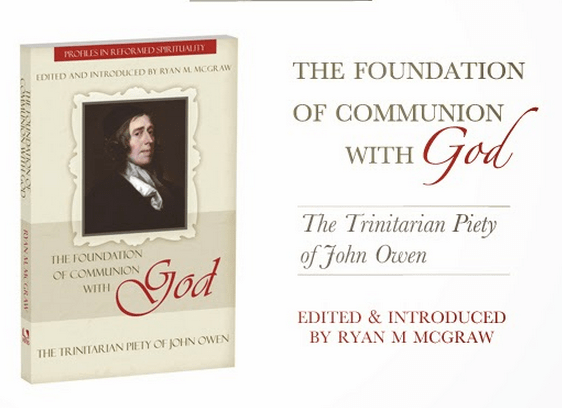
Book Review: “The Foundation of Communion with God: The Trinitarian Piety of John Owen”

Screen Shot 2014-11-08 at 6.06.01 AM

[Publisher $7.50 | Kindle $4.99]

When I first opened up the mail package and took this book out I was surprised how small it was (6.9 x 4.4 x 0.5 inches), just a little bigger than my hand. However, when I first opened up the pages of this book and began to look at its contents I found it was much more substantial than its appearance.

This book is part of the Profiles in Reformed Spirituality” series, edited by Joel Beeke and Michael Haykin, which aims to, “introduce the spirituality and piety of the  Reformed  tradition by  presenting descriptions of the lives of notable Christians with select passages from their works.”

Example of one of the full page pictures

Example of one of the full page pictures

Ryan M. McGraw (ed.) achieves his aims by beginning with a short biographical sketch (21 pages including several pages of full size pictures) of John Owen, specifically highlighting major events in his life that shaped his writing. Then the bulk of the book moves onto giving you 41 chapters (yes 41, but don’t be dismayed; the book only chimes in at 136 pages), each about two to three pages long, of “collected portions from primary sources.”

I think we’ve all heard things like, “Owen is a tough read!” or, “You have to read and re-read him to get anything out of him,… oh, but it is worth it!”

That makes this a perfect book for anyone who has always been afraid to dive into John Owen. The primary source chapters have even “updated his language and punctuation and added paragraph breaks” to make dipping into Owen even more accessible. If that isn’t enough, it is full of helpful footnotes and it even has an appendix on where to go from here in your reading of Owen.

All that to say, I really love the format of this book. It is an easy and accessible way to introduce oneself to the spiritual giants of our church history. If one is already familiar with Owen, one might consider using it as a 41-day devotional. Read one chapter a day (two to three small pages) and meditate on the great truths that Owen is writing on and I can’t see how you couldn’t be stirred up!

I think anyone who reads this book will see the benefits of reading the works of Owen and will no doubt want to take up and read more and more of his works.

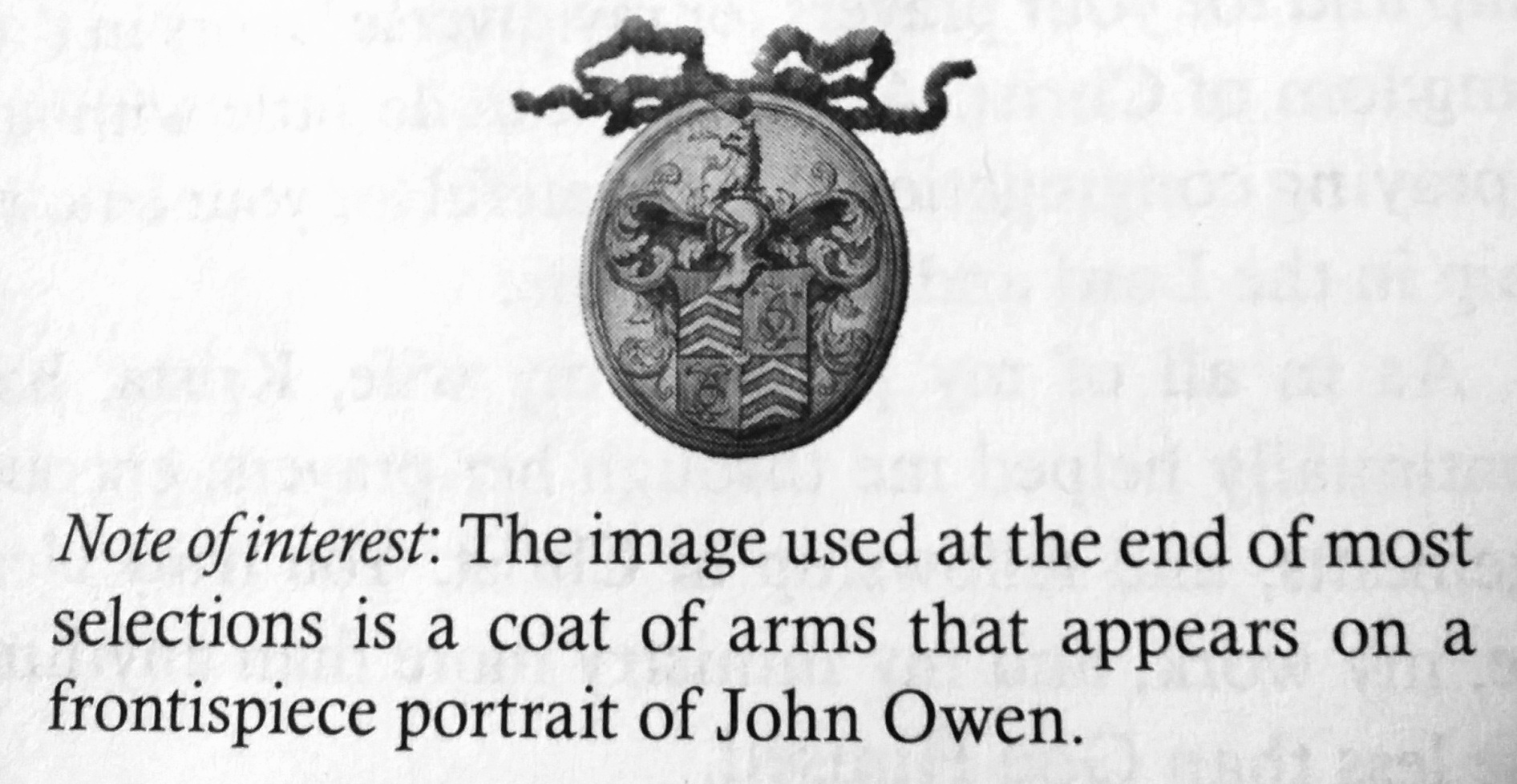
John Owen Coat of Arms

[Note: You may view my highlights from the biography portion here.]

What I’m Not Saying About the Godly Line of Seth

Recently, I posted a four-post argument on my understanding of the identity of the “sons of God” in Genesis 6. Since settling on my view of this passage, I have read several articles from those who hold to the more common view. In these articles there are some misnomers I’d like to address. I think each of these arguments can be reduced down to one very simple assertion: Don’t hear what I’m not saying. Let’s address each one of these misnomers in turn.

I’m not saying that the Sethites were anywhere else referred to in Genesis as ‘sons of God’

Sure, the Sethites are not identified anywhere other than Genesis 6 by Moses as sons of God, but neither are fallen angels. The book of Job alludes to angels being called ‘sons of God,’ but even that assumes a certain interpretation. Think of it this way:

Job was the first book written in the Bible. Hundreds of years later Moses wrote the Pentateuch. Hundreds of years after that the prophets tell us that Satan was actually a guardian cherub in the Garden of Eden. Thus, we must assume that Moses, foreseeing the prophets’ understanding of Satan’s nature, interprets that back into Job and then uses that interpretation to identify fallen angels able to create for themselves bodies capable of procreating with female humans. This hermaneutic is, to say that least, bizarre.

However, for God to designate His remnant people as His children is far from bizarre, even for Moses. In Exodus 4:23 God, through Moses, told Pharaoh, “Let My son go that he may serve Me” (NASB). God is a covenant keeping God, and we with whom He keeps covenant are not His mere subjects. We are His sons (Matthew 5:9; Luke 20:36; Romans 8:14; 9:26; Galatians 3:26; 4:6).

I’m not saying that the Sethites were intrinsically godly

Some call into question the certainty with which we can say that the line of Seth were all godly. I would call that into question as well. In and of himself, no man has ever been completely biblecoffee2_kjekolrighteous. Look at the life of Abraham. He deceived to monarchs and put his wife’s purity on the line to save his own skin, and yet he is called righteous. Look at his nephew Lot. He offered up his daughters to the city, got drunk, and impregnated his daughters, and yet he is called righteous.

By referring to the Sethites as the godly line of Seth, we are not eschewing the fact that we are here referring to sinful men. Beyond any doubt, they were sinful men. However, look at the way that sinful men of God are remembered in the Bible vs. sinful men of the world. The New Testament authors only recall the good in the life of Abraham. They refer to Lot as righteous Lot. They recall only the sins of Balaam, but recall only the faith of Rahab the harlot.

So, what is the difference between the godly and the ungodly in a world where all have sinned and fallen short? The difference is a difference of covenant and perseverance. Those who are in covenant with God, though they may sin (even scandalously), through repentance and perseverance, they will be called godly. They will be called sons of God!

I’m not saying that all who are called ‘sons of God’ persevere

Obviously, not all of the Sethites persevered to the end. There is always a certain level of corruption among God’s people. There will always be wheat among the tares. However, God always has His remnant. For the Sethites, the corruption reached so far that, by the time of the flood, the only remnant left was Noah and his immediate family. There were times in the life of the nation of Israel when there were only 7,000 who had not bowed the knee to Baal.

To say that a people of God is godly in the Bible is not necessarily to say that all of them do all things with all godliness at all times. That notion is simply preposterous. If that were the case, why in the world would Paul tell Titus that God’s grace enables us to live godly lives (Titus 2:12)? Why on earth would Peter say that God rescues the godly (2Peter 2:9)? None of us is perfect. We all fall short in many ways. So, to say that the Sethites were godly is not to say that they were perfect or that they persevered to the end. It is simply to say that they were God’s people at that time.

By the time of Noah, they obviously had come to be very corrupt, just as did the nation of Israel before the dispersion and Judah before the exile. That is the point, though. Even though men may fail, God always keeps His promises. He promised a Messiah that would crush the serpent’s head and, though men may fail us every time, God will remain faithful to His promises. God preserved His chosen Seed through Noah, even though the line of Seth eventually failed.

I will not concede that the daughters of men are the daughters of all mankind

Some have also pointed out that “daughters of men” seems to be used to refer generally to the female offspring of all men, not just those of the Cainites. When placed in contrast to the sons of God, though, it is not hard to understand that two very distinct groups are being referenced here. It is much like the use of the two Adams in 1Corinthians 15.

The first Adam became a living soul, but the last Adam (Christ) became a life-giving spirit (vs. 45). Therefore, “as in Adam all die, so also in Christ all will be made alive” (vs. 22; NASB). Does Paul mean here that every individual in Christ has been or will be made alive? Of course he doesn’t. What he is teaching is that there are two types of men. There are those who are in Adam and, therefore, dead in their trespasses and sins, and there are those who are in Christ, who have been raised with Him to walk in newness of life.

Sometimes the biblical authors used general, universal-sounding terms to designate one group, but then mark them out as not being general and universal by contrasting them with a more specific group. That is what Paul was doing when he wrote 1Corinthians 15, and that is what Moses is doing when he speaks of the daughters of men in Genesis 6. The daughters of men are best understood when contrasted with the sons of God. They are those who follow after the precepts of men rather than the precepts of God. So, when God’s chosen people went after them, they committed a great evil in the sight of the Lord.

Who Were the ‘Sons of God’ in Genesis 6? (Full)

Read my four-part series on the “sons of God” in Genesis 6 here, here, here, and here, or read it in full below. Also, check out my follow-up article, What I’m Not Saying About the Godly Line of Seth.

____________________

Of late, I have been leading the 9 to 12 year olds at my church through a discussion of the book of Genesis. When I came to Genesis 6, the question came up that inevitably comes up when surveying this book of the Bible: “Who were the sons of God in Genesis 6?” Now, this was not my first time having studied this text, so the answer came fairly easy for me, but I realize that it is still a hotly debated issue in Evangelicalism. In fact, I recently had an exchange with someone on social media over this topic, and the guy was less than cordial toward me for my stance.

The Fallen Angels View

The default position in the Dispensationalist SBC churches I attended as a child was that the sons of God were fallen angels who became like men and procreated with human women, the offspring of which were giant, hybrid creatures called Nephilim. The go-to text for proving this interpretation was always Job 1:6 where Satan (a fallen cherub) is said to have appeared before God “when the sons of God came to present themselves before the Lord” (NASB). The idea seems to be, if a set of words is used in one way over in one book of the Bible, it must be used in the exact same way wherever else it appears.

Of course, the proponents of this view also cited a few verses from the New Testament:

“For if God did not spare angels when they sinned, but cast them into hell and committed them to pits of darkness, reserved for judgment” (2Peter 2:4; NASB).

“And angels who did not keep their own domain, but abandoned their proper abode, He has kept in eternal bonds under darkness for the judgment of the great day” (Jude 6; NASB).

Also…

“in which also He went and made proclamation to the spirits now in prison, who once were disobedient, when the patience of God kept waiting in the days of Noah, during the construction of the ark, in which a few, that is, eight persons, were brought safely through the water” (1Peter 3:19-20; NASB).

Refutation

Seems like a pretty open-and-shut case, doesn’t it? Hardly. Let’s examine their arguments closer and get into the context of these passages to see whether or not the arguments hold up and are truly supported by the texts here cited.

Job 1:6

Let us start with the assertion many have made that “sons of God” must mean angels in this text precisely because that is what it means elsewhere, like in Job 1:6. This assertion assumes the idea that biblical words and phrases cannot have multiple meanings and usages. This is not true for any language; words and phrases have multiple usages and meanings, regardless of the language you are examining.

Especially when we are dealing with different authors writing in different eras, we need to take these things into account. Job is largely believed to have been written around the same time Abraham lived. We know nothing whatsoever about its author or common usages of phrases during his time. We do know that Moses, who wrote Genesis, lived hundreds of years after Abraham.

In this span of time, the common vernacular was highly likely to change. Consider the fact that the King James Version of the Bible was codified in the 1600s in Elizabethan English, and its language was considered archaic by many as early as the mid-1800s. Moses might have had angels in mind when he used the designation ‘sons of God.’ The only way to know for sure is to look at his usage of it in the immediate context. We will do so in Part Three of our study.

2Peter 2:4
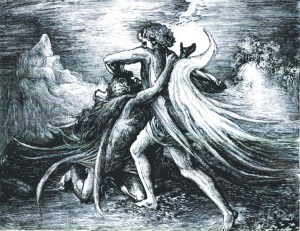
Angels_and_Demons___by_masianiNext, we have 2Peter 2:4 in which Peter tells us that God did not spare angels when they sinned but cast them into hell. How does this even come close to relating to Genesis 6? Well, in the next verse, Peter alludes to Noah’s generation and the judgment they faced. What we have in 2Peter is the apostle’s warning against false teachers. He draws three illustrations of how God deals with false teachers. He judged the angels, he judged the generation of Noah, he judged Sodom and Gomorrah, and He will judge the false teachers in these last days as well. When understood in context, 2Peter 2 provides no support to the “angels sleeping with humans” view of Genesis 6.


Jude 6

But what about Jude 6? Isn’t that a parallel passage to 2Peter, and doesn’t that talk about angels abandoning spiritual form to take bodies for themselves? Proponents of this view draw from the word τὸ οἰκητήριον, claiming that angels left their bodily dwellings in order to assume new bodies. They attempt to justify this usage by pointing out that the only other usage of the Greek word in question is in 2Corinthians 5:2 is in reference to the Christian’s future, glorified (physical) body.

Actually, BDAG tells us that the term used both in Scripture and in extra-biblical texts to refer to heavenly dwelling places. Thus, it is apparently being used figuratively to refer to the bodies we will receive in heaven in 2Corinthians whereas, in Jude, it is used to refer to the angels’ actual heavenly abode. Jude, then, is not arguing that angels took on flesh; rather, he is warning against false teachers who, like those angels, would be punished by God in the end.

1Peter 3:19-20

Finally, in 1Peter 3:19-20, we see that Christ went and made proclamation to spirits who are now in prison. Who were these spirits? In order to determine their identity, we must back up and look at the context. Peter is writing to his audience about their sufferings and claims that Christ too also suffered and died and was made alive in the Spirit. In this same Spirit, he writes, Christ went and made proclamation to the spirits “who were once disobedient, when the patience of God kept waiting in the days of Noah” (vs. 20a).

If Peter is talking about angels here, we have a big problem. Why would the patience of God be waiting for angels to respond to a Messianic proclamation? “For assuredly He does not give help to angels, but He gives help to the descendant of Abraham” (Hebrews 2:16; NASB). Christ did not come to die for angels, but for men, so what proclamation could he have possibly been making to angels? If it is a message of judgment and not salvation, how is it that this proclamation now correlates to baptism (1Peter 3:21)? No. Christ did not preach to the spirits of enfleshed angels; he preached to the spirits of men.

How then did the Spirit of Christ preach to the men of Noah’s day? Simple. He preached to them through Noah! Noah was a “preacher of righteousness” (2Peter 2:5); he was God’s messenger in his day. When God’s messenger speaks, God speaks. Had Noah’s generation heeded his voice and entered the ark, they would have been saved. In like manner, when we heed the voice of God’s divinely appointed messengers and are immersed into union with Christ, we are saved from the judgment to come.

The Godly Line of Seth

Now, we’ve examined the identity of the sons of God in Genesis 6, stating the default position of most in the Western church and refuting it with some negative argumentation. Let us now begin to offer a positive argument for the position I hold. As far as I am aware, there are three common positions held on the sons of God in Genesis 6, one of which I will not concern myself for lack of space and time.

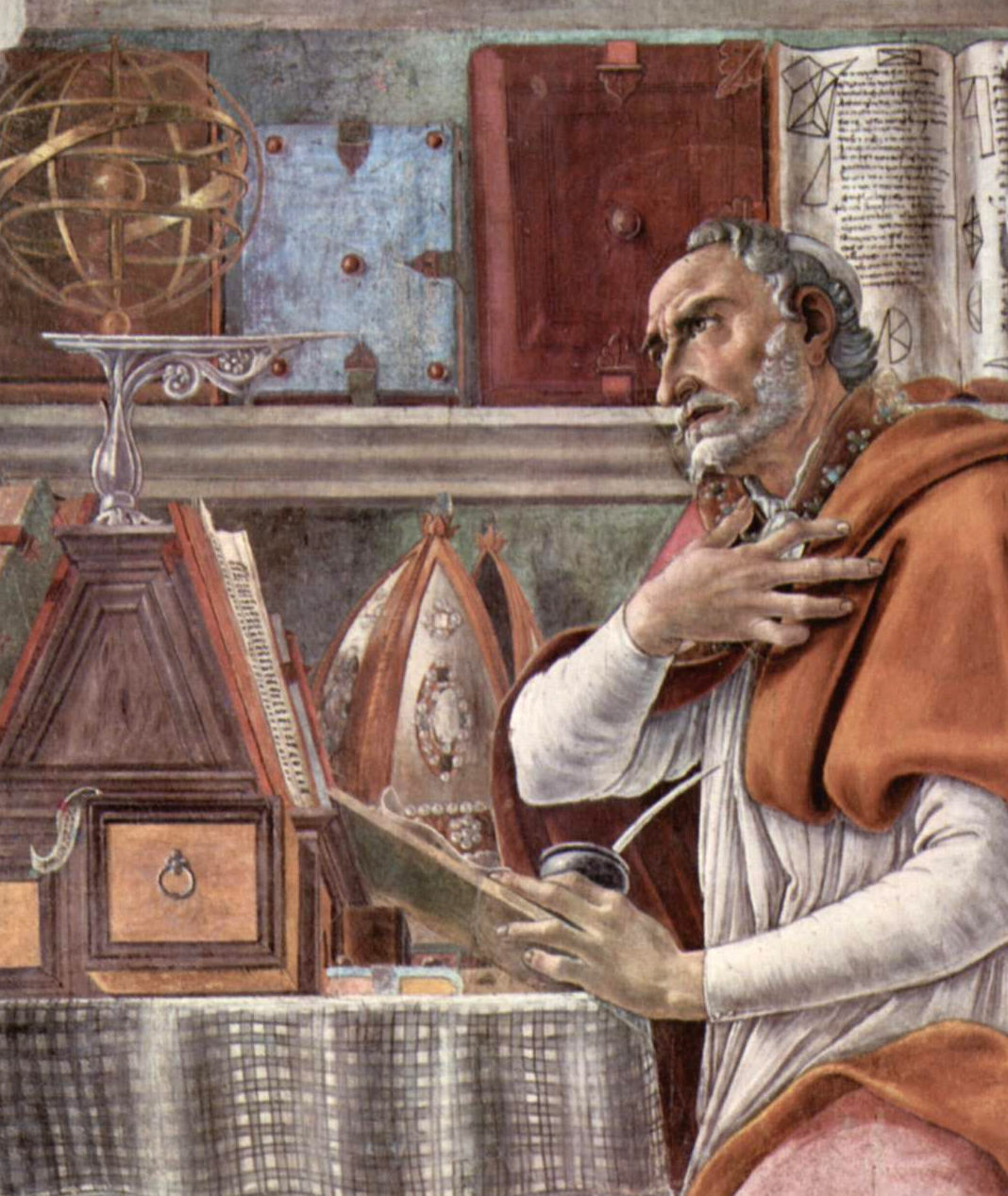
Augustine

Plain and simple, the position I hold is the position commonly called the “godly line of Seth” view. This position has historically been held by many Protestants, but was most famously championed by Augustine in his City of God. In City of God, Augustine spends the first half of the tome arguing in the negative against Augustine_of_Hippo_Sandro_Botticellithose who had claimed that Rome had fallen as a direct result of her abandonment of the Roman gods for Christianity. Augustine argued that those who worshiped the Greek and Roman gods worshiped demons, while those who worshiped Christ were worshiping the one, true and living God of the universe.
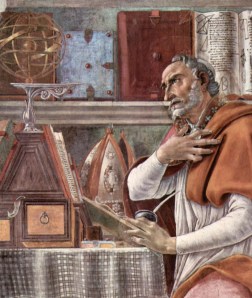
In the second half of this multi-volume work, Augustine develops a biblical theology of Christ. He traces through each book of the Bible a Christocentric hermeneutic of redemptive history. If you’ve never read City of God before, it is worth it just to see how he understands how God has worked through the different epochs of redemptive history to bring about His purposes.

History according to Augustine, more than anything else, is God’s story. However, it is not merely God’s story. History is more precisely the story of how God brings about His redemptive purposes through providentially directing the activities of the city of God and the city of man. From the dawn of creation, God has always had His people, and His people are distinct from all other people on the face of the earth.

Nehemiah Coxe

Nehemiah Coxe picked up this idea of tracing God’s redemptive activity through the word of God when he wrote Covenant Theology: From Adam to Christ. Coxe’s unique contribution was that he demonstrated how God’s redemptive work in redemptive history was uniquely covenantal. Of course, as everyone knows who is familiar with this work, Coxe largely borrowed from Congregationalist John Owen in setting out his framework.

Both Augustine and Coxe subscribe to the “godly line of Seth” view, but we should beware lest we subscribe to a view merely because it is affirmed by a theologian we respect. Our minds and our hearts must be bound to Scripture. We must never elevate a man or a creed on par with Scripture. With that in mind, let us take a look at some Scriptural proof for the “godly line of Seth” view.

Our First Parents
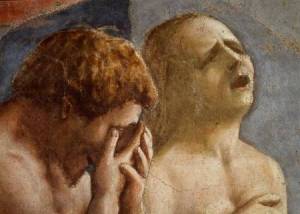
BEN63190In Genesis 1 and 2, we see that Adam and Eve were made holy and happy. They had never sinned, they were naked, and they were unashamed. God had only given them one rule, and that was that they should not eat of the tree of the knowledge of good and evil. As we know well, our first parents did eat of that fruit and, doing so, they plunged all of their progeny into sin and misery.

However, in Genesis 3, God offered mankind some hope. After having conducted His trial and found the man, his wife, and their deceiver guilty, God rendered His verdict. Upon the woman, He placed a curse, that she would have pain in child-rearing. Upon the man, he placed a similar curse, that he would no longer have joy in his labors. Before pronouncing these curses, though, God pronounced a curse on the serpent, a curse that came with hope for mankind.

“And I will put enmity

Between you and the woman,

And between your seed and her seed;

He shall bruise you on the head,

And you shall bruise him on the heel” (Genesis 3:15; NASB).

This pronouncement is what many theologians have labeled the proto-euangelion, which basically means the first gospel proclamation. In it, Adam and Eve were given a promise that one of their descendants would eventually set right all that they had destroyed in their rebellious act. Thus, we can imagine the effect that their oldest son’s fratricidal act would have on them.

Cain, Abel, and Seth

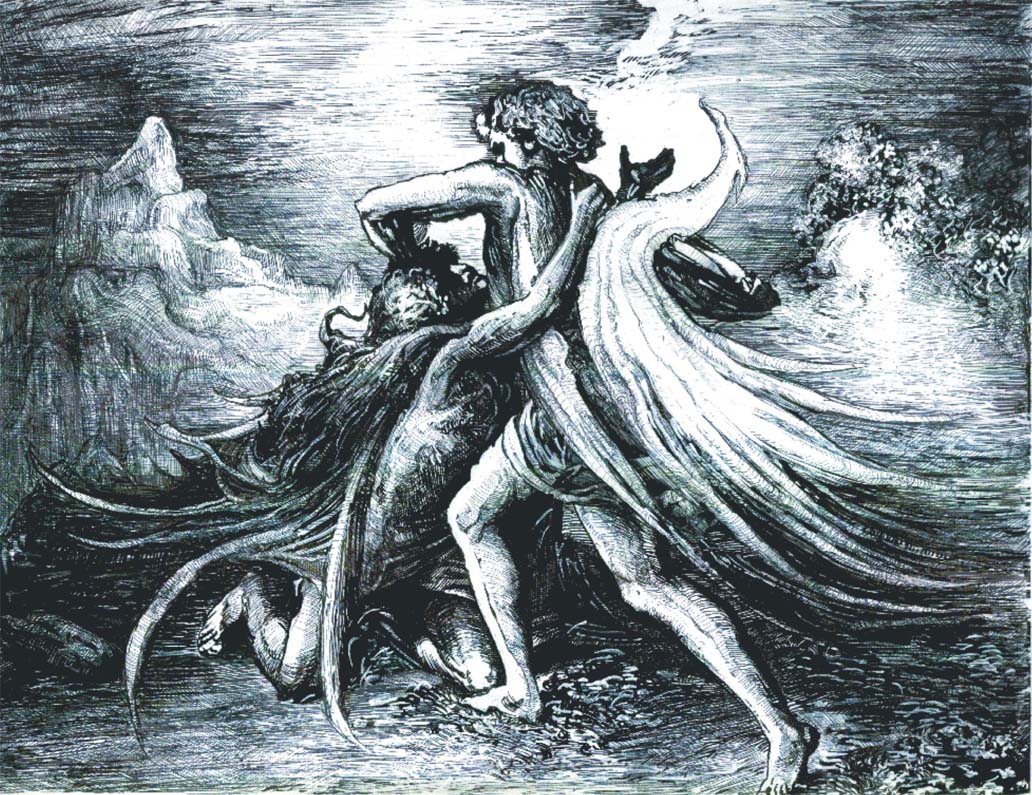
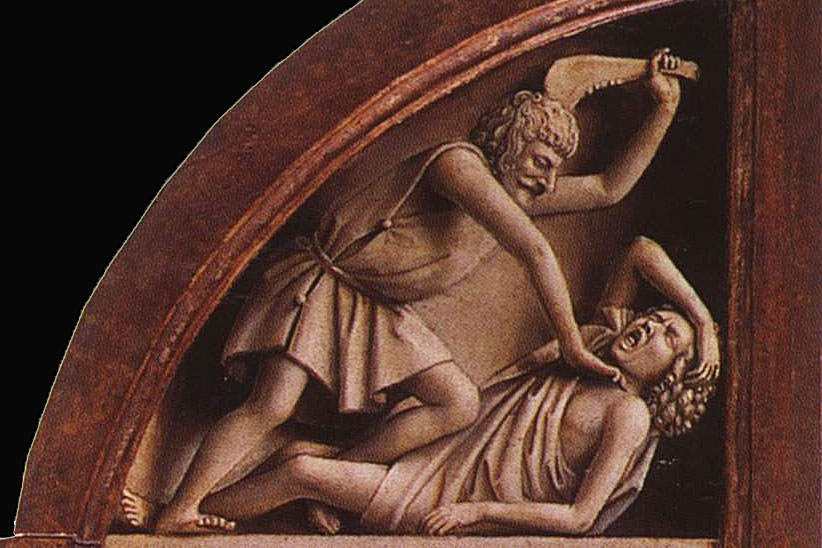
In Genesis 4, we witness the murder of one of Adam’s sons at the hand of his other son, likely the one through whom the promised Seed was expected to Caincome. With this act, Cain cast some doubt over the promise God had made on that dismal day in the garden. Through whom was the promised Seed to come? Certainly not Cain!
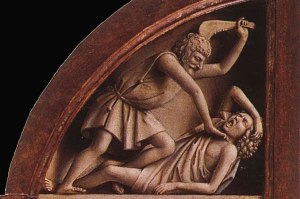
The second half of Genesis 4 and Genesis 5 serve as a contrast of sorts. After Cain kills Abel, his lineage is detailed for us in the remainder of chapter 4. It is filled with violent, evil men. Chapter Five, however, reestablishes hope for mankind. Adam and Eve have a third son, Seth, and through him come godly men such as Enoch and Noah. On the arrival of Noah, Bible translators provide for us a chapter break. Yet the story is not over.

Do Not Be Unequally Yoked

Just as mankind’s hopes were dashed at the murder of Abel, so too they were dashed just after the godly line of Seth was established. What Moses tells us is that even this godly line was compromised. In fact, it was so corrupted that God saw fit to destroy the earth with a deluge. How was this godly line of Seth compromised? Through marriage.

Throughout the Bible, God forbade His people from intermarrying with pagans and idolaters. He established godly lines (e.g. Abraham, Isaac, Jacob, Judah, David…) through whom He established His covenants and promises, and through whom He would eventually bring the Seed of Abraham: Christ. The “godly line of Seth” argument is that God did not begin this covenantal headship work with Abraham, but with that promise in Genesis 3.

God has always His people, and those people have always had earthly representatives. Today, the Mediator between God and man is the man Jesus Christ. When one is found to be in the people of God under one of these covenant heads, to marry outside of that line is synonymous with apostasy. It simply is not to be done.

To do so will lead to idolatry and sin, as it did for the Israelites in the days of Balaam and still does in the church today. God’s people are not to be unequally yoked. Rather, we are to remain faithful to the God who called us out from among the nations.

Applications

In addressing the identity of the sons of God in Genesis 6, we have examined the most common interpretation today, given a negative argument against it, and offered a positive argument in favor of my personal understanding of it. This post has already been rather long. Thus, in conclusion to our study, there are just a few applications I’d like to make.

The Analogia Fide

First, we ought always to be mindful of the fact that our interpretation of one text cannot cancel out our interpretation of other texts in the word. We must 46f1a1ed!h_300,id_1999,m_fill,wrecognize that, insofar as the word was written by one divine Author, it cannot contradict itself at any point. So, when the Bible teaches creation as a divine attribute (Psalm 33:6-9; 148:5; Isaiah 43:7; 45:12; Ephesians 3:9), we must recognize the utter blasphemy of attributing creative power to any created being. So, whatever we say about the ‘sons of God’ in Genesis 6, we have no liberty to say that they are angels who created flesh for themselves.

When people take hard to understand passages and use passages that are even harder to understand to try to explain them, there is always the risk of altering very important truths in other parts of the Bible. As such, we need to revive the old hermeneutical principle of analogia fide, or the analogy of the faith. This principle is simple. It asserts that we interpret the less clear parts of Scripture in light of the more clear parts. With this principle as our guide, we will be less likely to try to apply the difficult writings of Peter to the less difficult passage in Genesis 6, obscuring its more rich meaning.

Which of the Angels?

Second, let us glory in our place in creation. When we understand that Christ didn’t go and make proclamation to angels in hell, it allows us to affirm with the author of Hebrews the true goal of the gospel. Christ came to bring many sons to glory, not from the hosts of fallen angels, but from his brothers in the flesh (Hebrews 2:9-13). “For assuredly He does not give help to angels, but He gives help to the [descendant of Abraham” (vs. 16).

Not only is Christ exalted above the angels, but He also secured a place for His brethren above the angels in glory. Our eschatological place in creation has been established by our victorious Savior, and He is not ashamed to call us brothers. What a place of significance this truth affords us. What dignity we have above even the angels!

The God of Promise

promisesThird, let us recognize the fact that God is faithful. Whatsoever He has promised, He will deliver. When Cain killed Abel, God’s promise stood. He provided a way through the godly line of Seth. When Adam died and all seemed lost, within the year God took Enoch demonstrating that He is a God of deliverance. When the godly line of Seth began to intermarry with heathen women and abandon God, He provided an ark of salvation. When God had been silent for hundreds of years, Rome had conquered Israel, and all once again seemed lost, God finally sent the Seed of the woman to crush the head of Satan and deliver His people from their sins.

God has met every promise He ever made. He is the God of promise, and He will remain faithful to the end. Let us glory in our great God of promise!