A Little Time With The 1689: Day 257

Day 257

Of Christian Liberty and Liberty of Conscience.

Chapter 21, Paragraph 2.

“God alone is Lord of the conscience, and has left it free from the doctrines and commandments of men which are in any thing contrary to his word, or not contained in it….”

Scripture Lookup

James 4:12

Rom. 14:4

Acts 4:19,29

1 Corinthians 7:23

Matthew 15:9

Reflection

Who sets the standard? Who makes the rules that we are to follow? Whose commands ought we to obey?

God alone sets that standard we are to follow. Through Christ alone has our liberty been purchased, and it is to Him alone that we owe our allegiance. As our Savior, Judge, and Lawgiver, God has the prerogative to declare what laws we are to obey.

There is no obligation to obey any other command that is not found in Scripture, or that contradicts Scripture. This is freedom of conscience. Such a freedom should be held most dearly especially by those who align themselves with the Particular Baptists of the past. Such brothers and sisters were persecuted for refusing to observe certain practices, convicted that such practices were not commanded by God. Is it necessary to baptize the children of believers? Baptists do not find such a doctrine contained within Scripture, and may even argue that such a practice is contrary to Scripture. We are therefore freed from following a tradition of men. Other traditions and practices warrant examination as well: are we humbugs if we don’t celebrate Christmas? There are many traditions that upon second thought are not found in Scripture, and have no obligation upon the Christian.

However, such a freedom does not mean that we just flippantly tell others “You’re not the boss of me!” whenever we hear something we don’t like. We have a charge to know what is commanded in God’s word. Studying the Scriptures to see what is commanded should be a characteristic of every believer. Careful consideration should inform our consciences, so we may clearly say that we do not find such commands in Scripture.

Questions to Consider

  • Are there any traditions of men that you have felt obligated to obey?

A Little Time With The 1689: Day 256

Day 256

Of Christian Liberty and Liberty of Conscience.

Chapter 21, Paragraph 1.

“….All which were common also to believers under the law for the substance of them; but under the New Testament the liberty of Christians is further enlarged, in their freedom from the yoke of a ceremonial law, to which the Jewish church was subjected, and in greater boldness of access to the throne of grace, and in fuller communications of the free Spirit of God, than believers under the law did ordinarily partake of.”

Scripture Lookup

Galatians 3;9,14

John 7:38,39

Hebrews 10:19-21

Reflection

The freedoms that Christ purchased for His people are for all of His people. Throughout history, every elect believer has received the liberties procured for them by Christ: freedom from the guilt of sin, freedom from bondage to Satan, freedom from everlasting damnation, and so on. Believers before the coming of Christ also enjoyed such liberty. They did not have to fear condemnation, or the curse of the Law, for they had faith in the One that was to come.

Although the price of Redemption was not actually paid by Christ, till after his Incarnation, yet the virtue, efficacy, and benefit thereof were communicated to the Elect in all ages successively… (LBCF 8.3)

While both Old and New Testament believers partake of the liberties Christ has purchased, those believers on this side of the cross have been given a fuller extent of those liberties. The ceremonial law is no longer binding on believers, as the One to whom it pointed has come. Old Testament saints, however, were still to sacrifice constantly for sin, obeying the commands of God. Through Christ’s intercession, we can boldly approach the throne with a greater confidence than those saints that lived before Him. While believers in the Old Testament also were regenerated, the intricate knowledge of regeneration, and the work of Spirit, were not as clear to them. The Holy Spirit guides us into all truth, and that truth is revealed to a greater extent to Christians through God’s Word:

The whole Counsel of God concerning all things necessary for his own Glory, Man’s Salvation, Faith and Life, is either expressly set down or necessarily contained in the Holy Scripture…” (LBCF 1.6)

Our union in Christ enables believers from all epochs to share every spiritual blessing in common. Yet the fullness of time has come, and we now see in greater part the glory of salvation through Christ. Old Testament saints need not be pitied, but we should rejoice that much more in our deeper liberty through Christ.

Questions to Consider

  • What do Christians have in common with Old Testament saints? What do we have that is different?

A Little Time With The 1689: Day 255

Day 255

Of Christian Liberty and Liberty of Conscience.

Chapter 21, Paragraph 1.

“…as also in their free access to God, and their yielding obedience unto Him, not out of slavish fear, but a child-like love and willing mind….”

Scripture Lookup

Romans 8:15

Luke 1:73-75

1 John 4:18

Reflection

Fear.

As sinners, we have much to fear. Fear of condemnation, fear of the Law, fear of this evil world, fear of future torment. As believers, through our union with Christ, we need not fear those things any more. He took our condemnation. He fulfilled the Law. He defeated evil. We are safe from harm when we are found in Him.

Freed from such a miserable state of being and a horrific future, do we now cower in fear before God? Certainly we ought to be humbled and awe-struck at His very being. But do we need to be apprehensive when approaching Him? Will He turn angry with us when we fail?

Look at who God is. Almighty, all-knowing, everywhere present and holy, yet also most loving and abundant in goodness. This God sent His Son, who lowered Himself and took on human flesh. He endured the terror of this evil world. He suffered the wrath due to our sin. He died so that we may live. In rescuing us, Christ has drawn us so closely to Himself that when God looks at us, He sees Christ’s righteousness as ours. Nothing hinders us from accessing God.

Purchasing for us the freedom to access God, Christ has also procured for us the desire to access God. When we are regenerated, we are enabled by the Holy Spirit to will and do that which is pleasing to God. Enlightened by Him as to His will, we wish to obey Him, and freely act to do so. Knowing the love the Father has lavished on us, we do not need to fearfully obey Him. We are free to obey Him.

Questions to Consider

  • What motivates your actions: love of God, or fear of Him?

Book Review: The Crook in the Lot by Thomas Boston

The Crook in the Lot by Thomas Boston is a real Puritan classic that I just happened to put in my Amazon shopping cart to get free shipping last month, but I am glad that I did! And I want to encourage you to get a copy of this one, and treasure it for the true gem that it is.

Boston wrote this book as an in-depth contemplation of Ecclesiastes 7:13, which says:

Consider the work of God: who can make straight what He has made crooked?

As Christians we encounter a variety of difficult circumstances and situations in our lives (or our ‘lot’). For some people, the difficulty in our lot may be seen in physical problems with our bodies (i.e. health problems, illness, deformities, weakness, barrenness, beauty, etc.). For other people it may deal with their honor, or the failure to receive the honor and respect due to them. Still others may deal with difficulty in their vocations and stations in this world, whether it is ongoing difficulty on their job, frustrated hopes and expectations, or even a desire to do something else while you have to remain where you are. And another area of difficulty for many people lies in their relationships with family, friends, the world, and even the Church. However, as Boston continuously points out, it does not matter where your ‘crook’ is in your lot of life, it is of highest importance that we, as Christians, have the proper view of these difficulties and look upon them with the eye of faith, not just by our natural senses. And with a proper view, these difficulties will become advantageous to us as we learn how to adjust our deportment (loved that word) under them.

If I had to capture the main points of this book, they would be:

  1. The hand of God is unmistakably involved in every aspect of our lives, both small and great. If He has decided to put a crook, or a difficulty, in some aspect of your life, you will not be able to change or alter that difficulty until He wills it to change. So you ought to quiet yourself with the knowledge that regardless of the difficulty, God is directly involved and is using this for your good in Him.
  2. Humility is of the utmost necessity in the Christian life, and if you will be loved and cared for by God, you must learn humility. However, humility is oftentimes very hard to come by in the Christian life because we wrestle with lofty opinions of ourselves and what we are due. Thus, God teaches us humility through the crooks in our lot, and His aim is to make this a thorough work. So, though we may be content to just deal with our various difficulties in life and work through them, looking for better days ahead, God desires that we learn how to lower our spirits down to our lots so that we indeed calm and quiet our souls as a weaned child with its mother (Psalm 131). The lowering down of our spirits in the midst of crooks is probably the hardest lesson to learn for the Christian; however, it yields the sweetest fruits.
  3. As we perform the duties of humility, we have this promise from the Lord that He will raise us up out of our difficulties (straighten the crooks) in due season. The due season happens at different times for each Christian, as the Lord sees fit. And there are some crooks that will not be straighten until we close our eyes for the last time and take our last breath. Nevertheless, we can trust that the Lord will exalt the humble at the appointed time, not a moment too late and not a second too soon.

There is so much more I can say about this book, but I will just end with this last point:

In these days, there is so much discontentment and dissatisfaction among people with their lot in life, even among professing Christians. Protests, rallies, blogs, and social media blasts abound as people take to voicing all of their problems with a variety of things around them that may or may not be actually affecting them. Nevertheless, the issues of fairness, equality, privilege, and rights dominate the news, and I found this book to be an extra tether for my soul, a balm for my aching mind, and a sweet, familiar melody to my heart that reminded me of the very basic things that I learned at the very beginning of my Christian walk. That is, we may not understand the ‘why’ behind all of the things in our lives right now, but we will understand them all better by and by.

Brothers and sisters, I pray that you get your hands on this book soon, and may you see with the eyes of faith in all of your crooks that the Lord has allotted to you.

Baptism and the Unity of the Church

In dealing with the numerous struggles with fellow believers within the local church, I am constantly drawn to the same question that was raised by the apostle Paul regarding our sanctification:

Do you not know that all of us who have been baptized into Christ Jesus were baptized into His death? Romans 6:3

Paul’s question in this passage appeals to both the reality of baptism and to the fundamental meaning of baptism in the Christian life. Because we have “been baptized into Christ Jesus”, this passage symbolizes what has been done for us. At a fundamental level, baptism points to Jesus Christ and to our union with Him by faith. As Sinclair Ferguson teaches, baptism functions as a type of “naming ceremony”

You are being named for the Father, the Son, and the Holy Spirit. The Father has sent His Spirit to unite us to Jesus Christ. In Him, we are given the rich inheritance of all the gracious resources, we will ever need to be brought from sin to salvation, from death to life, and from earth to heaven. Devoted to God, p. 76

In this way, we are called to focus and look at what baptism means. Baptism is a visible sign of our union with Christ in His death and resurrection. It is a picture of our “ingrafting into Christ, of remission of sins, and of his giving up unto God, through Jesus Christ, to walk in the newness of life” (2nd London Baptist Confession of Faith, 29.1). As faith clings to this truth of the gospel, we are called to remember what it tells us about who we are in Christ. This is why many Reformed catechisms instruct us on remembering or “improving upon” our baptism.
9468d1e5e5d1a99fd5ed8c631004ce0a

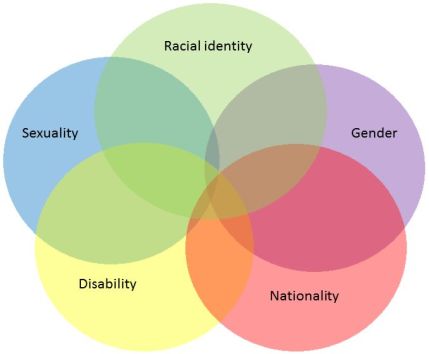
In my early Christian days, I understood the truth of Christian baptism intellectually. In reflecting on my Christian life, I realized that it has taken many more years to grasp this truth emotionally and instinctively because baptism directly challenges all earthly conceptions of identity. This was not because I struggled with concepts of identity as a young Christian. To the contrary, I had a very firm and well-established identity in my mind as a young man. Before I was a Christian, when I described myself to others, I would identify myself with my ethnicity (Black), my nationality (American), my vocation (aspiring scientist), my political views (paleolibertarian), and my religious views (agnostic/atheist). When I was converted, those primary identification markers remained, except that I exchanged agnosticism for Christian. I was taught by my pastors that Christ must have preeminence over all, but honestly, in my early Christian life, my self-image could be pictured as a Venn diagram of various identification markers (with the Christian identity as one of them).

Over time, I’ve realized that reflecting on the meaning of baptism has a profound impact on matters of identity. Baptism does not create a new identity which exists alongside other earthly identities; rather baptism says that “you have died and your life is hidden with Christ in God” (cf. Colossians 3:3). In other words, Christian baptism doesn’t create an identity crisis; baptism proclaims that the old life in Adam is gone and the new life in Christ has begun.

For many, the old man/new man dynamic is usually interpreted solely in the context of sin within individual Christians. However, the old man/new man dynamic has a wider context. The death of the old man occurs within the context of being severed from our union with Adam (cf. Romans 5:12-21) and of being delivered from this present evil age (cf. Galatians 1:4). Likewise, our new life in Christ occurs within the context of being united to Christ (cf. Romans 6:1-3) and of being delivered to the Kingdom of Christ (cf. Colossians 1:13). Thus, when one is in Christ, he is a “new creation” (cf. 2 Corinthians 5:17). Our Christian baptism testifies that the new age (with its new powers and its new ways) has broken into this evil age to deliver us from the present evil age. This implies that the old lenses in which we view each other and view this world has ended.

How does this apply to identity? For many Americans, if we were honest with ourselves, we have been trained to view ourselves, not in light of our baptism but in light of all of these other identities. We currently live in a highly racialized, genderized, and politicized society, and much of the identity politics common in America has entered into local churches and denominations. This has led to unnecessary discord and division among Christians within the Church.

However, Christian baptism testifies that we are united to Christ and that we are united to each other. Baptism testifies that we have all been clothed in Christ. This is not an aspirational statement, but it is a fact because of what Christ has done. Within the scope of our union with Christ, there is neither Jew nor Greek, neither slave nor free (i.e. class distinctions), neither male nor female (i.e. gender/sex distinctions), and neither Scythian nor barbarian (i.e. ethnic/national distinctions) [cf. Colossians 3:11, Galatians 3:28]. The lenses which our society has trained us to view each other and this world are not valid for those in union with Christ.

Because of the gospel, the Church is the place where those who were formally enemies (whether for social, historical, or political reasons) now genuinely love one another. This point cannot be emphasized enough because human history is truly a history of conflict. We see this in the biblical narrative starting from Genesis 4 and these various conflicts remain in the background through Old Testament history. In light of human history, the true question is NOT why nations and societies have conflicts; rather, the true question is how do nations and societies have peace with each other? In the gospel, not only has Christ removed the long-standing hostility between Jew and Gentile; Christ has broken down the hostility between people groups and has formed one new people – the Church (cf. Ephesians 2:11-22). This is why it is remarkable that the Church will be known for its love for one another, regardless of their history (cf. John 13:35).

Baptism points to all of these marvelous realities that form our identity and unite us together, but it is true that Christians live in the midst of two ages (“the present evil age” and “the age to come”). The powers of these two ages remain competitors for our lifestyle as Christians and our fellowship with one another in the Church. This is why we must constantly remember our baptism. It is known that when Martin Luther was fighting temptation, he would remind himself “I am baptized”. I believe that same exhortation is needed today.

When we are tempted to question our identity in Christ or to judge our brothers and sisters in Christ based on non-Christian criterion, we must constantly remind ourselves that we have been baptized into Christ. When we are tempted to be absorbed into conversations of race/ethnicity and to view ourselves and others through the lens of ethnic identity and culture, we must still constantly remind ourselves that we have been baptized into Christ. Thus, we are and belong to a different people. We must remember what we have been baptized into His most holy name and that we have been “renamed” in Christ as members of Christ’s body.

As we remember our baptism more and more, we will develop a visceral and gut reaction to anything that seeks to undermine the truth of our baptism and introduce schism and division within the Church. When we remember our baptism, we are spurred on to have our human relationships defined by holiness and righteousness, as is proper for those who have given up their names to Christ, and to walk with each other in brotherly love, as is proper for those baptized by the same Spirit into one body.

A Little Time With The 1689: Day 254

Day 254

Of Christian Liberty and Liberty of Conscience.

Chapter 21, Paragraph 1.

“…from the Evil of Afflictions; the Fear, and Sting of death, the Victory of the Grave, and Everlasting Damnation:…”

Scripture Lookup

Romans 8:28
1 Corinthians 15:54-57
2 Thessalonians 1:10

Reflection

Christ has purchased liberty for His people. Through our union with Christ, we receive multiple freedoms upon regeneration. Among these are:

  • freedom from the evil of afflictions,
  • freedom from the fear and sting of death,
  • freedom from the victory of the grave, and
  • freedom from everlasting damnation.

Those who are in Christ no longer experience the evil of afflictions. This may puzzle some readers. Don’t Christians still endure afflictions? How are we free from such pain and hardship? It is not the affliction from which we are freed, but the evil of afflictions. “…after a most special manner [the Providence of God] taketh care of his Church, and disposeth of all things to the good thereof.” (LBCF 5.7)

The same objection may be made of freedom of the fear of death as of the evil of afflictions. “I still fear death – why am I not free from the fear of it?” Dying is unnatural. Death is an enemy. But for the Christian, it is a defeated enemy. Its sting is removed. While we may be apprehensive concerning death, we are not terrified by it.

Our death is not a satisfaction for our sins, but the abolishing of sin and our passage into everlasting life.

-Hercules Collins, An Orthodox Catechism

Death will never be victorious over the Christian. Through Christ we have freedom from the grave’s victory. Life is ours – eternally! “I came that they may have life, and have it abundantly.” (John 10:10) Those outside of Christ will receive everlasting damnation. Such torment and condemnation is without end. Believer, Christ has freed you from this!

 Questions to Consider

  • When you think of afflictions and death, how do you react? Are you reminded of Christ, or do you retreat in fear?

A Little Time With The 1689: Day 253

Day 253

Of Christian Liberty and Liberty of Conscience.

Chapter 21, Paragraph 1.

“The Liberty which Christ hath purchased for Believers under the Gospel, consists in their freedom from the guilt of Sin, the condemning wrath of God, the Rigour and Curse of the Law; and in their being delivered from this present evil World, Bondage to Satan, and Dominion of Sin;…”

Scripture Lookup

Galatians 3:13
Galatians 1:4
Acts 26:18
Romans 8:3

Reflection

Freedom! Christ has bought freedom for His people. Through His life, death , and resurrection, Christ has secured liberties for believers, bestowed upon them when they are regenerated. “If the Son makes you free, you will be free indeed.” (John 8:36) What are the liberties that believers enjoy?

Because of Christ, believers have:

  • freedom from the guilt of sin. No longer do we have to stand condemned because of our status as corrupted humans. Christ has paid the penalty for our sin.
  • freedom from the condemning wrath of God. The suffering Christ endured on the cross will never be felt by us. Ever.
  • freedom from the rigour of the Law. Because Christ perfectly fulfilled the Law on our behalf, we do not have to live up to the law for salvation.
  • freedom from the curse of the Law. “Christ redeemed us from the curse of the Law, having become a curse for us—for it is written, ‘Cursed is everyone who hangs on a tree'” (Galatians 3:13) Death is not a curse for the believer, for Christ has removed its sting.
  • deliverance from this present world. However much it beckons us to join, Christ has set us free from its imprisonment.
  • deliverance from bondage to Satan. As the hymn states, “The Prince of Darkness grim, we tremble not for him…” Christ has freed us from Satan’s tyranny. We are His subjects now, never again to be ruled by the devil.
  • deliverance from the dominion of sin. Christ has set us free; we are no longer slaves to sin.  “…through the continual supply of strength from the sanctifying Spirit of Christ, the regenerate part doth overcome…” (LBCF 14.3) Because of Christ, we no longer need to succumb to sin.

And this is not all!

The liberty we have because of Christ is immense and vast. Praise Him for all He has done!

Questions to Consider

  • Christian, are you living in light of the freed Christ has bestowed upon you?

A Little Time With The 1689: Day 252

Day 252

Of the Gospel, and of the extent of the Grace thereof.

Chapter 20, Paragraph 4.

“Although the gospel be the only outward means of revealing Christ and saving grace, and is, as such, abundantly sufficient thereunto; yet that men who are dead in trespasses may be born again, quickened or regenerated, there is moreover necessary an effectual insuperable work of the Holy Spirit upon the whole soul, for the producing in them a new spiritual life; without which no other means will effect their conversion unto God.”

Scripture Lookup

Psalm 110:3

1 Corinthians 2:14

Ephesians 1:19,20

John 6:44

2 Corinthians 4:4,6

Reflection

You can ask nicely. You can plead. You can beg. You can put on the biggest light-and-music spectacular ever recorded. All of those may move men to tears or evoke emphatic commitments to change. Without the declaration of the Gospel, none of that will convert a sinner. The message of Christ, and His mediatorial work on behalf of sinners, must be present. There can be no salvation without it.

The declaration of the Gospel cannot work on its own, though. The Holy Spirit must quicken and renew the sinner, enabling her to will that which is offered in the Gospel. If the Spirit does not regenerate someone, then they are still dead in their trespasses and sins. No amount of preaching the Gospel will effect change without the work of the Spirit.

Is the word & the Spirit enough to bring about regeneration? The actions of many churches say “No.” Money needs to be spent. Programs have to be in place. Look at how many attend flashy churches compared to “plainer” ones, and it appears the Holy Spirit needs a boost. Scripture tells us otherwise. The power that raised Jesus from the dead is the same power that changes hearts. The growth of the church in the New Testament was not due to the great music or children’s program. So no matter what you may lack in money or pizazz, declare the Word boldly. The Spirit will convert those that are His, when He sees fit.

Questions to Consider

  • Are you intimidated to share the Gospel? Why?

A Little Time With The 1689: Day 251

Day 251

Of the Gospel, and of the extent of the Grace thereof.

Chapter 20, Paragraph 3.

“The revelation of the Gospel to Sinners, made in divers times, and by sundry parts, with the addition of Promises, and Precepts for the Obedience required therein, as to the Nations, and Persons, to whom it is granted, is merely of the Sovereign Will and good Pleasure of God; not being annexed by virtue of any Promise, to the due improvement of men’s natural abilities, by virtue of Common light received, without it; which none ever did make, or can so do; And therefore in all Ages the preaching of the Gospel hath been granted unto persons and Nations, as to the extent, or straitening of it, in great variety, according to the Counsel of the Will of God.”

Scripture Lookup

Psalm 147:20

Acts 16:7

Romans 1:18-32

Reflection

We are commanded to proclaim the Gospel throughout the earth. But what happens if we don’t? Will those with whom we fail to share the good news approach us some day and say, “Why didn’t you tell me?!”

If salvation were up to us, we would be crushed under such expectations. Not only would we have to ensure our own salvation, but the salvation of every other person we knew would be solely dependent upon whether or not we made sure to tell them about Jesus. If we miss someone, we would have ourselves to blame.

Now, can someone be saved without hearing of Christ? No. Christians do have a responsibility to give an account for the hope that is in them. Yet ultimately God is sovereign over who hears the Gospel. Some nations have heard it in abundance; some nations have never heard it. Is the one nation somehow better than the other? Do they receive knowledge of the Gospel because they were more advanced intellectually? Of course not. Whatever nation hears the Gospel preached, it hears based on the counsel of God alone.

Especially for those Christians who are citizens of the United States, this truth should humble us. Such freedom has been granted in sharing the Gospel in this country that we sometimes assume that we deserve it. Keep guard against such airs of superiority. The blessing of the Gospel does not mean we are worthy.

Questions to Consider

  • Do you find yourself thinking that some peoples deserve to hear the Gospel over others?

A Little Time With The 1689: Day 250

Day 250

Of the Gospel, and of the extent of the Grace thereof.

Chapter 20, Paragraph 2.

“This promise of Christ, and salvation by him, is revealed only by the Word of God; neither do the works of creation or providence, with the light of nature, make discovery of Christ, or of grace by him, so much as in a general or obscure way; much less that men destitute of the revelation of Him by the promise or gospel, should be enabled thereby to attain saving faith or repentance.”

Scripture Lookup

Romans 1;17

Romans 10:14,15,17

Proverbs 29:18

Isaiah 25:7; 60:2,3

Reflection

Conversion does not happen by looking at the stars or gazing at a sunset. As beautiful as creation is, it cannot tell that Christ is the promised One who saves sinners. Only Scripture reveals God’s will for humanity concerning salvation. The Confession made this point back in Chapter 1:

Although the light of Nature, and the works of Creation and Providence do so far manifest the goodness, wisdom and power of God, as to leave men unexcusable; yet are they not sufficient to give that knowledge of God and His will, which is necessary unto Salvation.

This can be hard to accept, even for those who are regenerated and love Christ. What about those pagan nations who never hear the Gospel? Are they to be condemned without having a chance to hear? Yes, for they are without excuse. Without Scripture, there is no possibility of knowing Christ. There is no way of salvation without the revelation found in the Bible.

This also means that the Gospel must be spread in order for anyone to be saved. Again, this can be hard to accept, for it means that as Christians we have a responsibility, and one that includes some risk. Everyone can look at a flower and admire it; but tell people about the beauty of Christ and you may be mocked or despised. Friendships may be lost; material goods vanish; even your life may be taken. “Living out” the Gospel instead sounds so much easier than the alternative! But silence is not an option for those who love God, for if we love Him, we will keep His commands. We are commanded to declare Christ to others; let us not shy away from so doing.

Questions to Consider

  • Do you act as if you believe people can be saved without knowledge of Christ?