The Effects of Sin on Higher Education

As mentioned in previous blogs, I am a professor by vocation. Apart from research and teaching responsibilities, one of the important aspects of my daily job involves college service activities, which usually involves serving on campus-wide academic committees. One of the committees that I serve on is called the First Year Experience (FYE) committee. The FYE is an academic program designed to integrate new students into the academic and cultural community of the College. The courses in this program give new students an opportunity to work closely with faculty, smooth their transition to college, and provide them with the skills that will help them succeed throughout their academic careers.

During our normal meetings, there is a question that arises without fail: why are incoming students so bad? Most often, undergraduate faculty like to believe that all of the problems lay with the failures of high school education. However, we also have to look at ourselves because faculty that teach in graduate school programs, professional masters programs, and even seminaries, ask the same basic questions: Why are incoming students so bad? Why haven’t students developed sound critical thinking skills and effective learning strategies? Why do so few students take personal responsibility and initiative for their own educational and intellectual development? Why do so many students possess an infantile view of education in which they must be spoon-fed in order to learn? Why aren’t we producing the types of scholars and skilled professionals that are needed in a highly competitive global economy? These questions are not for secular institutions only. Faculty members at Christian universities pose the same types of questions as well.

There are many answers to these questions that usually deal with funding, institutional effectiveness, and innovative teaching methods. However, I want to address this question from a distinctly Christian perspective. From the numerous answers that I’ve read, I have not heard many commentators discuss how the obvious decline in Christian morality and ethics has affected the quality of our education system. As Christians, we are aware of how sin affects the whole man. In particular, we know that the presence of sin in our hearts negatively affects and undermines the human mind and intellect (otherwise known as the noetic effects of sin). In a sermon given at 2012 National Conference for Ligonier Ministries, R. Albert Mohler gives 14 different noetic effects of the fall

  1. Intellectual ignorance
  2. Intellectual distractedness
  3. Forgetfulness
  4. Intellectual prejudice
  5. Faulty perspective
  6. Intellectual fatigue
  7. Intellectual inconsistencies
  8. Faulty deduction and induction
  9. Intellectual apathy/laziness
  10. Dogmatism and closedmindness
  11. Intellectual pride
  12. Vain imagination
  13. Miscommunication
  14. Partial/incomplete knowledge

This is not meant to be an exhaustive list, but it is clear that many of these noetic effects describe the state of the typical American undergraduate student. We also know that there has been a noticeable decline in morality and ethics as our nation continues to reject the law of God as the absolute standard for morals and ethics. Because sin affects the whole man, it stands to reason that a culture that willfully turns away from Christian truth, morality, and ethics will have their hearts, minds, and intellect darkened. Consider the words of Paul

For although they knew God, they did not honor him as God or give thanks to Him, but they become futile In their thinking, and their foolish hearts were darkened. Romans 1:21

Now this I say and testify in the Lord, that you must no longer walk as the Gentiles do, in the futility of their minds. They are darkened in their understanding, alienated from the life of God because of the ignorance that is in them, due to their hardness of heart. Ephesians 4:17-18

As Christians, we know that the discipleship of the mind and the heart are inseparable. In other words, it is impossible to separate morality and education because they both are part of the discipleship process and thus they mutually influence each other. My basic thesis is that the darkening of the American heart (due to its rejection of God’s moral law) has invariably led to the darkening of the American mind in higher education. My goal in this series is to analyze how each noetic effect of sin has a direct impact on the current state and trajectory of modern American undergraduate education.

With this study I also want to offer a Christian response to the current problems in modern American education. I would like to state upfront that I will not be advocating for Christians to take over institutions of higher education (particularly for public, state-run institutions). However, there is legitimate Christian responsibility concerning these matters and these will be addressed in future blogs.

Complementarian Beliefs: Addressing Cultural Influences

I’ve been thinking long and hard about how I could critique egalitarianism in a meaningful way that can actually contribute, rather than repeat statements and conversations that have been made before. And considering the vast amount of resources that you can look at on the topic, I figure that it is best for me to keep this fairly simple and short. In the next few posts, I will be highlighting some key points in egalitarianism that kept screaming at me as I worked my way through the complementarian critiques.

What Culture?

One of the things that I appreciated most about the Danvers Statement was that the council provided a rationale for why they devised the statement in the first place. The influence of the culture was expressly mentioned twice in the rationale:

1. The widespread uncertainty and confusion in our culture regarding the complementary differences between masculinity and femininity;

10. and behind all this the apparent accommodation of some within the church to the spirit of the age at the expense of winsome, radical Biblical authenticity which in the power of the Holy Spirit may reform rather than reflect our ailing culture.

Now you can check out the Christian’s for Biblical Equality statement again, but you will see absolutely no mention or address of the culture or how the culture is influencing Christianity at all. And hearkening back to my college experience where discussing the influences of culture was the norm, this was one of the first things that stood out to me the most about egalitarianism. But let’s get on the same page first and define culture.

Culturethe sum of attitudes, customs, and beliefs that distinguishes one group of people from another. Culture is transmitted, through language, material objects, ritual, institutions, literature, music, and art, from one generation to the next. (The American Heritage New Dictionary of Cultural Literacy)

Learning this definition during my freshman year, I spent the remaining years of college often having internal dialogues about the things that went on around me, and I also asked myself a lot of questions. I knew that our country was founded with some Christian principles in mind, but our culture was far from being Christian or even God-centered. So I wondered if the whole world is not Christian, then what does a real Christian look like today, and should I be making an effort to be different than the rest of the world as a Christian? And if so, to what extent should I be different as a Christian? But, should I reject everything in the culture, or are there some things that can be useful to me as a Christian? Later on, my husband would ask me this question in a new way: How is every area of our lives distinctly Christian?

With this in mind, it has not appeared to me how egalitarians are addressing the influence of culture in their beliefs. Whereas complementarians directly mentioned the influence the culture is having in the hearts and minds of Christians throughout the church, egalitarians have largely remained silent on that particular topic. And it has caused me to wonder if egalitarians are aware that they are being influenced by the culture, and if they see the need to exercise discernment over how these things are influencing them.

As Christians, we have to be able to distinguish and isolate. We have to be able to discern, scrutinize, test, and yes, discriminate. We are called to destroy arguments and lofty opinions that assail the knowledge of God, and we must be able to buffet our own thoughts (as well as the thoughts of others) when they began to fall out of line with what is taught in the Word of God (2 Corinthians 10:3-6). We are engaged in a real spiritual war that has real consequences and real casualties, and I encourage my egalitarian brothers and sisters to consider these questions in light of that battle on their own time:

Do you believe that the culture has or is influencing your views and interpretations of the Bible? If so, is that proper, and should it be allowed to continue? Do you believe that there is a spirit of the age that you need to be aware of? And if so, how are you able to detect it and stand against it?

M’Cheyne Bible Reading Plan: March 31

Leviticus 2-3 (NASB, ESV, KJV, HCSB)

John 21 (NASB, ESV, KJV, HCSB)

Proverbs 18 (NASB, ESV, KJV, HCSB)

Colossians 1 (NASB, ESV, KJV, HCSB)

What’s Going on with the Daily M’Cheyne Reading?

I haven’t been asked, but I’m sure some of you may have noticed that it has now been about a week since my last M’Cheyne post. I usually draft the posts and schedule them to publish pretty far in advance so that I don’t miss a day. Just to let you know, we will get caught up, and the M’Cheyne plan will continue forward through 2015. It has just been a very busy couple of weeks.

As many of you may know, I recently accepted a call to the pastorate at Sovereign Grace Baptist Church in San Angelo, TX. I start preaching weekly this Lord’s Day, and we are set to move there on April 15th. Your prayers would be much appreciated in this new phase of our lives. I also appreciate your patience with me as I slowly get back into the swing of things and work on getting caught up with the M’Cheyne Plan. May the Lord richly bless you.

Billy

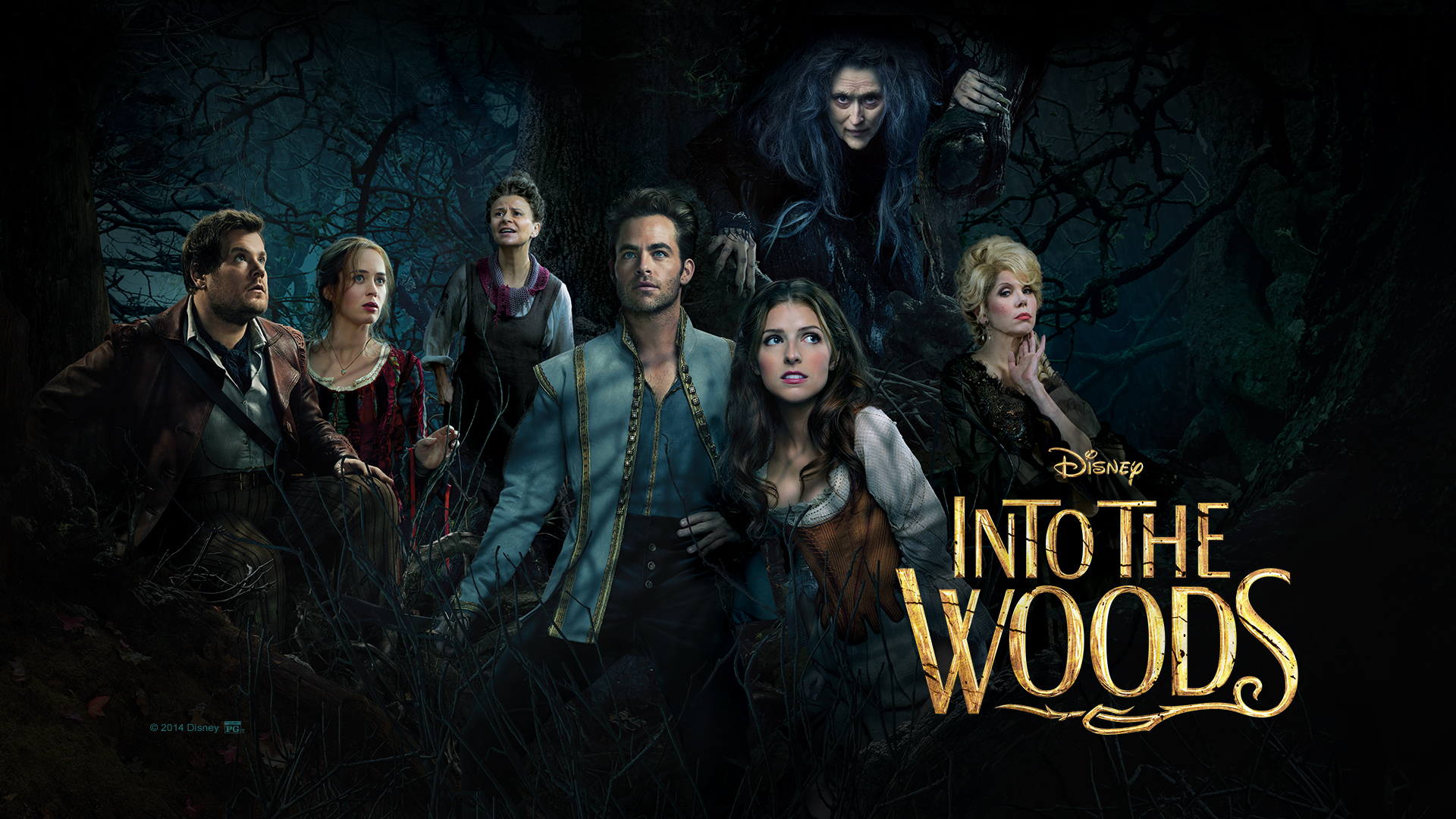
Into the Woods: A Preachy Postmodern Betrayal

Note: By “betrayal” I do not mean that I feel betrayed by the movie. Betrayal is a technical term used to describe a method of storytelling in which the audience is led to believe one thing is the case when, in the third act, it is revealed the storytellers have been misleading them all along.

Once every year or two, after my wife and I have watched a film that has told its story with a certain combination of uniqueness and excellence, I will turn to my wife and tell her, “This is the movie of the year.” These movies usually lend themselves to some of the most stimulating conversations in our homes. We recommend them highly to our friends and family, and we can’t stop talking about them for months. Into the Woods is not one of these movies.

In fact, I had the opposite reaction to this movie. For the first time since Lost in Translation, my experience with Into the Woods resulted in me using an absolute negative to describe a movie. What do I mean by “absolute negative”? An absolute positive might be a word like “best,” or “greatest,” or “most excellent.” Well, Into the Woods was the worst Disney movie I have ever seen.

Into the Woods is a smash-up of several different Brothers Grimm fairy tales: Little Red Riding Hood, Cinderella, Rapunzel, and Jack and the Beanstalk. Given some of the previews I’d seen of it, I was under the impression that it would be a largely accurate portrayal of the original stories and a respite from such horrible attempts as Jack the Giant Slayer and Hansel and Gretel: Witch Hunters. The cast also seemed to be well chosen with picks such as Meryl Streep, Johnnie Depp, and Emily Blunt. I was even pleasantly surprised to see Traci Ullman joining the cast.

In spite of everything it has going for it, Into the Woods is still the worst Disney movie I have ever seen. And yet, for the most part, I loved it. Wait, what?!? How could it be the worst Disney movie and yet, for the most part, Billy loved it? This will be the fun part of the review, just as it was the fun part of the movie for me.

What I Absolutely Loved

12ac4a20-70da-11e4-a4ab-bde19bada7f4_ITW_Yahoo_HeroThe first thing I loved about the movie were the songs (at least in the beginning). My favorite musical growing up had to have been Willie Wonka and the Chocolate Factory with Gene Wilder. There were great storyline elements, the characters were richly drawn, and there were lessons to be learned from the nasty little brats that accompany Charlie on his tour of the factory. Yet, the thing that most people remember about Willie Wonka is the amazing soundtrack. Few live-action movies measure up to Willie Wonka (song-wise) quite like Into the Woods. The songs are funny and the singing is top-notch. The lines can be hard to follow from time to time, but it’s all part of the fast-paced experience of the film.

The writing, acting, and special effects are all what one might expect going into a Disney movie. For the first two acts of the movie, the storyline weaves together fairly seamlessly, even though there are several stories being strung together all at once. The producers seem to have made some wise choices in the editing room as well, choosing to tell some of the more fantastic elements of the story through song rather than through long, drawn-out scenes that would have slowed down the pace of the movie.

Perhaps the high water mark of the movie for me was how true to the original Brothers Grimm fairy tales some of the elements of the stories were. Spoiler Alert!!! Just as in Brothers Grimm, Cinderella attends a three-day festival rather than a two-hour ball, oft visits her mother’s grave, and marries the prince only after her evil step-sisters lop off one her big toe and the other her heel to try to fit into the gold slipper. Jack comes off, just as in Brothers Grimm, as a klepto. Rapunzel is a peasant girl who is kidnapped by a witch, because her parents stole from the witch’s garden, she gets involved with the King’s son, and he gets his eyes gouged out by some thorns as a result of the witch’s jealousy. Many of these elements are taken straight from the original fairy tales and, surprisingly, they are pulled off with taste.

What I Absolutely Hated

Many movies are implicitly preachy. I don’t mind preachy; after-all, I’m a preacher. However, I do prefer for the preachiness of a movie to be implicit rather than explicit. In Into the Woods, there is a certain worldview that is preached, and it is by no means implicit. One article I read referred to the worldview as nominalism, an ancient Greek philosophical worldview. However, I think that gives the writers too much intellectual credit. Rather, what I got from the movie is more akin to “the spirit of the age.”

What it offers is a post-modern, relativistic worldview in which right and wrong are oppressive concepts and lethal when introduced into the philosophical veins of little children. Parents are the greatest of oppressors, and authority figures in general, but “moral” authorities specifically, should be undermined at all costs. Again, I don’t mind preachy, but this worldview is woven into song and spoken with dogmatic fervor as the way that we all ought to think about the world around us. I’ll take my post-modern relativism with a little more subtlety and implicitness, thank you!

The worldview and the preachiness weren’t the worst part of it all for me, however. It was the fact that it came without warning in the third act. In storytelling, the worst thing a writer / storyteller can do is betray his audience. If the story is a ghost story, you don’t wait to reveal supernatural elements until the third act. You slowly introduce them here and there, opening up your audiences’ minds to the possibility of ghosts along the way. Otherwise, when they get to the end of your story and find that it was a ghost all along, they will feel cheated.

In Into the Woods, there is no suggestion along the way that you are going to be preached at in the third act. Spoiler Alert!!! They don’t tell you that suddenly, and without warning, the baker’s wife and Cinderella’s prince are going to start making out. They don’t tell you that concepts such as right and wrong, and our ability to distinguish between them, even whether or not we should attempt to distinguish between them, are going to be questioned. No, they don’t just question moral absolutes, they condemn with strong words the idea that we should teach children to see the world in such a way.

Conclusion

This movie is utterly deplorable. For all of its greatness in the first and second acts, it pretty much shoots itself in the head and lights itself on fire in the third act. I give it zero of a possible five stars.