CCF Episode Twenty-Four: Christian Liberty According to the 1689 (Part Two)

CredoCovPodcastMaster

In this episode, JD and Billy sit down to discuss Christian Liberty in light of The Baptist Confession. Featuring music from Nora Bayes

MP3 Download | stream:

For further study on the history of alcohol in America and the history of the use of grape juice in communion listen to this sermon delivered by Arden Hodgins.

Subscribe to future podcasts and leave us a review on iTunes: RSS | iTunes  

For further study:

BaptistConfessionLeather1689


The Baptist Confession & The Baptist Catechism
edited by James Renihan

We’d love your participation. Contact us with your comments and questions about the confession’s contents:

CCF Episode Twenty-Three: Christian Liberty According to the 1689 (Part One)

CredoCovPodcastMaster

In this episode, Billy and JD sit down to discuss Christian liberty as it is laid out in The Baptist Confession. Featuring music from Josh White and Stephen the Levite.

MP3 Download | stream:

“Modern Christians seem to marginalize the doctrine of Christian liberty. The subject is rarely discussed in any systematic theologies. Even practical books on Christian living often gloss over the topic. For some, the doctrine of Christian liberty is just not that important in relationship to other doctrines of the faith. For others, the doctrine of Christian liberty is too controversial. Consequently, many modern Christians fail to give this doctrine the attention it deserves.” – from Dr. Bob Gonzalez over at It Is Written, read more…

“Many of today’s young evangelicals have happily thrown off the legalistic fundamentalism of their childhood. They’ve come to a greater understanding of God’s abundant grace, and the gospel has liberated them from slavery to guilt and fear. That’s a very good thing. But I submit that recovering the gospel alone isn’t enough to keep legalism at bay. We need a renewed emphasis on the law of God or else legalism will inevitably reemerge. Specifically, we need a clear emphasis on (1) the law as a covenant, and (2) the law as a standard or rule.” – from Tom Hicks over at The Blog (Founders), read more…

Subscribe to future podcasts and leave us a review on iTunes: RSS | iTunes  

The book we mentioned:

BaptistConfessionLeather1689


The Baptist Confession & The Baptist Catechism
edited by James Renihan

We’d love your participation. Contact us with your comments and questions about the confession’s contents:

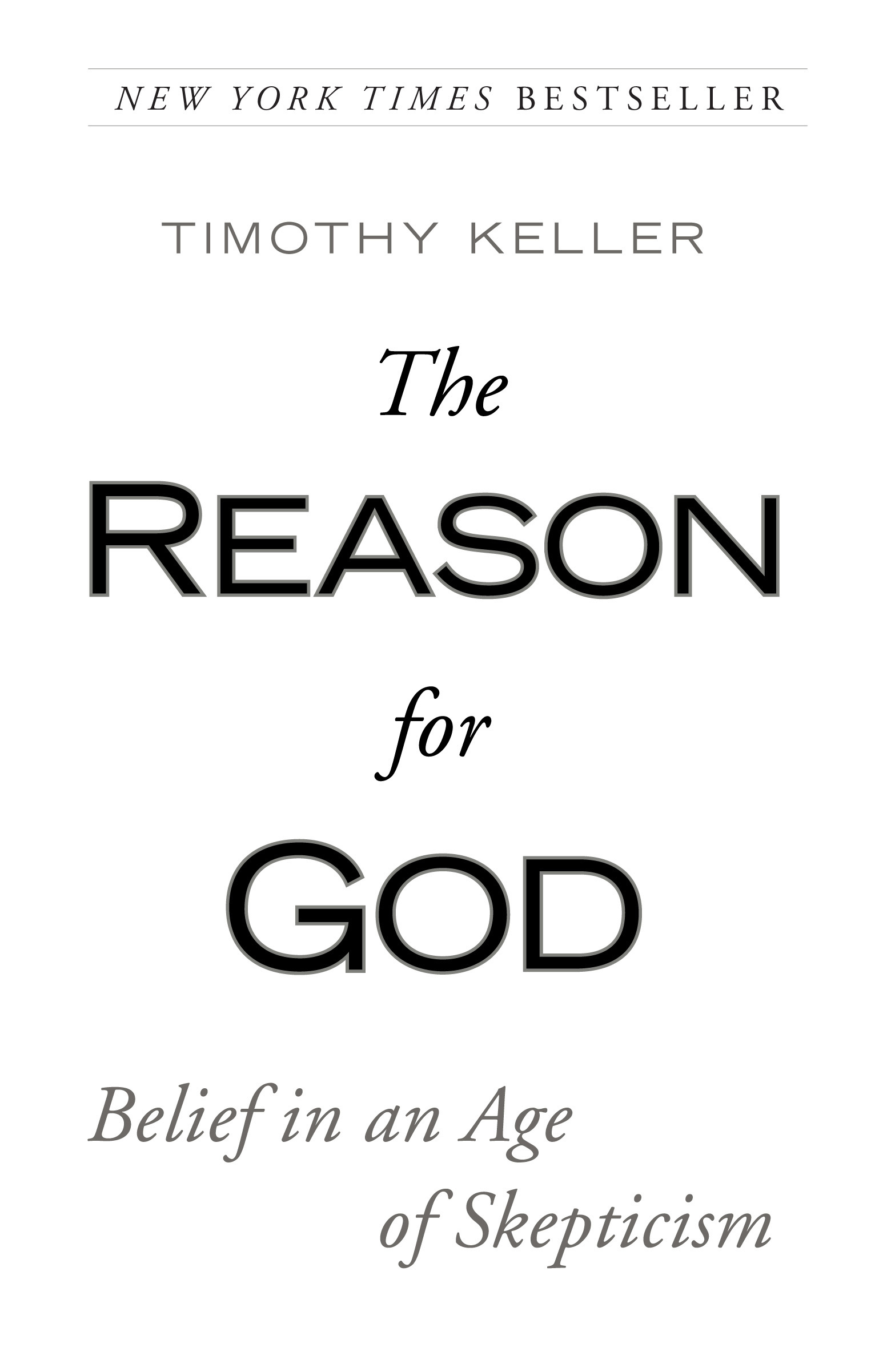
Book Review: The Reason for God by Timothy Keller

Keller, Timothy. The Reason for God: Belief in an Age of Skepticism. New York: Riverhead Books, 2008. 254pp. $16.00.

0cec69c028853f708858c875b6693795_400x400In his 1952 book by the same name, C.S. Lewis attempted to defend what he coined ‘mere’ Christianity. He described Christianity as a house that included Roman Catholics, Eastern Orthodox, and various strands of Protestantism. When a person is first converted, that person is a mere Christian in the great hallway of the house. From that hallway, a mere Christian can and should choose to go into one of the various rooms (denominations). Lewis was not as concerned with getting unbelievers into his particular room as he was with getting them into the great hallway. In keeping with Lewis’ emphasis on converting unbelievers to mere Christianity, Timothy Keller, pastor of Redeemer Presbyterian Church in Manhattan, seeks to meet unbelievers in their doubts and lead them into the great hallway. In Keller’s own words, “I am making a case in this book for the truth of Christianity in general—not for one particular strand of it” (121).

Summary

In The Reason for God, Keller strikes a very pastoral, almost conversational tone. He is not primarily speaking to Christians; his intended audience is made up of doubters. Like C.S. Lewis’ Mere Christianity and Cornelius Van Til’s Why I Believe in God, rather than being an apologetics textbook, The Reason for God presents as a conversation piece for Christians and unbelievers. The main body of the book is broken up into two main parts—Part 1: The Leap of Doubt, and Part 2: The Reasons for Faith.

The Leap of Doubt

In this section, Keller addresses a host of misconceptions about God and Christianity. In the first chapter, he addresses the assumption that exclusivity in religion leads to bigotry by demonstrating that Christianity, while being exclusive, is a religion comprised of members who should themselves have been excluded. Writing Chapter Two, in dealing with the problem of suffering, Keller paints pictures of God and of heaven that are so desirous that, in theory, it retroactively erases all pain experienced this side of death.

Chapter Three is a case for the glory of slavery in the service of a King who became a Slave and died for His subjects. Keller’s goal in the fourth chapter is to point out the inconsistency of committing injustice while claiming the name of Christ. In Chapter Five, he demonstrates the fact that the God of the Bible is not a God primarily comprised of an all-inclusive love, but neither is such a god found in any of the texts of the myriad religions of the word. The seventh and final chapter of Part One demonstrates the folly of trying to interpret God and the Bible through the lens of a modern approach to history and culture.

The Reasons for Faith

After a brief intermission where Keller offers a brief apologetic for his approach to the subject matter, he returns with Part Two: Reasons for Faith.  Having briefly dealt with several reasons unbelievers may have to doubt Christianity, he turns to a positive case for faith. Chapter Eight is Keller’s case for the Christian approach to empirical evidences and against evolutionary science’s unsatisfactory attempt at dismissing divine evidences. He points to internal evidences such as moral obligation, in Chapter Nine, as evidence for God’s existence.

With Chapter Ten, Keller attacks the issue of sin and shows the necessity of the cross. Chapter Eleven is devoted to the demonstration of grace’s triumph over self-righteousness. His twelfth chapter is a demonstration of the relational and social implications of the cross. In Chapter Thirteen, he lays out his apology for the resurrection. The fourteenth and final chapter is a brief treatise on the glories of heaven. Keller concludes this work with an epilogue titled: Where Do We Go from Here? In this section, he walks the unbeliever through the process of conversion and incorporation into the body of Christ.

Critical Evaluation

Christians can gain much from reading The Reason for God. One thing that is immediately noticeable is the fact that no one can write on this subject without upsetting some, if not all, parties: believers and unbelievers, liberals and conservatives, evidentialists and presuppositionalists. However, Keller strikes a tone in this book that can be described in no other way than pastoral. While a case may be made that he makes too many concessions, he does not draw lines in the sand and die on hills where it is not dictated by the subject matter. When writing with such pastoral overtones, it can be difficult to toe the line between unbiblical compromise and gross reactionism. Keller is not always successful in toeing this line, but no one could argue that he has not made a valiant effort at doing so.

Furthermore, though Keller is very accessible and pastoral in his writing, it must be noted that he is widely read on the subject matter at hand. He quite obviously reads broadly, quoting from a wide array of Christian and non-Christian authors. The subject is doubtlessly one of great importance to him, one that he does not think worthy of minimal research and much conjecture. Keller’s heart and his effort in The Reason for God is to be commended highly.

However, there are a few concerns that arise in his method of argumentation. Keller approaches the doubt of an unbeliever as something that is ethically neutral. He makes the gross error of equivocating the common with the honorable. Everyone has their doubts. Thus, it must be honorable to put your doubts on display, right? Wrong. If Christians were to understand doubt for what it is: the sinful suppression of truth, they would reject this equivocation and cease treating the doubts of Christians and non-Christians as something to be praised.

At the end of Keller’s “Introduction,” he describes two scenes where Christ dealt with doubt in others. When found in the apostle Thomas, Christ is said to exhort Thomas to believe and to give him the evidence for which he asked. This is an incomplete account of the confrontation. Christ also rebuked his sinful doubt, “do not be unbelieving” (John 20:27; NASB), and compared him in a negative light with those who do not doubt (vs. 29). In the same way, the father of the epileptic boy in Mark 9 obviously understood the sinfulness of persistent doubt when he said, “I do believe; help my unbelief” (vs. 24). The Greek word here rendered “help” is a word meaning “come to the rescue of.” The direness and sinfulness of doubt are not adequately conveyed in Keller’s approach to unbelievers. Rather, he appears content to applaud their honesty, and join them in it, as long as it moves them to the next point in the discussion.

Of further concern is Keller’s doctrinal minimalism. He admits, as does Lewis in Mere Christianity, that he does see a point where every Christian ought to assume a broad-reaching doctrinal and corporate identity. However, his primary concern in the book is to make a case for “the truth of Christianity in general” (121). As such, the question must be asked how soon a new Christian ought to find a local church. Keller addresses this issue only as a byword, and only after much admitted trepidation, in his Epilogue. He affirms that new Christians must find local congregations with which to identify, but all-the-while passively validating their residual disdain for the bride of Christ (246-247).

Conclusion

In The Reason for God, Timothy Keller sets a commendable example for approaching unbelievers. He is always very cautious to breach the tough topics with much gentleness and humility. However, his method is not representative of a proper hamartiology (doctrine of sin). Doubt is not neutral as it relates to sin; it certainly is not commendable. Christians who engage the unbelieving world do them no favors by pretending that it is, whether in word or deed. Readers would do well to imitate Keller’s tone and patience with the unbelievers with which they come into contact. They would do just as well to approach his many concessions with great discernment, careful not to die on non-essential hills, but willing to draw the line in the sand on matters that are unquestionable in God’s Word.

________________________


Pick up The Reason for God today:ReasonForGod_040809.inddThe Reason for God paperback

by Timothy Keller

CCF Episode Twenty-Two: The Trueman Show

In conjunction with The Confessing Baptist, JD and Billy sit down with Dr. Rev. Carl Trueman to discuss his book The Creedal Imperative. Featuring music from Shai Linne and Redeemer INdy.

image


For further discussion of The Creedal Imperative, check out these episodes and my book review from earlier in 2014.

MP3 Download | stream:

Subscribe to future podcast: RSS | iTunes [official page pending]

The book we discussed:

Creedal Imperative

The Creedal Imperative Paperback
by Carl R. Trueman

We’d love your participation. Contact us with your comments and questions about the book’s contents:

Christianity and the Arts [Complete]

Many books have been written on the subject of Christianity and the arts. In recent years, there seems to have been a surge of young artists calling themselves Christians in film, music, and other arenas. How ought Christians to think about this issue?

umhb_baugh_visual_arts

Well, we are no experts on the subject, but in Part One and Part Two of our series on “Christianity and the Arts,” JD and I discuss how we have approached the issue, how we were influenced by our upbringings, and how our approach to the subject is informed by the Bible.

CCF Episode Twenty-One: The Gospel According to the 1689

CredoCovPodcastMaster

In this episode, Billy and JD sit down to discuss the gospel as it is summarized in The Baptist Confession.

MP3 Download | stream:

There is a chapter in The Baptist Confession called “Of the Gospel and the Extent of the Grace Thereof.” Quite a mouthful, ay? Anyway, I just wanted to make note of it, since we really didn’t take time to explore it in this episode. It’s there. Perhaps the reason we don’t spend a whole lot of time on discussing that one chapter is because we see it primarily as functioning as a type of summary of the confession itself, insofar as the confession is a summary of the gospel and its implications. Anyway, if you’d like more reading on this chapter, check this out from Dr. Bob Gonzales:

This chapter on “the gospel” is not found in the Westminster Confession. The Congregationalists added this chapter to the Savoy Declaration, and the Baptists incorporated it into their Confession.” Read more…

Subscribe to future podcasts and leave us a review on iTunes: RSS | iTunes  

The book we skimmed over:

BaptistConfessionLeather1689


The Baptist Confession & The Baptist Catechism
edited by James Renihan

We’d love your participation. Contact us with your comments and questions about the confession’s contents:

[Redux] CCF Episode Twenty: Christianity and the Arts (Part Two)

CredoCovPodcastMaster

Earlier today, I posted the podcast for this week, but not really. The file I embedded was the one from two weeks ago. However, if you listened to that one (Christianity and the Arts, Part One), it should serve as a good refresher before listening to this week’s episode: Part Two. Enjoy.

In this episode, Billy and JD sit down to discuss movies, Christian liberty, and paintings. Featuring audio excerpts from the motion pictures Chariots of FireOctober Baby, and Bella.

MP3 Download | stream:

Chariots of Fire

October Baby

Bella

Subscribe to future podcasts and leave us a review on iTunes: RSS | iTunes  

We’d love your participation. Contact us with your comments and questions about the episode:

Book Review: The Creedal Imperative by Carl Trueman

Many of you are no doubt aware that we have already traversed much of the subject matter of The Creedal Imperative over at The CredoCovenant Fellowship. Hopefully my review of it here will inspire a few more to pick a copy of it and read along with us in those episodes.

_____________________________________________________

Trueman, Carl R. The Creedal Imperative. Wheaton: Crossway, 2012. 197pp. $16.99.

molesworth_reasonably_smallHow might creedal and confessional commitments jeopardize the protestant commitment to Sola Scriptura? Are such commitments not tantamount to the elevation of tradition to the level of, if not above, Scripture itself? Will not such commitments in essence render the church irrelevant in this modern age? Whatever happened to “no creed but the Bible”? Carl Trueman, Professor of Church History at Westminster Theological Seminary (Philadelphia, PA.), seeks to answer these questions and more in The Creedal Imperative. In this book, Trueman argues that “creeds and confessions are, in fact, necessary for the well-being of the church” (20).

Summary

The scope of Trueman’s argumentation is fairly broad sweeping for such a short work (only six chapters). He first approaches the issue from a humanities standpoint exploring some of the key issues in contemporary culture that touch on his topic. Then, in keeping with his academic expertise, he begins a slow and steady trek through biblical and church history mining for principles and events that lend themselves to his thesis. Then, he turns to an examination of the doxological benefits of creeds and confessions before finally concluding with some of the practical and theological benefits he sees in them.

Examining the Other Side

Trueman begins his argumentation in Chapter One by examining some issues in the broader culture to help his readers understand the cultural undercurrents that may, perhaps even unbeknownst to them, be influencing the way they relate to creeds and confessions. He begins by laying on the table three concepts commonly held to be true by those who subscribe to creeds and confessions: the importance and relevance of the past, the propriety of language in the transmission of truth across time and space, and the necessity of an institution that speaks with authority (22-23). He then walks his readers through the modern and postmodern landscape of ideas to demonstrate how all three of these concepts are systematically opposed to the way the contemporary culture in the West has been conditioned to think about the world.

A Stroll through History

Trueman proceeds to walk his readers through history seeking to provide a basis for creedal and confessional subscription. He begins by arguing from a survey of biblical history for the importance of words in redemptive history, the universality of human nature, and the rightful place of the church as an authoritative institution. Given these three premises, he concludes that the church has the obligation and the authority to use a “form of sound words” (creeds and confessions) to speak to man’s common condition. He then traces out a history of the development of creeds in the life of the early church, demonstrating how each one was meant to provide a further clarification upon the original Christian creed: “Jesus is Lord.” Finally, in Trueman’s historical survey, he examines a selection of the most influential Protestant confessions and the marks they bore on the churches that adopted them.

The Benefits

The last two chapters of the book deal primarily with the usefulness of the creeds and confessions for the church. Chapter five explores the doxological benefit of creeds and confessions, while in chapter six Trueman seeks to cover a broad array of other benefits creeds and confessions carry. To bookend the book, Trueman includes an introduction and a conclusion as well as an appendix on revising and supplementing creeds and confessions.

Critical Evaluation

The Creedal Imperative was not meant to deal with an entirely original subject matter. The argument for the necessity and usefulness of creeds and confessions is nothing new. However, where other works have sought to be more exhaustive and academic in their approach, or where older works present themselves with much more archaic language, Trueman has offered the millennial generation something much more pithy and accessible.

His trademark cultural commentary and his masterful use of wit and illustration in the first chapter grabs readers’ attention from the start. However, there is a sharp drop in rhetorical form from chapter one to chapter two. The Trueman-esque humor and wit that the casual reader of the Reformation21 blog has come to expect only reemerges in tiny flashes here and there throughout the rest of the book. Arguably, this approach is commendable in that the author’s personality takes a backseat to the delivery of the intended content.

Regarding the fifth chapter, “Confession as Praise,” the author might have been more forthright in titling the chapter “Creeds in Worship,” because he spends the bulk of the chapter building a case for the recitation of creeds in liturgy. His argument is based on the fact that creeds and confessions provide the theological foundation for doxology. In the end, Trueman does not claim that it is imperatival that creeds and confessions be used in the order of worship at church meetings, but in his words, “The question is not so much ‘Should we use them?’ as ‘Why would we not use them?’” (158). Trueman is not legalistic about his liturgical commitments, but one might argue that such a strong suggestion falls just shy of a direct imperative seeming to equate confessional Christianity with liturgical, high-church Christianity.

Also dispersed throughout the book are Trueman’s trademark warnings about the dangers of evangelicalism. Trueman is not reserved in declaring his conviction that confessional Christianity and evangelicalism find themselves at odds with one another. He argues that evangelical minimalism sends the message to Christians “that issues such as baptism are of minor importance, and that the matters which divide denominations are trivial and even sinful in the way they keep Presbyterians and Baptists from belonging to the same church” (46-47). He also takes issue with the pairing of the terms “confessional” and “evangelical” to describe the same object. He argues:

What we have today in confessional evangelical circles is rather an eclectic pick ‘n’ mix approach to classical confessional Protestantism, where those matters which seem helpful to building a broad evangelical parachurch consensus are highlighted and those matters which divide—and have always divided Protestants—are set to one side as of less importance (132).

Finally, Trueman does well in arguing that an adherence to creeds and confessions does not lead to an abandonment of Sola Scriptura. Rather, it actually aids churches in understanding what they mean when they use such terms. One can claim “no creed but the Bible,” but through what grid then does one interpret the Bible? The answer is obvious. Everyone who sets themselves to the task of Bible interpretation inevitably falls back on some creed or another, whether written or implied. At least with confessional churches, their doctrinal and hermeneutical standards are put in writing for all to see and criticize. However, for those who claim “no creed but the Bible,” there is no such accountability. They can interpret the Bible however they see fit, with as much variation from week to week as seems best to them. In this way, creeds and confessions help explain what churches mean when they claim Sola Scriptura, and they provide a safeguard against those who would abuse it for whatever reason and to whatever end.

Conclusion

Overall, Trueman makes very strong arguments for his case that creeds and confessions are not only beneficial for the church today, but they are also necessary. He touches on a wide array of issues relating to the issue of creedal and confessional subscription. His work is neither original nor exhaustive, but it is nonetheless important. In its construction, it commends itself to both the layman and the academician. At once it is both witty and devotional, both provocative and informative, both succinct and broad-scoped. Finally, it is difficult to over-emphasize the importance of its subject matter for the Christian church in the West today.

Pick up The Creedal Imperative today:

Creedal Imperative

The Creedal Imperative paperback
by Carl R. Trueman

CCF Episode Eighteen: Christianity and the Arts (Part One)


CredoCovPodcastMaster

In this episode, Billy and JD sit down to discuss music as entertainment and how Christians relate to it. Featuring music from Conor Oberst, Pearl Jam, Muddy Waters, Prophets and Outlaws, Stephen the Levite, and Switchfoot.

MP3 Download | stream:

Subscribe to future podcasts and leave us a review on iTunes: RSS | iTunes  

We’d love your participation. Contact us with your comments and questions about the episode: