M’Cheyne Bible Reading Plan: January 4

Genesis 4 (NASB, ESV, KJV, HCSB)

Matthew 4 (NASB, ESV, KJV, HCSB)

Ezra 4 (NASB, ESV, KJV, HCSB)

Acts 4 (NASB, ESV, KJV, HCSB)

A Working Definition of Evangelism (Revised)

You can see the original Definition here.

_____________


With a view toward making disciples of all peoples and bringing them into covenant with a local church, in which they shall be baptized in the name of the Triune God and taught to obey all Christ commanded, evangelism is the act of worship whereby Spirit-led believers articulate for unbelievers God’s holiness, man’s sin and its wages, Christ’s accomplishment of redemption through His obedience in life, death, and resurrection, and the proper response of sinners: repentance from sin toward God and faith in Jesus Christ alone for salvation.

What I’m Not Saying About the Godly Line of Seth

Recently, I posted a four-post argument on my understanding of the identity of the “sons of God” in Genesis 6. Since settling on my view of this passage, I have read several articles from those who hold to the more common view. In these articles there are some misnomers I’d like to address. I think each of these arguments can be reduced down to one very simple assertion: Don’t hear what I’m not saying. Let’s address each one of these misnomers in turn.

I’m not saying that the Sethites were anywhere else referred to in Genesis as ‘sons of God’

Sure, the Sethites are not identified anywhere other than Genesis 6 by Moses as sons of God, but neither are fallen angels. The book of Job alludes to angels being called ‘sons of God,’ but even that assumes a certain interpretation. Think of it this way:

Job was the first book written in the Bible. Hundreds of years later Moses wrote the Pentateuch. Hundreds of years after that the prophets tell us that Satan was actually a guardian cherub in the Garden of Eden. Thus, we must assume that Moses, foreseeing the prophets’ understanding of Satan’s nature, interprets that back into Job and then uses that interpretation to identify fallen angels able to create for themselves bodies capable of procreating with female humans. This hermaneutic is, to say that least, bizarre.

However, for God to designate His remnant people as His children is far from bizarre, even for Moses. In Exodus 4:23 God, through Moses, told Pharaoh, “Let My son go that he may serve Me” (NASB). God is a covenant keeping God, and we with whom He keeps covenant are not His mere subjects. We are His sons (Matthew 5:9; Luke 20:36; Romans 8:14; 9:26; Galatians 3:26; 4:6).

I’m not saying that the Sethites were intrinsically godly

Some call into question the certainty with which we can say that the line of Seth were all godly. I would call that into question as well. In and of himself, no man has ever been completely biblecoffee2_kjekolrighteous. Look at the life of Abraham. He deceived to monarchs and put his wife’s purity on the line to save his own skin, and yet he is called righteous. Look at his nephew Lot. He offered up his daughters to the city, got drunk, and impregnated his daughters, and yet he is called righteous.

By referring to the Sethites as the godly line of Seth, we are not eschewing the fact that we are here referring to sinful men. Beyond any doubt, they were sinful men. However, look at the way that sinful men of God are remembered in the Bible vs. sinful men of the world. The New Testament authors only recall the good in the life of Abraham. They refer to Lot as righteous Lot. They recall only the sins of Balaam, but recall only the faith of Rahab the harlot.

So, what is the difference between the godly and the ungodly in a world where all have sinned and fallen short? The difference is a difference of covenant and perseverance. Those who are in covenant with God, though they may sin (even scandalously), through repentance and perseverance, they will be called godly. They will be called sons of God!

I’m not saying that all who are called ‘sons of God’ persevere

Obviously, not all of the Sethites persevered to the end. There is always a certain level of corruption among God’s people. There will always be wheat among the tares. However, God always has His remnant. For the Sethites, the corruption reached so far that, by the time of the flood, the only remnant left was Noah and his immediate family. There were times in the life of the nation of Israel when there were only 7,000 who had not bowed the knee to Baal.

To say that a people of God is godly in the Bible is not necessarily to say that all of them do all things with all godliness at all times. That notion is simply preposterous. If that were the case, why in the world would Paul tell Titus that God’s grace enables us to live godly lives (Titus 2:12)? Why on earth would Peter say that God rescues the godly (2Peter 2:9)? None of us is perfect. We all fall short in many ways. So, to say that the Sethites were godly is not to say that they were perfect or that they persevered to the end. It is simply to say that they were God’s people at that time.

By the time of Noah, they obviously had come to be very corrupt, just as did the nation of Israel before the dispersion and Judah before the exile. That is the point, though. Even though men may fail, God always keeps His promises. He promised a Messiah that would crush the serpent’s head and, though men may fail us every time, God will remain faithful to His promises. God preserved His chosen Seed through Noah, even though the line of Seth eventually failed.

I will not concede that the daughters of men are the daughters of all mankind

Some have also pointed out that “daughters of men” seems to be used to refer generally to the female offspring of all men, not just those of the Cainites. When placed in contrast to the sons of God, though, it is not hard to understand that two very distinct groups are being referenced here. It is much like the use of the two Adams in 1Corinthians 15.

The first Adam became a living soul, but the last Adam (Christ) became a life-giving spirit (vs. 45). Therefore, “as in Adam all die, so also in Christ all will be made alive” (vs. 22; NASB). Does Paul mean here that every individual in Christ has been or will be made alive? Of course he doesn’t. What he is teaching is that there are two types of men. There are those who are in Adam and, therefore, dead in their trespasses and sins, and there are those who are in Christ, who have been raised with Him to walk in newness of life.

Sometimes the biblical authors used general, universal-sounding terms to designate one group, but then mark them out as not being general and universal by contrasting them with a more specific group. That is what Paul was doing when he wrote 1Corinthians 15, and that is what Moses is doing when he speaks of the daughters of men in Genesis 6. The daughters of men are best understood when contrasted with the sons of God. They are those who follow after the precepts of men rather than the precepts of God. So, when God’s chosen people went after them, they committed a great evil in the sight of the Lord.

Who Were the ‘Sons of God’ in Genesis 6? (Application)

In addressing the identity of the sons of God in Genesis 6, I have stated the most common interpretation today, given a negative argument against it, and offered a positive argument in favor of my personal understanding of it. The last couple posts have been rather long for me. Thus, in conclusion to our study, there are just a few applications I’d like to make.

The Analogia Fide

First, we ought always to be mindful of the fact that our interpretation of one text cannot cancel out our interpretation of other texts in the word. We must recognize that, insofar as the word was written by one divine Author, it cannot contradict itself at any point. So, when the Bible teaches creation as a divine attribute (Psalm 33:6-9; 148:5; Isaiah 43:7; 45:12; Ephesians 46f1a1ed!h_300,id_1999,m_fill,w3:9), we must recognize the utter blasphemy of attributing creative power to any created being. So, whatever we say about the ‘sons of God’ in Genesis 6, we have no liberty to say that they are angels who created flesh for themselves.

When people take hard to understand passages and use passages that are even harder to understand to try to explain them, there is always the risk of altering very important truths in other parts of the Bible. As such, we need to revive the old hermeneutical principle of analogia fide, or the analogy of the faith. This principle is simple. It asserts that we interpret the less clear parts of Scripture in light of the more clear parts. With this principle as our guide, we will be less likely to try to apply the difficult writings of Peter to the less difficult passage in Genesis 6, obscuring its more rich meaning.

Which of the Angels?

Second, let us glory in our place in creation. When we understand that Christ didn’t go and make proclamation to angels in hell, it allows us to affirm with the author of Hebrews the true goal of the gospel. Christ came to bring many sons to glory, not from the hosts of fallen angels, but from his brothers in the flesh (Hebrews 2:9-13). “For assuredly He does not give help to angels, but He gives help to the [descendant of Abraham” (vs. 16).

Not only is Christ exalted above the angels, but He also secured a place for His brethren above the angels in glory. Our eschatological place in creation has been established by our victorious Savior, and He is not ashamed to call us brothers. What a place of significance this truth affords us. What dignity we have above even the angels!

The God of Promise

Third, let us recognize the fact that God is faithful. Whatsoever He has promised, He will deliver. When Cain killed Abel, God’s promise stood. He provided a way through the godly line of Seth. When Adam died and all seemed lost, within the year God took Enoch demonstrating that He is a God of deliverance. When the godly line of Seth began to intermarry with heathen women and abandon God, He provided an ark of salvation. When God had been silent for hundreds of years, Rome had conquered Israel, and all once again seemed lost, God finally sent the Seed of the woman to crush the head of Satan and deliver His people from their sins.

God has met every promise He ever made. He is the God of promise, and He will remain faithful to the end. Let us glory in our great God of promise!


Who Were the ‘Sons of God’ in Genesis 6? (Part Three)

In the first two articles I posted on the identity of the sons of God in Genesis 6, I stated the default position of most in the Western church and refuted it with some negative argumentation. In this article, I will now begin to offer a positive argument for the position I hold. As far as I am aware, there are three common positions held on the sons of God in Genesis 6, one of which I will not concern myself for lack of space and time.

Augustine

Plain and simple, the position I hold is the position commonly called the “godly line of Seth” view. This position has historically been held by many Protestants, but was most famously championed by Augustine in his City of God. In City of God, Augustine spends the first half of the tome arguing in the negative against those who had claimed that Rome had fallen as a direct result of her abandonment of the Roman gods for Christianity. Augustine argued that those who worshiped the Greek and Roman gods worshiped demons, while those who worshiped Christ were worshiping the one, true and living God of the universe.

In the second half of this multi-volume work, Augustine develops a biblical theology of Christ. He traces through each book of the Bible a Christocentric hermeneutic of redemptive history. If you’ve never read City of God before, it is worth it just to see how he understands how God has worked through the different epochs of redemptive history to bring about His purposes.

History according to Augustine, more than anything else, is God’s story. However, it is not merely God’s story. History is more precisely the story of how God brings about His redemptive purposes through providentially directing the activities of the city of God and the city of man. From the dawn of creation, God has always had His people, and His people are distinct from all other people on the face of the earth.

Nehemiah Coxe

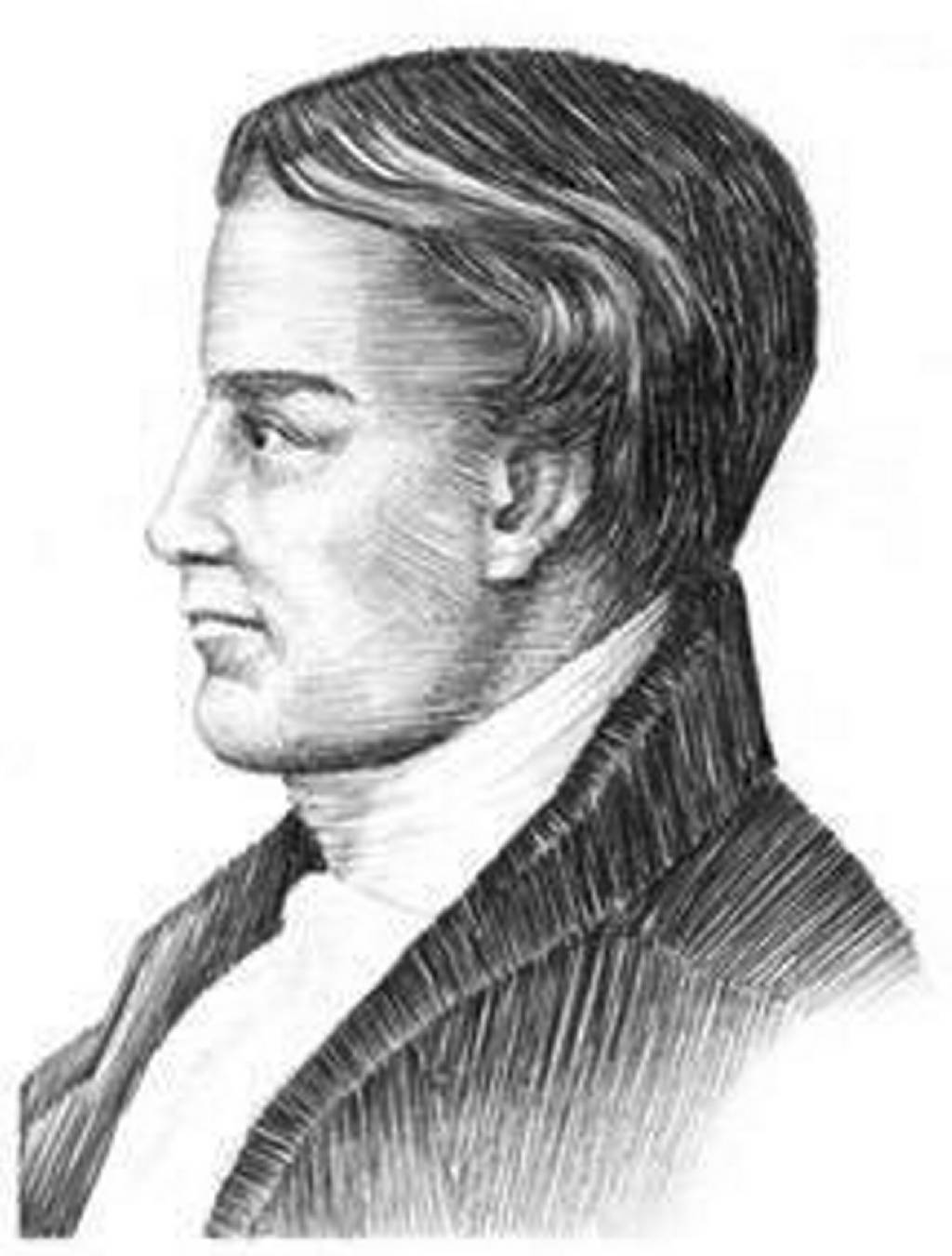
coxeowen2Nehemiah Coxe picked up this idea of tracing God’s redemptive activity through the word of God when he wrote Covenant Theology: From Adam to Christ. Coxe’s unique contribution was that he demonstrated how God’s redemptive work in redemptive history was uniquely covenantal. Of course, as everyone knows who is familiar with this work, Coxe largely borrowed from Congregationalist John Owen in setting out his framework.

Both Augustine and Coxe subscribe to the “godly line of Seth” view, but we should beware lest we subscribe to a view merely because it is affirmed by a theologian we respect. Our minds and our hearts must be bound to Scripture. We must never elevate a man or a creed on par with Scripture. With that in mind, let us take a look at some Scriptural proof for the “godly line of Seth” view.

Our First Parents

In Genesis 1 and 2, we see that Adam and Eve were made holy and happy. They had never sinned, they were naked, and they were unashamed. God had only given them one rule, and that was that they should not eat of the tree of the knowledge of good and evil. As we know well, our first parents did eat of that fruit and, doing so, they plunged all of their progeny into sin and misery.

However, in Genesis 3, God offered mankind some hope. After having conducted His trial and found the man, his wife, and their deceiver guilty, God rendered His verdict. Upon the woman, He placed a curse, that she would have pain in child-rearing. Upon the man, he placed a similar curse, that he would no longer have joy in his labors. Before pronouncing these curses, though, God pronounced a curse on the serpent, a curse that came with hope for mankind.

“And I will put enmity

Between you and the woman,

And between your seed and her seed;

He shall bruise you on the head,

And you shall bruise him on the heel” (Genesis 3:15; NASB).

This pronouncement is what many theologians have labeled the proto-euangelion, which basically means the first gospel proclamation. In it, Adam and Eve were given a promise that one of their descendants would eventually set right all that they had destroyed in their rebellious act. Thus, we can imagine the effect that their oldest son’s fratricidal act would have on them.

Cain, Abel, and Seth

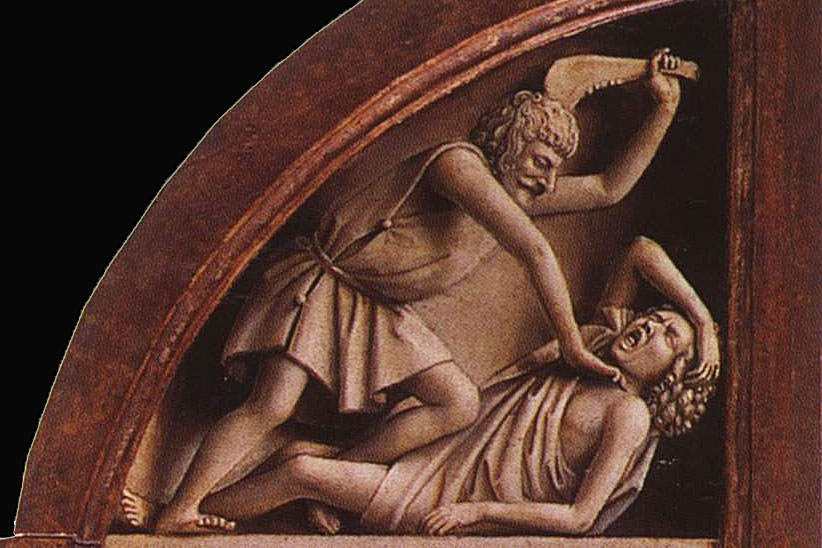
CainIn Genesis 4, we witness the murder of one of Adam’s sons at the hand of his other son, likely the one through whom the promised Seed was expected to come. With this act, Cain cast some doubt over the promise God had made on that dismal day in the garden. Through whom was the promised Seed to come? Certainly not Cain!

The second half of Genesis 4 and Genesis 5 serve as a contrast of sorts. After Cain kills Abel, his lineage is detailed for us in the remainder of chapter 4. It is filled with violent, evil men. Chapter Five, however, reestablishes hope for mankind. Adam and Eve have a third son, Seth, and through him come godly men such as Enoch and Noah. On the arrival of Noah, Bible translators provide for us a chapter break. Yet the story is not over.

Do Not Be Unequally Yoked

Just as mankind’s hopes were dashed at the murder of Abel, so too they were dashed just after the godly line of Seth was established. What Moses tells us is that even this godly line was compromised. In fact, it was so corrupted that God saw fit to destroy the earth with a deluge. How was this godly line of Seth compromised? Through marriage.

Throughout the Bible, God forbade His people from intermarrying with pagans and idolaters. He established godly lines (e.g. Abraham, Isaac, Jacob, Judah, David…) through whom He established His covenants and promises, and through whom He would eventually bring the Seed of Abraham: Christ. The “godly line of Seth” argument is that God did not begin this covenantal headship work with Abraham, but with that promise in Genesis 3.

God has always His people, and those people have always had earthly representatives. Today, the Mediator between God and man is the man Jesus Christ. When one is found to be in the people of God under one of these covenant heads, to marry outside of that line is synonymous with apostasy. It simply is not to be done.

To do so will lead to idolatry and sin, as it did for the Israelites in the days of Balaam and still does in the church today. God’s people are not to be unequally yoked. Rather, we are to remain faithful to the God who called us out from among the nations.

____________

Having given my negative and positive arguments for the “godly line of Seth” argument, I plan on giving some applications of these truths in my next article.

Circumcision and Baptism in Colossians 2

In two recent episodes (here and here) of the CredoCovenant Fellowship, some debate arose regarding the definition of circumcision and baptism in the context of Colossians 2. I found myself in disagreement with Nehemiah Coxe on the meaning of the passage, and decided I’d like to use my bully pulpit to argue my case. I’ve consulted with JD ahead of time so that he might have time to prepare a response.

Nehemiah Coxe seeks to demonstrate in Covenant Theology: From Adam to Christ how Colossians 2 teaches that water baptism replaces fleshly circumcision. He posits that the circumcision referenced in the passage is Christ’s own fleshly circumcision performed in His incarnate infancy. He further insinuates that, water baptism being a symbol pointing to Spirit baptism, we can assume that Paul means for us to recognize that he is in fact calling to mind water baptism. The conclusion to his argument is that water baptism, the symbol representing Spirit baptism, effectively nullifies the Covenant of Circumcision as symbolized in Christ’s circumcision. If you are confused by this argument, you may or may not be helped by reading Coxe’s argument in greater detail on pages 127-130 of Covenant Theology: From Adam to Christ.

The Book We Discussed…

In this post, I would like to argue that what we find in Colossians 2 is not a conclusive statement regarding the nature of fleshly circumcision and the nature of water baptism. Rather, it is the beginning of a much different argument that persists on into the beginning of Colossians 3. In this argument, Paul’s statements evoking circumcision and baptism are best understood to be premises rather than the conclusion.

Paul establishes three premises in his argument (2:8-12), circles back around to further explain his premises (2:13-3:4), and then gives his concluding statements in the form of application (3:5ff).

  • Premise 1 (2:8-11)
  • Premise 2 (2:12a)
  • Premise 3 (2:12b)
  • Further Explanation of Premise 1 (2:13-19)
  • Further Explanation of Premise 2 (2:20-23)
  • Further Explanation of Premise 3 (3:1-4)
  • Concluding Application (3:5ff)

His first premise is the fact that Christ has established Himself as the ultimate authority over all, and particularly in the life of the believer through heart-circumcision (vv. 8-11; cf. 13-19). His second premise is that we have been buried with Christ in spirit-baptism (vs. 12a; cf. 20-23). His third premise is that we have been raised from spiritual death with Him through His resurrection (vs. 12b; cf. 3:1-4). Let’s take these point by point.


For in Him all the fullness of Deity dwells in bodily form, and in Him you have been made complete, and He is the head over all rule and authority; and in Him you were also circumcised with a circumcision made without hands, in the removal of the body of the flesh by the circumcision of Christ (all Scripture citations taken from the New American Standard Bible);

As has been well documented, when Paul wrote to the church at Colossae, he was combating Judaizers and other false teachers (e.g. an early heretical group referred to by scholars as proto-Gnostics) who had added to the law of God and were perverting the teachings of Christ. He wanted to remind his brethren that they were under no yoke or burden but that under which Christ had placed them (Mt. 11:30). In fact, they had been placed under Christ’s yoke, not by rite of Jewish circumcision, but by regeneration—the greater reality:  spiritual circumcision of the heart.

In claiming His full and ultimate authority over all things, Christ is said to exercise His authority in two particular spheres: over creation generally (Col. 1:15-17) and over the church particularly (Col. 1:18-20). It is the second sphere to which Paul here addresses himself. Christ exercises His reign peculiarly in the lives of believers through the indwelling of His Spirit, but this indwelling has a starting point. That starting point is regeneration—the circumcision of the heart (Deut. 10:16; 30:6; Jer. 4:4; Rom. 2:29). After laying out his other two premises, Paul goes on to expound on this argument in verses 16-19:

16Therefore no one is to act as your judge in regard to food or drink or in respect to a festival or a new moon or a Sabbath day— 17things which are a mere shadow of what is to come; but the substance belongs to Christ. 18Let no one keep defrauding you of your prize by delighting in self-abasement and the worship of the angels, taking his stand on visions he has seen, inflated without cause by his fleshly mind, 19and not holding fast to the head, from whom the entire body, being supplied and held together by the joints and ligaments, grows with a growth which is from God.

Christ Himself is the rightful King and Ruler of His church. Therefore, no one else is to attempt to usurp His authority. If anyone attempts to compel his fellow saints to return to the types and shadows or to adopt some form of legalism or asceticism, he is effectively heaving an added burden upon the shoulders of Christ’s subjects. He is removing the delight of Christ’s rulership and replacing it with an extra-biblical, despotic oppression. Christ is King and Ruler over His church and will not share His throne.

But it is not a fleshly circumcision under which we have come, not even (I would argue) Christ’s incarnate fleshly circumcision. Such a notion is not even hinted at in the text. Rather it is that same circumcision under which God’s true people have always come: the circumcision of the heart. Under this circumcision, there are no civil or ceremonial laws that must be obeyed. Likewise, there are no ascetic practices which must be observed. Rather, the true believer passively receives the stamp of God’s approval in Christ upon his heart, and upon his heart the law is written (Jer. 31:33; Heb. 8:10; 10:16) that, in it, he might find his delight (Ps. 1:2; 40:8).


having been buried with Him in baptism,

Paul furthers his argument by calling to mind the doctrine of spirit baptism, a common theme in Paul’s letters (Rom. 6:6; 1Cor. 12:13; Gal. 3:27; Eph. 2:5). In order for Nehemiah Coxe’s argument to remain in tact, he must prove that this text is referring to either water baptism or Spirit baptism of which water baptism is a picture. Obviously,  he would have to make the second argument as (I will demonstrate), Paul is clearly referring to Spirit baptism. The problem is that Coxe does not make an argument that the symbol of Spirit baptism (water baptism) is being referenced here. He merely assumes it. Paul, on the other hand, will go on to make it clear that he is not talking about the physical symbol, but the spiritual reality.

20If you have died with Christ to the elementary principles of the world, why, as if you were living in the world, do you submit yourself to decrees, such as, 21“Do not handle, do not taste, do not touch!” 22(which all refer to things destined to perish with use)—in accordance with the commandments and teachings of men? 23These are matters which have, to be sure, the appearance of wisdom in self-made religion and self-abasement and severe treatment of the body, but are of no value against fleshly indulgence.

When Paul refers to burial in this passage, he is referring to that spiritual reality of our dying in Christ. In a very real sense, we have died and been buried with Him. We have died to sin (Rom. 6:2, 10; 1Pt. 2:24), to the law (Rom. 7:2-6; Gal. 2:19), and to the elementary principles of the world (Col. 2:20). Like a wife whose husband had died in battle, we have been freed and lawfully betrothed to Another. Being dead to sin and the law, they no longer have mastery over us.

Having died to these things, we are no longer to come under their bondage. We have died to the Old Covenant system. Therefore, we are neither to come under the yoke of fleshly circumcision nor the yoke of the civil or ceremonial laws. Likewise, we are no longer in the world, so we ought not to submit to the edicts of man imposed upon our consciences. Our consciences are to be bound ultimately and finally by Scripture alone! This is the first aspect of what the apostle means when he speaks of baptism: our union with Christ in His death and burial.


in which you were also raised up with Him through faith in the working of God, who raised Him from the dead.

The second aspect of Paul’s meaning is like the first: our having been raised with Christ! It is clear in the immediate text that Paul is not referring to water baptism when he says that we are raised “through faith.” This is not true of our water baptism. We are not raised up out of the water through faith, but by the joint efforts of the preachers arms and our abdominal muscles. Further, there is no talk of symbol in the text, so the faithful exegete is not at liberty to assume its presence in the argumentation. The baptism referenced here obviously takes on a spiritual meaning. Paul goes on to explain that meaning in Chapter Three, verses 1-4:

3:1Therefore if you have been raised up with Christ, keep seeking the things above, where Christ is, seated at the right hand of God. 2Set your mind on the things above, not on the things that are on earth. 3For you have died and your life is hidden with Christ in God. 4When Christ, who is our life, is revealed, then you also will be revealed with Him in glory.

Our baptism in Christ: our death, burial, and resurrection in Him, has the intended outcome of a victorious lifestyle lived with the knowledge that Christ was not defeated. Christ was raised, He ascended, and He currently reigns with the Father in heaven. If we have likewise been raised, we likewise have the joy of knowing that we are currently seated in the heavenly places with Him (Eph. 2:6), ruling and reigning with Christ our Brother.

We are no longer to live as slaves, defeated and conquered by the world in which we live. Rather, we are to recognize our true, royal positions as sons of the King of heaven and earth. The contrast here in Paul’s language is not between two covenants: one of fleshly circumcision and the other of water baptism. Instead, the contrast is between slavery to the world and freedom in Christ.


Conclusion

Whatever we may say about fleshly circumcision and water baptism, and the covenants to which they belong, we are not at liberty to argue toward those conclusions from this text. The reason why not is very simple: this text is not arguing for a contrasted understanding between fleshly circumcision and water baptism. This text is talking about Christ’s authority over believers as demonstrated by our heart circumcision (regeneration) and Spirit baptism (union with Christ in His death, burial, and resurrection).
CCF Episodes 13-14, 25-28: Covenant Theology by Nehemiah Coxe

Grab Covenant Theology: From Adam to Christ by Nehemiah Coxe and John Owen and read along with the CredoCovenant Fellowship as we engage its major themes from a Reformed Baptist perspective:


coxeowen2

Covenant Theology: From Adam to Christ

by Nehemiah Coxe and John Owen

CCF Episode Twenty-Eight: Concluding Our Discussion of Covenant Theology

CredoCovPodcastMaster

In this episode, JD and Billy sit down with Junior “The Big Dippa” Duran and Rene Del Rio to conclude their discussion of Covenant Theology: From Adam to Christ by Nehemiah Coxe and John Owen.

MP3 Download | stream:

Subscribe to future podcasts and leave us a review on iTunes: RSS | iTunes  

The book we read…coxeowen2

Covenant Theology: From Adam to Christ by Nehemiah Coxe and John Owen

We’d love your participation. Contact us with your comments and questions about the books contents: