M’Cheyne Bible Reading Plan: January 5

Genesis 5 (NASB, ESV, KJV, HCSB)

Matthew 5 (NASB, ESV, KJV, HCSB)

Ezra 5 (NASB, ESV, KJV, HCSB)

Acts 5 (NASB, ESV, KJV, HCSB)

A Working Definition of Evangelism (Revised)

You can see the original Definition here.

_____________


With a view toward making disciples of all peoples and bringing them into covenant with a local church, in which they shall be baptized in the name of the Triune God and taught to obey all Christ commanded, evangelism is the act of worship whereby Spirit-led believers articulate for unbelievers God’s holiness, man’s sin and its wages, Christ’s accomplishment of redemption through His obedience in life, death, and resurrection, and the proper response of sinners: repentance from sin toward God and faith in Jesus Christ alone for salvation.

Black Spirituality vs. Reformed Spirituality – Part 1

As a Black Physics professor who is also Reformed Baptist, I usually get asked three questions:

Why have I chosen to join a church with no other minorities? This question is usually asked from other Black Christians and usually there are numerous undertones to this question. Sometimes it’s suggested that I’m abandoning the Black church or Black people in general. Other times, the question suggests that I’m under a theological imperialism.

How do I reconcile science with the Christian faith? When this question is asked by unbelievers (which is usually the case because of my vocation), it’s usually a statement of incredulity and thus the question becomes an apologetics question. When this question is asked by believers, it’s usually a question about the scientific method, the creation debate, and the claims of the modern scientific atheists.

However, the question asked by most Reformed people is: Why aren’t there more Black Reformed Christians? There have been numerous answers to this question and honestly, the answers are superficial or, at times, downright insulting. Some people assert that diverging musical styles are the reason that Blacks don’t attend Reformed churches (as if all Black Christians like gospel music and don’t sing hymns). Some people assert that it’s because of the lack of expressiveness (as if all Black Christians are charismatic).

My goal is to eventually answer all of these questions, but I want to specifically focus on the third question. I believe that the essential reason is because of diverging views of Christian spirituality. What are the marks of a truly spiritual person? How does one grow in their devotion to Christ? What are the marks of a godly leader? My experience convinces me that most devout Black Christians answer these questions very differently than devout Reformed Christians. This seems to imply that traditional Black spirituality is quite different than Reformed spirituality. In this blog series, I want to address the commonalities and differences between traditional Black spirituality and Reformed spirituality and then address the trends in modern Black spirituality.

________

Let’s start with the first commonality: a high view of the Lord’s Day. Chapter 22, Paragraph 8 of the 1689 LBCF states:

The Sabbath is then kept holy unto the Lord, when men, after a due preparing of their hearts, and ordering their common affairs aforehand, do not only observe a holy rest all day, from their own works, words and thoughts, about their worldly employment and recreations, but are also taken up the whole time in the public and private exercises of his worship, and in the duties of necessity and mercy.
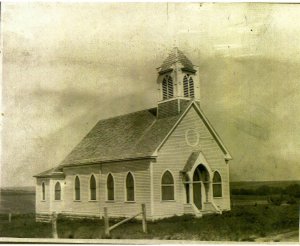
churchIt may be surprising to most Reformed people, but most devout Black Christians would completely affirm this statement. Most of the debates regarding the Sabbath that have occurred within the broader evangelical world and even within Baptist circles with those who affirm New Covenant Theology would be non-issues for devout Black Christians. Most black Christians believe that a person cannot truly be spiritual and grow in the Lord if they perpetually disrespect the Lord’s Day.

For those of us who have grown up in the Black Church, Lord’s Day piety was a central part of our life. For devout Black families, any extracurricular activity must be done on Saturdays because Sunday was set apart for the Lord. Moreover, many Black churches believed in an entire Lord’s Day, not just the morning of the Lord’s Day. As a child, when we woke up on Sunday morning, gospel music would play in the home so that our minds would be focused on Christ. We attended Sunday School at 9am, attended morning worship at 11:15am, had fellowship and lunch time within the church immediately following church (which usually lasted for a couple of hours), and then had evening service. It was firmly believed that God met with His people in a special way during corporate worship on the Lord’s Day. It was during our fellowship/lunch time that we mutually edified each other, found out what was going on with each other, and talked about what we were studying in the Scriptures. Sundays were also the day in which many members would perform acts of benevolence for sick church members (which we called the “sick and shut-in” ministry).

Consequently, it was considered sinful not to participate in the life of the Church on the Lord’s Day because you wanted to watch sports or do other worldly recreations. If a person would miss more than two consecutive Sundays, numerous people would call to see if something was wrong and at times, that would prompt a visitation from the deacons and pastor. Lord’s Day piety was also reflected in the attire that one would wear to church. It was assumed that you put on your “church clothes” when you went to church and if not, you had “disrespected the Lord and His house.” Some families would actually wash their cars every Saturday because in their view, “the Lord wants their best.”

For these reasons, many older Black Christians do not understand the casual and lax nature of many evangelicals, including some Reformed believers, concerning the Lord’s Day. No older Black Christian would believe the argument that “all of life is worship” means that the Lord’s Day is not a holy day. Very few older Black Christians would think it’s acceptable for people to come to church with flip-flops on and a T-shirt. Very few older Black Christians would think that the Lord’s Day ended by 12pm so that church members can watch the NFL on Sunday. All of these are innovations for the modern evangelical church, but this is a point in which Reformed and Black Christians both hold – Lord’s Day devotion is an essential and necessary component of the Christian life.

For the next blog, we will address another strong commonality: a high view of the sacraments.

Interracial Marriage and the Ordinary Means of Grace

This past week, I had the privilege of teaching the 9-12 year old class at my church. We are going through the Bible, piece by piece, and discussing each section. This week our discussion was on Genesis 6-11. Now, I understand that there are multiple orthodox views on who the sons of God were in Genesis 6. I exposed the kids to three, but only argued for the one I think to be best supported by the text: the godly line of Seth view.

When holding to this view, the question naturally arises, “What was the big deal with the sons of God marrying daughters of men?” A little context goes a long way in understanding how this is a problem. When Moses wrote the Pentateuch (the first five books of the Bible), the people of Israel were on the plains of interracial-marriageMoab awaiting their conquest of the land of Canaan (Numbers 22:1). There, God commanded them through Moses not to intermarry with the Canaanites (Deuteronomy 7:3-4).

I recall one time at a training exercise in the Army being asked by a guy where the Bible forbids interracial marriage. He wanted to know so that he could discourage his daughter from marrying outside her race. In fact, the Bible nowhere forbids interracial marriage for the sake of keeping people of different skin colors from joining together in matrimony. What it did forbid in Deuteronomy 7:3-4 was interfaith marriage. The Israelites were forbidden from taking foreign wives because they would entice them to follow after false gods.

In my estimation, the best understanding of the sons of God intermarrying with the daughters of men in Genesis 6 is that they were being led away from God by these women. What is interesting is that, when I asked the kids if the Bible anywhere explicitly forbids interracial marriage, they unanimously agreed that it does not. When I asked them why God forbid people in the Bible from marrying foreigners, they agreed that it was because they would entice them to follow false gods.

I bring all this up not to brag on how smart our children are at my church. Rather, I wanted to highlight the fact that the ordinary means of grace are sufficient for helping our churches, and even our the children in our churches, deal with the major issues that the church will face in our culture. The church does not have to resort to conducting a complete reset of its worship service or starting up a multi-culturalist project in order to be the church.

These children came to a right understanding of this deeply important cultural issue by partaking of the ordinary means of Bible reading. They have sat under the preached word week-in and week-out, they have sung psalms, hymns, and spiritual songs that promote biblical truth, and we as a church have regularly prayed over their souls for the better part of their lives. What the church needs is to commit itself to the ordinary means of grace and expect that this will be the medium through which God will perform His extraordinary, transformative work in the lives of believers both personally and corporately. What she does not need is a multi-culturalist agenda pushing for extra-biblical traditions to be added to the means God has ordained for the dispensing of His grace.

Why Mark Jones Is Right… and Wrong

Jones-Mark-HigherRes

Mark Jones

Let me be the first (perhaps not) Baptist to admit that Mark Jones was spot on in many regards in his post “A Plea for Realism”:Are Presbyterians Christians? It seems to me that Mark Jones is simply calling for a little intellectual honesty from us Baptists. Well, allow me to humor him.

I certainly agree that, if we do not allow unbaptized believers to take communion, that should include those who have been “baptized” in a way that we believe to be unbiblical and, thus, no baptism at all. If a paedobaptist came to my church who refused to be baptized post-confession due to having been sprinkled as an infant, we would not allow him to be a member, so why would we allow him to take communion? Baptism, in every Christian tradition, has historically preceded communion. Baptism preceding communion is both a historical and a biblical view. On this point, most Baptists and Presbyterians agree.

Therefore, for me to dissuade my Presbyterian friends from taking communion in my local church, I am not saying they are not Christians so much as that they have not followed biblical mandate in regard to the order of the sacraments. That is, baptism precedes communion. On this point, they would obviously disagree with me, because they hold to a different understanding of baptism. However, for Baptists to cave on this issue and allow for unbaptized Presbyterians (and that’s what we think they are) to take communion, we would be going against our confession’s definition of true baptism.

However, we are not alone in this stance. Presbyterians must take issue with at least some Baptists taking communion in their churches. Just this week, I listened to a somewhat refreshing episode of Reformed Forum in which Jim Cassidy admitted that Baptist parents are in sin who do not baptize their infants in keeping with a Presbyterian view of baptism. I think this is the only consistent Presbyterian view and, as such, I don’t see how Baptist parents can take communion in Presbyterian churches, unless Presbyterians encourage people in open, unrepentant sin to take communion.

ctc-album300Either way, both traditions have an issue when it comes to what Jones calls “catholicity” and baptism. Neither one of us can deny that we see the other as being disobedient to our Lord’s ordinance of baptism. Are Baptists inconsistent to call their Presbyterian friends Christians? Not quite as inconsistent, I would argue, as those Presbyterian churches that allow consistently Baptist parents to take communion.

So, perhaps the proper way to respond to our Presbyterian friends when they try to corner us on these issues is not to bend over backward to try to be ecumenical. Perhaps, the best response is to affirm them where they are correct, but demonstrate how they have to answer the same questions regarding their sacramentology. None of us are immune. At a certain level, each believe the other (credos and paedos) is disobedient at a certain level, and that must stand as a guard to the communion table at some point.

See also Tom Hicks’ response to Jones’ article. Michael Haykin has also chimed in, and Jones has offered his critique of Haykins’ response here.

M’Cheyne Bible Reading Plan: October

October 1


October 2


October 3


October 4


October 5


October 6


October 7


October 8


October 9


October 10


October 11


October 12


October 13


October 14


October 15


October 16


October 17


October 18


October 19


October 20


October 21


October 22


October 23


October 24


October 25


October 26


October 27


October 28


October 29


October 30


October 31


CredoCovenant 2.0

EA-2.0We are now actively and publicly recruiting new contributors to the blog. We’re looking for all kinds of bloggers with different backgrounds and life experiences. We will be privately contacting some solo-bloggers from around the web (those who openly publish their contact info), but if you read this and know someone who meets the criteria, let us know.


Criteria:

  1. Must subscribe to the 1689 London Baptist Confession of Faith.
  2. Must attend a confessionally Reformed church (if you are able).
  3. Must have previous blogging experience or be able to submit previously written material via e-mail for our consideration.
  4. Must be a member in good standing in a local church.
  5. Must bring something unique to the CredoCovenant dynamic.

We are also open to hearing from our readers how we might improve our website. Feel free to contact us at credocov@gmail.com to be considered as a contributor.

CCF Episodes 13-14, 25-28: Covenant Theology by Nehemiah Coxe

Grab Covenant Theology: From Adam to Christ by Nehemiah Coxe and John Owen and read along with the CredoCovenant Fellowship as we engage its major themes from a Reformed Baptist perspective:


coxeowen2

Covenant Theology: From Adam to Christ

by Nehemiah Coxe and John Owen

CCF Episode Twenty-Eight: Concluding Our Discussion of Covenant Theology

CredoCovPodcastMaster

In this episode, JD and Billy sit down with Junior “The Big Dippa” Duran and Rene Del Rio to conclude their discussion of Covenant Theology: From Adam to Christ by Nehemiah Coxe and John Owen.

MP3 Download | stream:

Subscribe to future podcasts and leave us a review on iTunes: RSS | iTunes  

The book we read…coxeowen2

Covenant Theology: From Adam to Christ by Nehemiah Coxe and John Owen

We’d love your participation. Contact us with your comments and questions about the books contents: