Means of Grace in Black Spirituality

In the previous three blogs in this series, I noted that the three basic similarities between Reformed and traditional Black spirituality are a high view of the Sabbath, a high view of the sacraments, and the necessity of the local church. Now we are going to discuss the major differences between Reformed and traditional Black spirituality. In my view, the first significant difference regards the means and nature of Christian holiness.

For many people, the question of how a believer may become more spiritual is actually a question of how a believer may grow in holiness. In other words, this is a question regarding the nature and means of our sanctification. In regards to the nature of sanctification, Chapter 13, Paragraph 1 of the 1689 LBCF states:

They who are united to Christ, effectually called, and regenerated, having a new heart and a new spirit created in them through the virtue of Christ’s death and resurrection, are also farther sanctified, really and personally, through the same virtue, by His Word and Spirit dwelling in them; the dominion of the whole body of sin is destroyed, and the several lusts thereof are more and more weakened and mortified, and they more and more quickened and strengthened in all saving graces, to the practice of all true holiness, without which no man shall see the Lord.

Apart from the language regarding effectual calling, most devout Black Christians will affirm this statement. However, the real question that most people have is how does a believer become sanctified? It is here where significant differences arise because many devout Black Christians have been significantly influenced by the Wesleyan holiness movement (particularly those who were raised in Black Pentecostal churches). In Reformed spirituality, there is a strong emphasis on regeneration, union with Christ, and the ordinary means of grace as the principal avenues for internal transformation, allowing the believer to increasingly love and serve God. This indicates that God is the actor in our sanctification. This is seen in Q. 93 in the Baptist Catechism

Q. 93. What are the outward and ordinary means whereby Christ communicates to us the benefits of redemption?

A. The outward and ordinary means whereby Christ communicates to us the benefits of redemption are His ordinances, especially the Word, Baptism, the Lord’s Supper and Prayer; all which means are made effectual to the elect for salvation.

It is my experience that most devout Black Christians view these as necessary tools for holiness, but they are not sufficient. In other words, the response to a Reformed view of holiness and sanctification would be “… that’s it?” From certain individuals, this view would be taken as license for us to not be actively engaged in our sanctification. In practice, most devout Black Christians have a Wesleyan view of the means of grace. On the United Methodist Church page, the means of grace are described in two broad categories: works of piety (such as reading, studying scriptures, fasting, evangelism, etc.) and works of mercy (such as visiting the sick, seeking justice, giving generously, etc.).

I believe that it’s important to compare and contrast these differing views. In the Wesleyan means of grace (which appears to be the default position for most traditional Black Christians), the emphasis is on our actions to God and God is pictured here as the respondent. In other words, God responds to our works of piety and mercy by sending grace. This is the reverse of the Reformed view in which our vital union in Christ produces the twin graces of repentance unto life and faith in the promises of God. Therefore, in the Reformed view of holiness, the emphasis is God’s action to us whereas we are the respondents.

holiness-4These distinctions may appear to be minor, but there is a very important practical implication of this view. If it is the case that God is the respondent in our development of holiness, this usually implies that we must find extra ways to obtain holiness. In other words, the primary goal in Christian spirituality is to pursue holiness through various different means. Some say that the path is through extended periods of fasting; some say that it’s through “surrendering to God”; some say it’s through “abiding in Him”; some say that it’s through “maintaining an atmosphere of worship”; some say that it’s meditative prayer; some say that it’s through “breakthroughs in prayer”; and the list can go on and on. Since there are so many subjective and varied approaches to developing holiness, this means that there is no true ordinary way in which a convert can reach spiritual maturity and become “holy”.

By contrast, in Reformed spirituality, there is a distinction between our inseparable union with Christ and our abiding communion with Christ. Our communion with Christ is predicated on our union with Christ. This means that, in Reformed spirituality, the primary goal is to actively pursue our communion with Him through the means that He has appointed. In other words, to pursue God and to enjoy our communion with Him in grace and glory is to pursue holiness. This is the practical implication of Galatians 5 in which our Christian development is grounded upon the fruit of the Spirit’s working in our hearts.

In our discussion of holiness, we must also ask another question: how do we know if we are growing in holiness? What is our standard for holiness? This is another point in which there are significant differences between traditional Black spirituality and Reformed spirituality. In Reformed spirituality, the measuring rod of our holiness is the moral law, summarized in the Ten Commandments, and the third use of the law becomes vitally important in assessing Christian spirituality. Unfortunately, this is usually not the case for most Black Christians that I’ve met. Usually, the measuring bar of holiness is primarily through a person’s sincerity (i.e. whether their action is in concert with their love towards God), a person’s external behavior (i.e. drinking, drugs, profanity, fornication, etc.), or through spiritual habits that makes one appear more externally righteous (i.e. not going to movies, listening to certain styles of music, etc.).

This subjective measuring bar for holiness leads to some other practical problems. First, it underestimates the true nature of sin. With this type of measuring bar, a person can have numerous “victories” over sin. However, when they speak of victory, they are often referring to external behaviors that are not being committed and they typically fail to see that such external behaviors are only the fruit of the real sin and depravity lying underneath of it all. Sin involves the initial compulsion and minute desire towards a behavior that is contrary to God’s absolute moral perfection, not just the stifling of it once it has compelled us from within. Second, since this measuring bar tends to be subjectively established, it leads to a view of holiness that is akin to moralism. This is an aspect that I personally lived through since I was raised as a Black Pentecostal. I remember spending my early years in despair because I knew that sin was always present within me and there were also another category of behaviors that would make me worldly. Without the Law, there is no biblical way in which we can define holiness or worldliness. Ultimately, this means the worldliness and holiness becomes based on a person’s sensibilities and in reality, there are no concrete definition for these terms. In essence, for too many Black Christians, worldliness means “things that the world does”.

For these reasons, it is very difficult for many devout Black Christians who grew up in this background to understand and accept how the ordinary means of grace work in the lives of believers to produce Christian maturity. This means that this is a topic that must be discussed at a fundamental level if there is to be useful dialogue. In this blog, I introduced the concept of communion with Christ. In the next blog, I will go into more detail with this topic and this will lead to another significant difference between Reformed and traditional Black spirituality: the role of mysticism.
The Local Church in Black Spirituality

In continuing this mini-series regarding Black spirituality, the third commonality with Reformed spirituality is a high view of the local church. In other words, a point in which Reformed and traditional Black Christians both hold is that a person cannot truly be spiritual and grow in the Lord if they neglect the local church. This means that church membership is necessary and vital for Christian growth. In regards to the formation of the Church, Chapter 26, Paragraphs 5 and 6 of the 1689 LBCF states

In the exercise of the authority which has been entrusted to Him, the Lord Jesus calls to Himself from out of the world, through the ministry of His Word, by His Spirit, those who are given to Him by His Father, so that they may walk before Him in all the ways of obedience which He prescribes to them in His Word. Those who are thus called, He commands to walk together in particular societies or churches, for their mutual edification, and for the due performance of that public worship, which He requires of them in the world.

The members of these churches are saints because they have been called by Christ, and because they visibly manifest and give evidence of their obedience to that call by their profession and walk. Such saints willingly consent to walk together according to the appointment of Christ, giving themselves up to the Lord and to one another, according to God’s will, in avowed subjection to the ordinances of the Gospel.

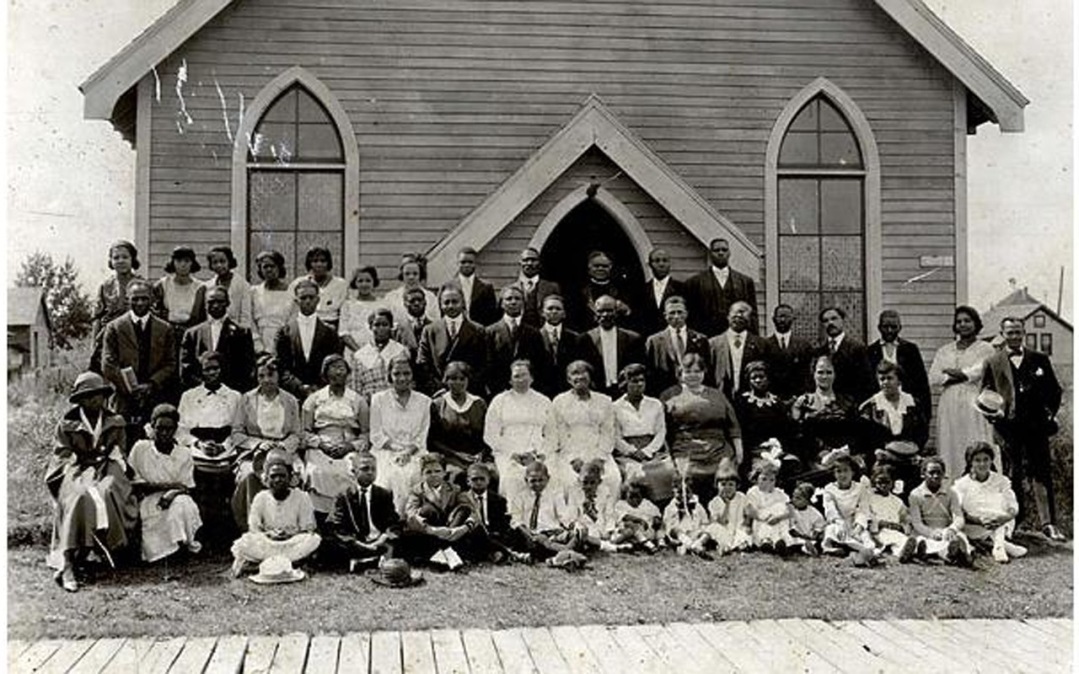
This is a statement in which traditional Black Christians will give a hearty amen to. This is particularly the case since it has been well-established that the Black Church was formed out of necessity, not by convenience. The unfortunate reality is that the historical racism of mainline denominations in the 18th and 19th century established the legitimacy of the Black church. For the purposes of this blog, the necessary formation of the Black church had a very important consequence on how many traditional Black Christians view the local church – namely, that the gospel of Christ should nurture and proclaim the eschatological hope of Christianity.

churchBecause the Black church preached the gospel of hope and developed a robust theological view of suffering, the Black church (as an institution) became the center of the Black community. Historically, the local church was seen as a city of refuge and provided the true hope to those dealing with the numerous difficulties of life. Many Black Christians would agree with the Puritans that this world is a vale of tears, but they praised God that there is “an opening gate of glory at its end”. They realized that there truly was a better and more heavenly country and viewed this current life as a pilgrimage. This was the message that was proclaimed to the Black community and the surrounding world. For traditional Black Christians, the local church (primarily through its preaching and hymnody) nurtured this hope and proclaimed the hope of this gospel to the world. In this way, the local church is the city set on a hill, the light of the world, and the salt of the earth – it offers a glimpse of our eternal state and our eternal inheritance as believers. For a more thorough discussion of this, feel free to listen to Thabiti Anyabwile’s sermon on the contributions of African-American theology.

One of the most upsetting trends in modern expressions of the Black Church is that this richly biblical theology is being replaced by Word of Faith/Prosperity teaching. The theology of suffering, which served as a historical distinctive of Black theology, is being cast aside for such bad teaching, and the impact is that the Black community has grown distrustful of the Black church. In my view, the Black church will only remain relevant as an institution only when it returns back to its roots on the matter.

Another very important aspect of the local church is church membership. In regards to church membership, Chapter 26, Paragraph 7 of the 1689 LBCF states

All believers are bound to join themselves to particular churches when and where they have opportunity so to do, and all who are admitted into the privileges of a church, are also under the censures and government of that church, in accordance with the rule of Christ.

This is a statement that all devout Black Christians believe. Simply put, church membership is a must for any person who calls themselves a Christian. Because the Black church plays such a central role in the community, virtually all Black millennials with Christian parents were raised in the church. By and large, traditional Black parents insist on church participation by not giving their children an option. As children, we served as ushers, choir members, janitors, landscapers, and all sorts of roles, with the intention that we would understand how important the local church is. This helps to explain why Black churches continue to see stable participation from millennials, whereas millennials as a whole are completely abandoning the church as a whole. This also meant that those who did not attend church were considered godless and worldly. This produces a very strong church-world distinction within Black spirituality.

It is at this point where traditional Black spirituality meshes much more with Reformed Baptists rather than Reformed Presbyterians. The concept of covenant children and the purposefully mixed nature of the church fall on deaf ears for many traditional Black Christians. Black parents have no problem telling their children to pray to God concerning various matters, while also confessing that their children aren’t Christians. Black parents have no problem forcing their children to read their Bible, to go to church, or to participate in family devotion. As a child, the most often quoted passage to emphasize the distinction between the true church and the world was 2 Corinthians 6:14-18:

Do not be unequally yoked with unbelievers. For what partnership has righteousness with lawlessness? Or what fellowship has light with darkness? What accord has Christ with Belial? Or what portion does a believer share with an unbeliever? What agreement has the temple of God with idols? For we are the temple of the living God; as God said,” I will make my dwelling among them and walk among them, and I will be their God, and they shall be my people. Therefore, go out from their midst, and be separate from them, says the Lord, and touch no unclean thing; then I will welcome you, and I will welcome you, and I will be a father to you, and you shall be sons and daughters to me, says the Lord Almighty.”

Because the church is seen as the place that God’s people are strengthened and encouraged against the assault from the world, this meant that the Black church met multiple times during the week. When I was converted as a teenager, the church that I attended had morning and evening worship on the Lord’s Day, Wednesday evening Bible study, and Friday evening prayer meeting – and it was expected that you attended (and properly prepared) for all of them. It was also assumed that we would visit churches in our local associations as well whenever important events appeared on the calendar. In a number of ways, a person’s active participation in these services was an indicator of their spiritual health. It was during these activities in which older, mature believers took an interest in young converts like myself – who taught me about the necessity of personal holiness and the significant of the local church. Moreover, the church-world distinction became more pronounced as Black preachers taught unashamedly on the doctrine of hell. We were taught to flee to Christ and His church to escape the condemnation that will occur to the world around us. Thus, the church-world distinction was very black-and-white (no pun intended!).

For these reasons, many modern arguments on the unimportance of the local church is nonsensical to those who grew up in my background. As a new convert, I was taught that it is foolish to separate our personal devotion to the Lord from our commitment to the local church. This is a point in which Reformed Christians and Black Christian can affirm with each other. For the next blog, we will begin to address the significant differences between traditional Black spirituality and Reformed spirituality. We will start with the divergent views concerning the means of grace.

Giving in the Order of Worship (Part One)

Earlier this year our church underwent several changes. First, we ordained two new deacons (we now have three). Second, we ordained a new elder (we now have two). Third, we instituted a time of giving in our order of worship. There were several considerations that contributed to our decision to start “passing the plate.” The following are just a few:

Giving as a Command

One of the big questions commonly asked of Calvinists is how they reconcile their soteriology with the Bible’s exhortations to evangelize. There are many different angles from which Calvinists approach this issue, but ultimately, they will unanimously end up hitting on the big one: we are commanded to evangelize. The same is true for giving. We give because we are commanded to give in the Bible.

In 1Corinthians 16:1-2, Paul orders the church in Corinth to regularly take up offerings on the Lord’s Day. He had not only given this command to the church at Corinth, but had also given it to the churches in Galatia. The specific occasion for this command was a famine that had come upon the church in Jerusalem, but notice that Paul does not have them take up a one-time “love offering” to help meet the need in Jerusalem. Rather, he had them take up regular offerings. This was so that the flock would not be pressed for funds when he came to them to collect the money. Rather, out of their regular givings, they would have compiled a large sum that they would have been unlikely to raise with a single offering. The work of the church requires regular giving. Churches cannot function without it.

Passing the Plate 01Throughout the Old Testament, God’s people are commanded to bring their gifts to the Lord. Even the sacrifices are referred to as gifts in some passages (Numbers 18:11; cf. Hebrews 5:1). The Magi brought gifts to Christ as an act of worship when He was a young child (Matthew 2:11). These commands to give are reiterated by the author of Hebrews when he says:

“And do not neglect doing good and sharing, for with such sacrifices God is pleased.” (Hebrews 13:16; NASB).

Such doing good and sharing is reminiscent of the early church in Acts 2 who shared all things in common and gave to anyone as he had need (vv. 44-45). So, if anyone asks why we should give, there may be many answers we can give. However, if all those were to fall by the wayside, we would still have the command given us in Scripture. Let us not withhold our gifts from the Lord who has so graciously given all things to us.

Giving as an Act of Worship

Another issue that was raised in our discussions about giving was the fact that pretty much any sermon you will find on subject of giving will inevitably make reference to the fact that giving in the Bible is an act of worship. In Matthew 6:1-4, Jesus gives instructions on worship through giving. He instructs those listening to His sermon to give in such a way that only they and God know how much was given. The point is that the gift is meant to be a theocentric act, not an act to draw attention upon oneself. We give out of worship toward God, not out of a desire to bring glory to ourselves.

This was the sin of Ananias and Sapphira. Ananias and Sapphira, having seen that others like Joseph of Cyprus (Acts 4:36-37) were selling land and giving to God, sold their land and gave only a portion of the proceeds. When they brought the portion to the apostles, they were asked why they lied. The land belonged to them, Peter said. As long as they owned it, it was theirs with which they could do what they wanted. They chose to sell the property and give some of the proceeds from it in order to bring glory to themselves (Acts 5:1-16). The act of giving is an act of worship to God, not to self.

Before we decided to include giving in the order of worship, we had always had an offering box in the back of the room. This box made giving the only act of worship at our church that was not included in the order of worship. It took the corporate sense out of this one act of worship and made it individualistic. Thus, I and others argued that, if we were going to call giving an act of worship, it should be included in the corporate worship service.

_________

In the next article, I will discuss three more arguments for giving in the order of worship: giving as a teaching tool (for our children), giving as a blessing to the giver, and giving as an act of stewardship.

The Sacraments in Black Spirituality

In regards to our previous discussion on traditional Black spirituality, the second commonality with Reformed spirituality is a high view of the sacraments. In other words, a point in which Reformed and Black Christians both hold is that a person cannot truly be spiritual and grow in the Lord if they perpetually neglect the sacraments. In regards to the sacraments, Chapter 28 of the 1689 LBCF states that:

Baptism and the Lord’s Supper are ordinances of positive and sovereign institution, appointed by the Lord Jesus, the only lawgiver, to be continued in his church to the end of the world. These holy appointments are to be administered by those only who are qualified and thereunto called, according to the commission of Christ.

Thanks to the writings of the 17th century Particular Baptists (as well as modern Baptist writers), many Reformed Baptists today have come to understand the importance of the sacraments in the life of the Church. Moreover, due to rediscovered writings from 17th century Particular Baptists, many Reformed Baptists have developed a covenantal view of the sacraments, which sees the sacraments as a means of grace. As a consequence, many Reformed Baptists understand the deep connection between Christian growth and faithful participation in the sacraments. Naturally, this leads to a deep reverence and respect for the ordinances of baptism and the Lord’s Supper.

628x471

This deep reverence for the sacraments is also a key mark in Black spirituality as well. Traditionally, most Black churches take communion once per month (typically on the first Sunday of the month) and for many congregations, there is a sense of expectation for Communion Sunday. In the church that I grew up in, a significant portion of the service on Communion Sunday was dedicated to preparing for the Supper. There was a heightened sense of seriousness as everyone knew that something very importance was about to happen. The solemnity of the event was particularly on display as the deacons distributed the elements with white gloves, which was always meant to be a symbol of respect for the ordinance. Before the congregation partook of communion, there were serious warnings given to those who took the Supper in an unworthy manner. After these warnings, the congregation partook of the elements together, as a symbol of their unity.

As many Reformed writers have written, there are many facets and layers of meaning which pertain to the Supper. In my experience, the two dimensions that are most prominently displayed in many traditional Black churches are the Eucharistic dimension and the covenantal dimension. In the Eucharistic dimension, we see that the Lord’s Supper is a holy and solemn feast of praise and thanksgiving to God for His lovingkindness. Here the sacrament of the Lord’s Supper is intended to bring us to the adoration and praise of God; it moves us to render thanksgiving to God for his infinite goodness and helps us to recognize the grace which God has so generously poured out for His people. In many Black churches, this dimension of the Supper has led to the composition of various hymns that have sometimes been called “blood songs”

I Know it was His Blood – Mahalia Jackson

The Blood Will Never Lose its Power – Andrae Crouch

Calvary – Richard Smallwood

The Blood – James Hall

These above songs also indicate that another central aspect of the Supper in traditional Black churches is the concept of a memorial. Here, it is understood that the recipient should do more than simply remember what Christ has done, but the recipient is making a public confession and commitment to Christ at the Supper. In essence, these “blood songs” are a recounting of the saving acts of God. This fits very much with Calvin’s understanding of 1 Corinthians 11:26

But this knowledge [of the saving acts of Christ] ought to move us to praise Him openly, so as to let men know, when we are in their company, what we are aware of within ourselves in the presence of God. The Supper is, therefore, if I may say so, a kind of memorial which must always be maintained in the Church until the final coming of Christ. John Calvin, Commentary on 1 Corinthians 11:26, Commentary on First Corinthians, p. 250

In many Black churches, there is also a sense of the covenantal dimension. A very popular African-American spiritual called Let Us Break Bread Together on our Knees (lyrics) which is typically sung on Communion Sunday illustrates this. Here the stress of this hymn is the mutual fellowship that we have with other believers at the Table. It’s at the Supper that we understand how we are united to Christ and to each other.

The ordinance of baptism plays a similar role in many Black churches as well. Article XIV of the Articles of Faith from the National Baptist Convention states that Christian baptism is “prerequisite to the privileges of a church relation.” In the churches that I grew up in, this meant that a new convert was sufficiently questioned before baptism by the pastor. After being sufficiently questioned, the new convert made vows based on the membership covenant of the local church (here’s an example) and was baptized. After being baptized, the new convert was given the right hand of fellowship, which emphasized the covenantal union of the member to the local church. Thus, a “true Christian” is one who was properly baptized and received the right hand of fellowship into the church. This pattern is observed not just from Black Baptist churches, but also AME and Pentecostal denominations as well.

Unfortunately, there appears to be a sharp distinction between the modern trends in Black churches and the traditional black church in which I grew up. It has been well established that modern evangelical churches are de-emphasizing the role of the sacraments in the life of the Church. This trend is entering the more modern, non-denominational Black Churches in which the role of the sacraments are often underemphasized, neglected, or at times, completely disrespected. Few modern Black churches “guard the table” from unbelievers and give no sense of warning towards those who receive the Supper with an unbelieving heart. In other cases, there have been churches that baptize virtually any child that attended a vacation bible school (which has been described as a position of de facto infant baptism). There have been numerous conversations in which older Black Christians have complained and have been offended by the casual (and at times, disrespectful) attitude of many churches regarding this sacraments. This attitude is also shared with Reformed believers who understand the significance of these ordinances. Thus, traditional Black spirituality and Reformed spirituality affirm the necessity of the sacraments in the life of the individual Christian and in the life of the Church.

For the next blog, we will address another strong commonality, particular with Reformed Baptist: a high view of the local church.

Black Spirituality vs. Reformed Spirituality – Part 1

As a Black Physics professor who is also Reformed Baptist, I usually get asked three questions:

Why have I chosen to join a church with no other minorities? This question is usually asked from other Black Christians and usually there are numerous undertones to this question. Sometimes it’s suggested that I’m abandoning the Black church or Black people in general. Other times, the question suggests that I’m under a theological imperialism.

How do I reconcile science with the Christian faith? When this question is asked by unbelievers (which is usually the case because of my vocation), it’s usually a statement of incredulity and thus the question becomes an apologetics question. When this question is asked by believers, it’s usually a question about the scientific method, the creation debate, and the claims of the modern scientific atheists.

However, the question asked by most Reformed people is: Why aren’t there more Black Reformed Christians? There have been numerous answers to this question and honestly, the answers are superficial or, at times, downright insulting. Some people assert that diverging musical styles are the reason that Blacks don’t attend Reformed churches (as if all Black Christians like gospel music and don’t sing hymns). Some people assert that it’s because of the lack of expressiveness (as if all Black Christians are charismatic).

My goal is to eventually answer all of these questions, but I want to specifically focus on the third question. I believe that the essential reason is because of diverging views of Christian spirituality. What are the marks of a truly spiritual person? How does one grow in their devotion to Christ? What are the marks of a godly leader? My experience convinces me that most devout Black Christians answer these questions very differently than devout Reformed Christians. This seems to imply that traditional Black spirituality is quite different than Reformed spirituality. In this blog series, I want to address the commonalities and differences between traditional Black spirituality and Reformed spirituality and then address the trends in modern Black spirituality.

________

Let’s start with the first commonality: a high view of the Lord’s Day. Chapter 22, Paragraph 8 of the 1689 LBCF states:

The Sabbath is then kept holy unto the Lord, when men, after a due preparing of their hearts, and ordering their common affairs aforehand, do not only observe a holy rest all day, from their own works, words and thoughts, about their worldly employment and recreations, but are also taken up the whole time in the public and private exercises of his worship, and in the duties of necessity and mercy.

churchIt may be surprising to most Reformed people, but most devout Black Christians would completely affirm this statement. Most of the debates regarding the Sabbath that have occurred within the broader evangelical world and even within Baptist circles with those who affirm New Covenant Theology would be non-issues for devout Black Christians. Most black Christians believe that a person cannot truly be spiritual and grow in the Lord if they perpetually disrespect the Lord’s Day.

For those of us who have grown up in the Black Church, Lord’s Day piety was a central part of our life. For devout Black families, any extracurricular activity must be done on Saturdays because Sunday was set apart for the Lord. Moreover, many Black churches believed in an entire Lord’s Day, not just the morning of the Lord’s Day. As a child, when we woke up on Sunday morning, gospel music would play in the home so that our minds would be focused on Christ. We attended Sunday School at 9am, attended morning worship at 11:15am, had fellowship and lunch time within the church immediately following church (which usually lasted for a couple of hours), and then had evening service. It was firmly believed that God met with His people in a special way during corporate worship on the Lord’s Day. It was during our fellowship/lunch time that we mutually edified each other, found out what was going on with each other, and talked about what we were studying in the Scriptures. Sundays were also the day in which many members would perform acts of benevolence for sick church members (which we called the “sick and shut-in” ministry).

Consequently, it was considered sinful not to participate in the life of the Church on the Lord’s Day because you wanted to watch sports or do other worldly recreations. If a person would miss more than two consecutive Sundays, numerous people would call to see if something was wrong and at times, that would prompt a visitation from the deacons and pastor. Lord’s Day piety was also reflected in the attire that one would wear to church. It was assumed that you put on your “church clothes” when you went to church and if not, you had “disrespected the Lord and His house.” Some families would actually wash their cars every Saturday because in their view, “the Lord wants their best.”

For these reasons, many older Black Christians do not understand the casual and lax nature of many evangelicals, including some Reformed believers, concerning the Lord’s Day. No older Black Christian would believe the argument that “all of life is worship” means that the Lord’s Day is not a holy day. Very few older Black Christians would think it’s acceptable for people to come to church with flip-flops on and a T-shirt. Very few older Black Christians would think that the Lord’s Day ended by 12pm so that church members can watch the NFL on Sunday. All of these are innovations for the modern evangelical church, but this is a point in which Reformed and Black Christians both hold – Lord’s Day devotion is an essential and necessary component of the Christian life.

For the next blog, we will address another strong commonality: a high view of the sacraments.

Interracial Marriage and the Ordinary Means of Grace

This past week, I had the privilege of teaching the 9-12 year old class at my church. We are going through the Bible, piece by piece, and discussing each section. This week our discussion was on Genesis 6-11. Now, I understand that there are multiple orthodox views on who the sons of God were in Genesis 6. I exposed the kids to three, but only argued for the one I think to be best supported by the text: the godly line of Seth view.

When holding to this view, the question naturally arises, “What was the big deal with the sons of God marrying daughters of men?” A little context goes a long way in understanding how this is a problem. When Moses wrote the Pentateuch (the first five books of the Bible), the people of Israel were on the plains of interracial-marriageMoab awaiting their conquest of the land of Canaan (Numbers 22:1). There, God commanded them through Moses not to intermarry with the Canaanites (Deuteronomy 7:3-4).

I recall one time at a training exercise in the Army being asked by a guy where the Bible forbids interracial marriage. He wanted to know so that he could discourage his daughter from marrying outside her race. In fact, the Bible nowhere forbids interracial marriage for the sake of keeping people of different skin colors from joining together in matrimony. What it did forbid in Deuteronomy 7:3-4 was interfaith marriage. The Israelites were forbidden from taking foreign wives because they would entice them to follow after false gods.

In my estimation, the best understanding of the sons of God intermarrying with the daughters of men in Genesis 6 is that they were being led away from God by these women. What is interesting is that, when I asked the kids if the Bible anywhere explicitly forbids interracial marriage, they unanimously agreed that it does not. When I asked them why God forbid people in the Bible from marrying foreigners, they agreed that it was because they would entice them to follow false gods.

I bring all this up not to brag on how smart our children are at my church. Rather, I wanted to highlight the fact that the ordinary means of grace are sufficient for helping our churches, and even our the children in our churches, deal with the major issues that the church will face in our culture. The church does not have to resort to conducting a complete reset of its worship service or starting up a multi-culturalist project in order to be the church.

These children came to a right understanding of this deeply important cultural issue by partaking of the ordinary means of Bible reading. They have sat under the preached word week-in and week-out, they have sung psalms, hymns, and spiritual songs that promote biblical truth, and we as a church have regularly prayed over their souls for the better part of their lives. What the church needs is to commit itself to the ordinary means of grace and expect that this will be the medium through which God will perform His extraordinary, transformative work in the lives of believers both personally and corporately. What she does not need is a multi-culturalist agenda pushing for extra-biblical traditions to be added to the means God has ordained for the dispensing of His grace.

Why Mark Jones Is Right… and Wrong

Jones-Mark-HigherRes

Mark Jones

Let me be the first (perhaps not) Baptist to admit that Mark Jones was spot on in many regards in his post “A Plea for Realism”:Are Presbyterians Christians? It seems to me that Mark Jones is simply calling for a little intellectual honesty from us Baptists. Well, allow me to humor him.

I certainly agree that, if we do not allow unbaptized believers to take communion, that should include those who have been “baptized” in a way that we believe to be unbiblical and, thus, no baptism at all. If a paedobaptist came to my church who refused to be baptized post-confession due to having been sprinkled as an infant, we would not allow him to be a member, so why would we allow him to take communion? Baptism, in every Christian tradition, has historically preceded communion. Baptism preceding communion is both a historical and a biblical view. On this point, most Baptists and Presbyterians agree.

Therefore, for me to dissuade my Presbyterian friends from taking communion in my local church, I am not saying they are not Christians so much as that they have not followed biblical mandate in regard to the order of the sacraments. That is, baptism precedes communion. On this point, they would obviously disagree with me, because they hold to a different understanding of baptism. However, for Baptists to cave on this issue and allow for unbaptized Presbyterians (and that’s what we think they are) to take communion, we would be going against our confession’s definition of true baptism.

However, we are not alone in this stance. Presbyterians must take issue with at least some Baptists taking communion in their churches. Just this week, I listened to a somewhat refreshing episode of Reformed Forum in which Jim Cassidy admitted that Baptist parents are in sin who do not baptize their infants in keeping with a Presbyterian view of baptism. I think this is the only consistent Presbyterian view and, as such, I don’t see how Baptist parents can take communion in Presbyterian churches, unless Presbyterians encourage people in open, unrepentant sin to take communion.

ctc-album300Either way, both traditions have an issue when it comes to what Jones calls “catholicity” and baptism. Neither one of us can deny that we see the other as being disobedient to our Lord’s ordinance of baptism. Are Baptists inconsistent to call their Presbyterian friends Christians? Not quite as inconsistent, I would argue, as those Presbyterian churches that allow consistently Baptist parents to take communion.

So, perhaps the proper way to respond to our Presbyterian friends when they try to corner us on these issues is not to bend over backward to try to be ecumenical. Perhaps, the best response is to affirm them where they are correct, but demonstrate how they have to answer the same questions regarding their sacramentology. None of us are immune. At a certain level, each believe the other (credos and paedos) is disobedient at a certain level, and that must stand as a guard to the communion table at some point.

See also Tom Hicks’ response to Jones’ article. Michael Haykin has also chimed in, and Jones has offered his critique of Haykins’ response here.

One Last Reflection on Race and the Church

CredoCovenant was mentioned in this post from Alicia over at Wife with Purpose.

wifewithpurpose's avatarWife with Purpose

A few weeks ago, I wrote a blog about my perspective on the Ferguson, MO situation and some things we could take away from it, especially being Christians. And my dear sweet husband sent me another blog that I personally found convicting and full of exhortation as well. His blog was entitled: 50 Shades of Christ: The Other Side of a Much Needed Dialogue, and truly, he did present another side of a dialogue that very much needs to happen. So, though this is a few weeks old, I do encourage you to check out his blog, and freely comment on your thoughts and views. The conversation can only be helped and fostered by your participation. Now, after reading that blog, I had some final thoughts that I wanted to share here one last thought on race and the church with this basic question: Has anything good come from Black people that…

View original post 1,026 more words

50 Shades of Christ: The Other Side of a Much Needed Dialogue

On last Thursday’s episode of The Briefing and in this article Al Mohler, president of The Southern Baptist Theological Seminary, made a much needed call for empathy regarding the Ferguson debacle. This call for empathy has been forefront in much of what I have read from bloggers, though it has been more implicit than explicit. In the wake of protests and riots following the tragic death of Michael Brown, African-Americans of all stripes have taken to their keypads. They have offered their unique perspectives on the issue and encourage empathy for a large group within the black community that sees Ferguson as indicative of a greater problem with law enforcement in many communities. Here and here are just a few from the Reformed blogosphere. I would recommend that our readers take the time to read them, as they are truly eye-opening.

Taking Dr. Mohler seriously that we ought to empathize with others and assuming that he’s talking to all Christians, not just majority-culture Christians, I am compelled to give my unique perspective for what it’s worth. It is my desire to be empathetic, as Dr. Mohler has urged. At the same time, I would like to aid my African-American friends in their efforts to be empathetic as well. I want this to be a dialogue, not just a monologue. I also recognize this is not a very popular subject for a Caucasian male to address. That is why this article was peer reviewed by friends of other races before I published it. Please, bear with me.

Background

When I was in seventh grade, I remember having a life-changing conversation with a friend of mine. I had made a very insensitive comment, as I am wont to do from time to time. This time it had to do with race relations. My friend quickly pulled me to the side and with tears explained to me the negative effects that racism had had on his life.

James was the product of an interracial marriage. His dad was Irish / Native-America and his mother had immigrated from Mexico. Consequently, some people thought he was either Arabic or Indian. He told me how people had teased him, calling him a camel jockey and a towel head. From that night forward, I have fought sinful urges to tolerate racism in myself or others. A moment of honesty: I have not always been completely successful. I don’t deny that I have made some rather absent-minded, insensitive statements from time to time.

As I got older the light of nature began to reveal to me things that were only further confirmed when I came to Christ. When I would hear white people speak negatively of other races, I would become extremely uncomfortable. Over time, I also came to be increasingly uncomfortable with the idea that one ought to find a special identity with one’s own race. Notions such as “my people” and “our people” came to be just as repulsive as any other type of racism.

The Bible and Partiality

Perhaps the book in Scripture that had the most effect on me as a young man, and especially after I came to Christ, was the book of James. Some have referred to James as the Proverbs of the New Testament. It is full of pithy precepts and imperatives, one of which is the prohibition of partiality:

“My brethren, do not hold your faith in our glorious Lord Jesus Christ with an attitude of personal favoritism. . . If, however, you are fulfilling the royal law according to the Scripture, ‘You shall love your neighbor as yourself,’ you are doing well. But if you show partiality, you are committing sin and are convicted by the law as transgressors” (James 2:1, 8-9; NASB).

In the immediate context James uses the example of partiality toward the rich as an example of how one might show favoritism within the body. The precepts he outlines are much farther reaching than just how we deal with the rich, though. Partiality of any kind ought to be condemned. When men and women leave all to follow Christ, we need to recognize the fact that we are their earthly inheritance (Mark 10:21, 28-31). Thus, to shun them for any reason, be it wealth, race, disability, etc., is to cease to function as the church ought to function.

As a Christian man seeking to apply these principles, I find it highly inappropriate to identify myself in church life as “a white man.” I am an image bearer, and I am to love all image bearers alike. To gravitate toward people who share with me in skin color to the exclusion of others would be contrary to everything I am as a new man in Christ (Ephesians 2:13-16). If the words “my people” were ever to flow from my lips, you could be quite positive that I would be referring to the whole body of Christ, not merely some people who share my skin pigmentation. Were I to use a term such as “white church,” you can bet that it would have an extremely negative connotation.

For all of the above reasons, I am at a loss for how godly pastors and bloggers who I respect would resort to using such terms so freely, African-American pastors and bloggers who claim they are for tearing down racial dividing walls. I don’t understand why, when I see many predominantly white churches bending over backwards to become more “multicultural,” it seems to be just a given that we accept the existence of “black” churches, Korean churches, Hispanic churches, etc. (the language consideration aside), without expecting them to strive for the same diversity. I hate the idea that there would be any church that would have any predominating identity other than Christ. To be honest it sickens me. At best it’s sub-Christian.

Multi-Culturalism

Then again, I have not been the most outspoken proponent of the modern multi-cultural movement in the American church. The call has gone out that predominantly white churches ought to be particularly intentional about seeking to look less “white” and more like the community. Here’s the problem: in order for churches to strive toward such ends, they must compete with churches in their communities that have a long history of gearing their ministry methods toward serving one race.

For instance, say you have a large Vietnamese culture in your community. You could take extra pains to teach your people conversational Vietnamese, hire Vietnamese staff members, seek to raise up or extend a call to potential Vietnamese elders, print out Sunday bulletins in Vietnamese, etc. At the end of the day, you are still at a disadvantage in competing with the Vietnamese church down the road and, in taking so many strides toward catering toward one people group, you have excluded all others. You have not become all things to all people; rather, you have become one thing to one group of people. Even worse, you have made your agenda the deciding factor, rather than the Holy Spirit, on who you hire, raise up in ministry, and even target with the gospel. Who are we to usurp the role of the Spirit in these matters?

See, the question for me is not whether you take added pains to accommodate for a select group of potential membership candidates in your area based on race and ethnicity. Rather, the question is, When you have new members who are not like you, how do you respond? How do you respond when the poor come into your meetings? How do you respond when the disabled come into your meetings? How do you respond when the white man, the black woman, the Vietnamese family, or the Hispanic couple walk through your doors? Do you give first place to any particular group, or do you wait and see who the Spirit will exalt?

Don’t get me wrong. I agree that the precepts of the gospel should result in a more pan-cultural face in local churches. I believe it has in the church where I serve. We are a very diverse group of people, and it can all be attributed to the primacy of the gospel in our body life. However, I worry that some who have made it their aim to see a more intentional approach to multi-culturalism in the church might be taking their own particular applications of these principles and equating them with the gospel itself. As such, they add to the gospel an added burden that simply is not there, making it no gospel at all. They have made multi-culturalism primary over the gospel while claiming it is subservient to the same gospel.

It seems clear to me both from the Bible and from experience that, if we simply conduct ourselves according to the principles outlined for us in Scripture, these things should iron themselves out in body life. R.C. Sproul put it best in a recent Twitter Q&A. When asked, “How important is racial diversity in the LOCAL church? What is the best approach to developing diversity?” Sproul responded, “Let the church be the church in all that she does.” Let’s be slow to judge the bride of Christ when the sin of partiality could very well exist primarily in the surrounding community and other more race-centric churches in the area.

Conclusion

The biggest hindrance to accomplishing the goals outlined by the multi-cultural church movement is multi-culturalism itself. As long as we have pastors who monolithically refer to their ethnic groups as “my people,” as long as it is socially acceptable to have such things as “black churches,” “Hispanic churches,” “Romanian churches,” etc., as long as we seek to be multi-cultural, letting racial dividing walls persist even within one local church, we will never see true peace among God’s people. Such rhetoric only serves to deepen the very real racial divide in the Western church. For those of you who have yet to hear this position on this issue in the church, I hope I have been of assistance. I hope this monologue can now become more of a dialogue, and I hope that we can all take strides toward the ends Dr. Mohler outlined and lead with empathy.

Baptists and 2K

2K

Church and State: Hostiles?

In continuing the protracted(apologies for the delay) series on the validity of being a Baptist and Reformed, we have come to the objection made by Laurence Justice concerning the doctrine of church and state. I do think we generally agree that these are two different realms with two different responsibilities before God. I must disagree with his reasoning behind why this cancels the term Reformed for Baptists.  Unfortunately, some of the language used is unhelpful and, once again, historically selective. Let’s deal with each case separately, beginning with the Consantinian argument.

Constantine: Destroyer of Christianity

I don’t know much of history behind Constantine and his role behind calling for unity in the church of the time. Was it for the solidification of his own power as Emperor of Rome? Was it in order to pursue a unified church for the good of the church? It seems to be that both of these are potentially true. Unity is never a bad thing as long as it is unity of the truth of Scripture. Constantine called for an ecumenical council of the Church to lay these disputes to rest. We know this council to be the one that produced the Nicene Creed defending the nature of Christ as fully divine, and defending the Triune nature of the Godhead against Arius and his error that Christ was divine but of a different substance from the Father. This is good that Constantine used his power to call for unity of the Church for it produced the first of the Orthodox Ecumenical Creeds that most of the Christian world to this day holds to. On the other hand, in regards to infant baptism, it appears to be that Constantine used his power to impose 4th century paedobaptist doctrine upon the whole Church. There were a group of people who disagreed with this doctrine(and rightly so). They were persecuted and executed for dissenting with the church and state which were married under Constantine. Was infant baptism the only reason for persecution? Their persecution was certainly related to baptism, but it had less to do with infant baptism than re-baptism. The Donatist controversy was over bishops who had recanted the faith. If a person was baptized(even as an infant) by a bishop who had “fallen away,” then their baptism was invalid. So it placed value on the one baptizing. One’s moral excellence is what gave baptism validity in the sight of the Donatist. The “fall of the Church” is not due to the moral purity of the Church, but due to what the Church believes concerning the Gospel. This sets up the next bit of unhelpful and historically selective language.

Killing Donatists: The Spigot Opened to the River of Blood

This is the same language used by Baptist perpetuists who see church purity in accordance with correct baptism. In other words, those who practiced infant baptism corrupted the church and those who baptized adults kept the church pure. This contains within it the belief that one’s doctrine and practice must be 100% pure in order to be a pure church. The Second London Baptist Confession says that the purest churches are subject to error. What makes up the Kingdom of God is those who believe in Christ and profess His name. One’s practices evidence what one believes concerning the Gospel and a Church that practices credobaptism and not padeobaptism is a more pure church, but it doesn’t mean that God’s people are not among the paedobaptist churches. They are true churches. Their practice needs reforming. We must leave this idea that only moral excellence is what constitutes Christ’s church. We must look for the Church among those who have believed on His name and have been delivered from the kingdom of darkness into the Kingdom of the Beloved Son.

Reformers: Successors to Constantinan Persecution

Did Calvin, Luther, Zwingli, etc. continue with this persecution to the Anabaptists aka Neo-Donatists? Was it the refusal of the Anabaptists to accept the baptism of children what led to their death? Perhaps that was part of it. Many of the Anabaptists did not seek to adhere to any of the laws of the civil magistrate. They believed it was an evil thing that existed and to take part in it was to take part in the works of the evil one. So the Reformers, who saw a closer relation of Church and State, persecuted them not primarily for their rebaptizing of their children, but mainly due to their rebellion against the state in matters of civil disobedience. After all, it was the Munster Anabaptists who took over the city and began a war. They became the face of Anabaptism. I know they were not indicative of the whole of Anabaptism, but they certainly were an example of how rebellion against the state ought not be allowed insofar as it consists of common, civil affairs. The mistake the Reformers made was a similar one to Constantine: that Church and State can coordinate the affairs of humans together.

Baptists: Two Kingdom Theologians

Amen to the first half of Dr. Justice’s final paragraph! The civil magistrate’s duty is not in the sphere of religion or worship. The Church’s duty is not in the sphere of ordering the common affairs of humanity. Baptists believe that Jesus Christ is Lord of the Church and State. So did Augustine, Luther and the rest of the Reformers. Baptists have a separation of the two into a common kingdom and a heavenly kingdom. Here is where I end my applause of the paragraph. The two kingdoms aren’t antagonistic to each other. They have different roles and functions. At times, the state is a friend to the Church when it allows Her to follow Her conscience when it comes to worship. The Church is a friend to the state when it doesn’t impose religious worship on society. The State has a duty to call the church to fidelity insofar as the Church cannot murder, teach kids to be disobedient to parents, commit adultery, steal, covet, or lie. The Church has a duty to call the State to fidelity by calling it to preserve human life, promote marital fidelity, protect private property, etc. Neither can impose its rulings on the other, they can only call each other to righteousness and faithfulness. They aren’t “basically antagonistic” to one another. They can be antagonistic to one another when they infringe upon their proper roles to which God has set them up to carry out. But they are both called by God to carry out their respective roles in relation to each other. It is perfectly acceptable for the Christian to exercise the use of the sword.  We are called by the Apostle Paul to obey and submit to those who are set over us, including the emperor Nero who wields the sword for peace.

That’s the last ramblings of this fellow. Now off to put my 5 month old down for a nap.