50 Shades of Christ: The Other Side of a Much Needed Dialogue

On last Thursday’s episode of The Briefing and in this article Al Mohler, president of The Southern Baptist Theological Seminary, made a much needed call for empathy regarding the Ferguson debacle. This call for empathy has been forefront in much of what I have read from bloggers, though it has been more implicit than explicit. In the wake of protests and riots following the tragic death of Michael Brown, African-Americans of all stripes have taken to their keypads. They have offered their unique perspectives on the issue and encourage empathy for a large group within the black community that sees Ferguson as indicative of a greater problem with law enforcement in many communities. Here and here are just a few from the Reformed blogosphere. I would recommend that our readers take the time to read them, as they are truly eye-opening.

Taking Dr. Mohler seriously that we ought to empathize with others and assuming that he’s talking to all Christians, not just majority-culture Christians, I am compelled to give my unique perspective for what it’s worth. It is my desire to be empathetic, as Dr. Mohler has urged. At the same time, I would like to aid my African-American friends in their efforts to be empathetic as well. I want this to be a dialogue, not just a monologue. I also recognize this is not a very popular subject for a Caucasian male to address. That is why this article was peer reviewed by friends of other races before I published it. Please, bear with me.

Background

When I was in seventh grade, I remember having a life-changing conversation with a friend of mine. I had made a very insensitive comment, as I am wont to do from time to time. This time it had to do with race relations. My friend quickly pulled me to the side and with tears explained to me the negative effects that racism had had on his life.

James was the product of an interracial marriage. His dad was Irish / Native-America and his mother had immigrated from Mexico. Consequently, some people thought he was either Arabic or Indian. He told me how people had teased him, calling him a camel jockey and a towel head. From that night forward, I have fought sinful urges to tolerate racism in myself or others. A moment of honesty: I have not always been completely successful. I don’t deny that I have made some rather absent-minded, insensitive statements from time to time.

As I got older the light of nature began to reveal to me things that were only further confirmed when I came to Christ. When I would hear white people speak negatively of other races, I would become extremely uncomfortable. Over time, I also came to be increasingly uncomfortable with the idea that one ought to find a special identity with one’s own race. Notions such as “my people” and “our people” came to be just as repulsive as any other type of racism.

The Bible and Partiality

Perhaps the book in Scripture that had the most effect on me as a young man, and especially after I came to Christ, was the book of James. Some have referred to James as the Proverbs of the New Testament. It is full of pithy precepts and imperatives, one of which is the prohibition of partiality:

“My brethren, do not hold your faith in our glorious Lord Jesus Christ with an attitude of personal favoritism. . . If, however, you are fulfilling the royal law according to the Scripture, ‘You shall love your neighbor as yourself,’ you are doing well. But if you show partiality, you are committing sin and are convicted by the law as transgressors” (James 2:1, 8-9; NASB).

In the immediate context James uses the example of partiality toward the rich as an example of how one might show favoritism within the body. The precepts he outlines are much farther reaching than just how we deal with the rich, though. Partiality of any kind ought to be condemned. When men and women leave all to follow Christ, we need to recognize the fact that we are their earthly inheritance (Mark 10:21, 28-31). Thus, to shun them for any reason, be it wealth, race, disability, etc., is to cease to function as the church ought to function.

As a Christian man seeking to apply these principles, I find it highly inappropriate to identify myself in church life as “a white man.” I am an image bearer, and I am to love all image bearers alike. To gravitate toward people who share with me in skin color to the exclusion of others would be contrary to everything I am as a new man in Christ (Ephesians 2:13-16). If the words “my people” were ever to flow from my lips, you could be quite positive that I would be referring to the whole body of Christ, not merely some people who share my skin pigmentation. Were I to use a term such as “white church,” you can bet that it would have an extremely negative connotation.

For all of the above reasons, I am at a loss for how godly pastors and bloggers who I respect would resort to using such terms so freely, African-American pastors and bloggers who claim they are for tearing down racial dividing walls. I don’t understand why, when I see many predominantly white churches bending over backwards to become more “multicultural,” it seems to be just a given that we accept the existence of “black” churches, Korean churches, Hispanic churches, etc. (the language consideration aside), without expecting them to strive for the same diversity. I hate the idea that there would be any church that would have any predominating identity other than Christ. To be honest it sickens me. At best it’s sub-Christian.

Multi-Culturalism

Then again, I have not been the most outspoken proponent of the modern multi-cultural movement in the American church. The call has gone out that predominantly white churches ought to be particularly intentional about seeking to look less “white” and more like the community. Here’s the problem: in order for churches to strive toward such ends, they must compete with churches in their communities that have a long history of gearing their ministry methods toward serving one race.

For instance, say you have a large Vietnamese culture in your community. You could take extra pains to teach your people conversational Vietnamese, hire Vietnamese staff members, seek to raise up or extend a call to potential Vietnamese elders, print out Sunday bulletins in Vietnamese, etc. At the end of the day, you are still at a disadvantage in competing with the Vietnamese church down the road and, in taking so many strides toward catering toward one people group, you have excluded all others. You have not become all things to all people; rather, you have become one thing to one group of people. Even worse, you have made your agenda the deciding factor, rather than the Holy Spirit, on who you hire, raise up in ministry, and even target with the gospel. Who are we to usurp the role of the Spirit in these matters?

See, the question for me is not whether you take added pains to accommodate for a select group of potential membership candidates in your area based on race and ethnicity. Rather, the question is, When you have new members who are not like you, how do you respond? How do you respond when the poor come into your meetings? How do you respond when the disabled come into your meetings? How do you respond when the white man, the black woman, the Vietnamese family, or the Hispanic couple walk through your doors? Do you give first place to any particular group, or do you wait and see who the Spirit will exalt?

Don’t get me wrong. I agree that the precepts of the gospel should result in a more pan-cultural face in local churches. I believe it has in the church where I serve. We are a very diverse group of people, and it can all be attributed to the primacy of the gospel in our body life. However, I worry that some who have made it their aim to see a more intentional approach to multi-culturalism in the church might be taking their own particular applications of these principles and equating them with the gospel itself. As such, they add to the gospel an added burden that simply is not there, making it no gospel at all. They have made multi-culturalism primary over the gospel while claiming it is subservient to the same gospel.

It seems clear to me both from the Bible and from experience that, if we simply conduct ourselves according to the principles outlined for us in Scripture, these things should iron themselves out in body life. R.C. Sproul put it best in a recent Twitter Q&A. When asked, “How important is racial diversity in the LOCAL church? What is the best approach to developing diversity?” Sproul responded, “Let the church be the church in all that she does.” Let’s be slow to judge the bride of Christ when the sin of partiality could very well exist primarily in the surrounding community and other more race-centric churches in the area.

Conclusion

The biggest hindrance to accomplishing the goals outlined by the multi-cultural church movement is multi-culturalism itself. As long as we have pastors who monolithically refer to their ethnic groups as “my people,” as long as it is socially acceptable to have such things as “black churches,” “Hispanic churches,” “Romanian churches,” etc., as long as we seek to be multi-cultural, letting racial dividing walls persist even within one local church, we will never see true peace among God’s people. Such rhetoric only serves to deepen the very real racial divide in the Western church. For those of you who have yet to hear this position on this issue in the church, I hope I have been of assistance. I hope this monologue can now become more of a dialogue, and I hope that we can all take strides toward the ends Dr. Mohler outlined and lead with empathy.

Christian Liberty According to the 1689


CredoCovPodcastMaster

Grab your copy of The Baptist Confession and join JD and Billy as they discuss Christian liberty from a Reformed Baptist perspective.

Subscribe to future podcasts and leave us a review on iTunes: RSS | iTunes  

The book we mentioned:

BaptistConfessionLeather1689


The Baptist Confession & The Baptist Catechism
edited by James Renihan

We’d love your participation. Contact us with your comments and questions about the confession’s contents:

CCF Episode Twenty-Five: Typology and the Line of Seth

CredoCovPodcastMaster

In this episode, Billy and JD sit down with Junior “The Big Dippa” Duran and Rene Del Rio to discuss Chapter Three of Covenant Theology: From Adam to Christ by Nehemiah Coxe and John Owen. Featuring music from Evangel.

MP3 Download | stream:

Subscribe to future podcasts and leave us a review on iTunes: RSS | iTunes  

The book we’re currently reading…coxeowen2

Covenant Theology: From Adam to Christ by Nehemiah Coxe and John Owen

We’d love your participation. Contact us with your comments and questions about the books contents:

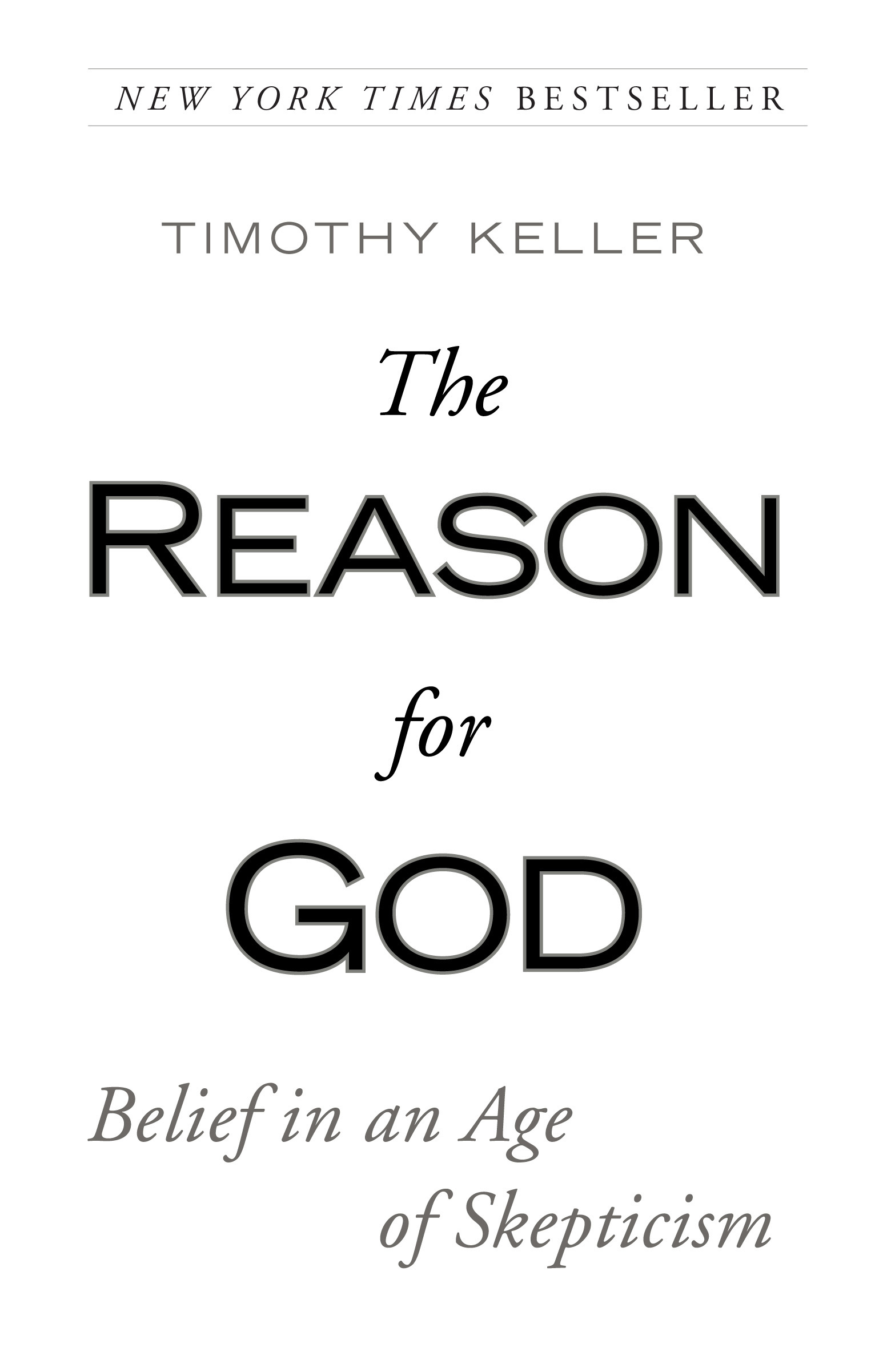
Book Review: The Reason for God by Timothy Keller

Keller, Timothy. The Reason for God: Belief in an Age of Skepticism. New York: Riverhead Books, 2008. 254pp. $16.00.

0cec69c028853f708858c875b6693795_400x400In his 1952 book by the same name, C.S. Lewis attempted to defend what he coined ‘mere’ Christianity. He described Christianity as a house that included Roman Catholics, Eastern Orthodox, and various strands of Protestantism. When a person is first converted, that person is a mere Christian in the great hallway of the house. From that hallway, a mere Christian can and should choose to go into one of the various rooms (denominations). Lewis was not as concerned with getting unbelievers into his particular room as he was with getting them into the great hallway. In keeping with Lewis’ emphasis on converting unbelievers to mere Christianity, Timothy Keller, pastor of Redeemer Presbyterian Church in Manhattan, seeks to meet unbelievers in their doubts and lead them into the great hallway. In Keller’s own words, “I am making a case in this book for the truth of Christianity in general—not for one particular strand of it” (121).

Summary

In The Reason for God, Keller strikes a very pastoral, almost conversational tone. He is not primarily speaking to Christians; his intended audience is made up of doubters. Like C.S. Lewis’ Mere Christianity and Cornelius Van Til’s Why I Believe in God, rather than being an apologetics textbook, The Reason for God presents as a conversation piece for Christians and unbelievers. The main body of the book is broken up into two main parts—Part 1: The Leap of Doubt, and Part 2: The Reasons for Faith.

The Leap of Doubt

In this section, Keller addresses a host of misconceptions about God and Christianity. In the first chapter, he addresses the assumption that exclusivity in religion leads to bigotry by demonstrating that Christianity, while being exclusive, is a religion comprised of members who should themselves have been excluded. Writing Chapter Two, in dealing with the problem of suffering, Keller paints pictures of God and of heaven that are so desirous that, in theory, it retroactively erases all pain experienced this side of death.

Chapter Three is a case for the glory of slavery in the service of a King who became a Slave and died for His subjects. Keller’s goal in the fourth chapter is to point out the inconsistency of committing injustice while claiming the name of Christ. In Chapter Five, he demonstrates the fact that the God of the Bible is not a God primarily comprised of an all-inclusive love, but neither is such a god found in any of the texts of the myriad religions of the word. The seventh and final chapter of Part One demonstrates the folly of trying to interpret God and the Bible through the lens of a modern approach to history and culture.

The Reasons for Faith

After a brief intermission where Keller offers a brief apologetic for his approach to the subject matter, he returns with Part Two: Reasons for Faith.  Having briefly dealt with several reasons unbelievers may have to doubt Christianity, he turns to a positive case for faith. Chapter Eight is Keller’s case for the Christian approach to empirical evidences and against evolutionary science’s unsatisfactory attempt at dismissing divine evidences. He points to internal evidences such as moral obligation, in Chapter Nine, as evidence for God’s existence.

With Chapter Ten, Keller attacks the issue of sin and shows the necessity of the cross. Chapter Eleven is devoted to the demonstration of grace’s triumph over self-righteousness. His twelfth chapter is a demonstration of the relational and social implications of the cross. In Chapter Thirteen, he lays out his apology for the resurrection. The fourteenth and final chapter is a brief treatise on the glories of heaven. Keller concludes this work with an epilogue titled: Where Do We Go from Here? In this section, he walks the unbeliever through the process of conversion and incorporation into the body of Christ.

Critical Evaluation

Christians can gain much from reading The Reason for God. One thing that is immediately noticeable is the fact that no one can write on this subject without upsetting some, if not all, parties: believers and unbelievers, liberals and conservatives, evidentialists and presuppositionalists. However, Keller strikes a tone in this book that can be described in no other way than pastoral. While a case may be made that he makes too many concessions, he does not draw lines in the sand and die on hills where it is not dictated by the subject matter. When writing with such pastoral overtones, it can be difficult to toe the line between unbiblical compromise and gross reactionism. Keller is not always successful in toeing this line, but no one could argue that he has not made a valiant effort at doing so.

Furthermore, though Keller is very accessible and pastoral in his writing, it must be noted that he is widely read on the subject matter at hand. He quite obviously reads broadly, quoting from a wide array of Christian and non-Christian authors. The subject is doubtlessly one of great importance to him, one that he does not think worthy of minimal research and much conjecture. Keller’s heart and his effort in The Reason for God is to be commended highly.

However, there are a few concerns that arise in his method of argumentation. Keller approaches the doubt of an unbeliever as something that is ethically neutral. He makes the gross error of equivocating the common with the honorable. Everyone has their doubts. Thus, it must be honorable to put your doubts on display, right? Wrong. If Christians were to understand doubt for what it is: the sinful suppression of truth, they would reject this equivocation and cease treating the doubts of Christians and non-Christians as something to be praised.

At the end of Keller’s “Introduction,” he describes two scenes where Christ dealt with doubt in others. When found in the apostle Thomas, Christ is said to exhort Thomas to believe and to give him the evidence for which he asked. This is an incomplete account of the confrontation. Christ also rebuked his sinful doubt, “do not be unbelieving” (John 20:27; NASB), and compared him in a negative light with those who do not doubt (vs. 29). In the same way, the father of the epileptic boy in Mark 9 obviously understood the sinfulness of persistent doubt when he said, “I do believe; help my unbelief” (vs. 24). The Greek word here rendered “help” is a word meaning “come to the rescue of.” The direness and sinfulness of doubt are not adequately conveyed in Keller’s approach to unbelievers. Rather, he appears content to applaud their honesty, and join them in it, as long as it moves them to the next point in the discussion.

Of further concern is Keller’s doctrinal minimalism. He admits, as does Lewis in Mere Christianity, that he does see a point where every Christian ought to assume a broad-reaching doctrinal and corporate identity. However, his primary concern in the book is to make a case for “the truth of Christianity in general” (121). As such, the question must be asked how soon a new Christian ought to find a local church. Keller addresses this issue only as a byword, and only after much admitted trepidation, in his Epilogue. He affirms that new Christians must find local congregations with which to identify, but all-the-while passively validating their residual disdain for the bride of Christ (246-247).

Conclusion

In The Reason for God, Timothy Keller sets a commendable example for approaching unbelievers. He is always very cautious to breach the tough topics with much gentleness and humility. However, his method is not representative of a proper hamartiology (doctrine of sin). Doubt is not neutral as it relates to sin; it certainly is not commendable. Christians who engage the unbelieving world do them no favors by pretending that it is, whether in word or deed. Readers would do well to imitate Keller’s tone and patience with the unbelievers with which they come into contact. They would do just as well to approach his many concessions with great discernment, careful not to die on non-essential hills, but willing to draw the line in the sand on matters that are unquestionable in God’s Word.

________________________


Pick up The Reason for God today:ReasonForGod_040809.inddThe Reason for God paperback

by Timothy Keller

CCF Episode Twenty-One: The Gospel According to the 1689

CredoCovPodcastMaster

In this episode, Billy and JD sit down to discuss the gospel as it is summarized in The Baptist Confession.

MP3 Download | stream:

There is a chapter in The Baptist Confession called “Of the Gospel and the Extent of the Grace Thereof.” Quite a mouthful, ay? Anyway, I just wanted to make note of it, since we really didn’t take time to explore it in this episode. It’s there. Perhaps the reason we don’t spend a whole lot of time on discussing that one chapter is because we see it primarily as functioning as a type of summary of the confession itself, insofar as the confession is a summary of the gospel and its implications. Anyway, if you’d like more reading on this chapter, check this out from Dr. Bob Gonzales:

This chapter on “the gospel” is not found in the Westminster Confession. The Congregationalists added this chapter to the Savoy Declaration, and the Baptists incorporated it into their Confession.” Read more…

Subscribe to future podcasts and leave us a review on iTunes: RSS | iTunes  

The book we skimmed over:

BaptistConfessionLeather1689


The Baptist Confession & The Baptist Catechism
edited by James Renihan

We’d love your participation. Contact us with your comments and questions about the confession’s contents:

[Redux] CCF Episode Twenty: Christianity and the Arts (Part Two)

CredoCovPodcastMaster

Earlier today, I posted the podcast for this week, but not really. The file I embedded was the one from two weeks ago. However, if you listened to that one (Christianity and the Arts, Part One), it should serve as a good refresher before listening to this week’s episode: Part Two. Enjoy.

In this episode, Billy and JD sit down to discuss movies, Christian liberty, and paintings. Featuring audio excerpts from the motion pictures Chariots of FireOctober Baby, and Bella.

MP3 Download | stream:

Chariots of Fire

October Baby

Bella

Subscribe to future podcasts and leave us a review on iTunes: RSS | iTunes  

We’d love your participation. Contact us with your comments and questions about the episode:

CCF Episode Fourteen: Adam and the God of Covenants

CredoCovPodcastMaster

In this episode, JD and Billy sit down with Pastor Jason Delgado and Jack DiMarco to discuss the first two chapters of Covenant Theology: From Adam to Christ by Nehemiah Coxe and John Owen. Featuring music from Least of These and Beautiful Eulogy.

MP3 Download | stream:

Subscribe to future podcasts and leave us a review on iTunes: RSS | iTunes  

The book we’re currently reading…coxeowen2

Covenant Theology: From Adam to Christ by Nehemiah Coxe and John Owen

We’d love your participation. Contact us with your comments and questions about the books contents:

Character Sketch: The Blessed Man

PSALM ONE

In the third century B.C. lived a man named Theophrastus, a man known as a teacher of philosophy. Many of his works survive to this day, one of the most notable being his Characters. In it, he demonstrates the ancient Greek method of describing people by their actions. As he describes the officious man, the grumbler, and the newsmaker, he gives his readers only the actions that one might expect to observe in such a character. This work is considered of great historical significance, because it tells us some of the details of life in ancient Greece that are nowhere else to be found in ancient literature.

The Hebrews were quite different in the way they did character sketches, but they nonetheless did character sketches themselves. Character sketches are scattered throughout the poetic books in the Old Testament. One such instance is that of Psalm One, in which we see the contrast between the blessed (or righteous) man and the wicked. Now, as we will see, unlike the Greeks the Hebrews describe not only the actions of their characters, but they also describe the heart inclinations of their characters. But without further introduction, let’s get into the text where we might discover something of the character of the blessed man:

1How blessed is the man who does not walk in the counsel of the wicked,

Nor stand in the path of sinners,

Nor sit in the seat of scoffers!

2But his delight is in the law of the Lord,

And in His law he meditates day and night.

3He will be like a tree firmly planted by streams of water,

Which yields its fruit in its season

And its leaf does not wither;

And in whatever he does, he prospers.

4The wicked are not so,

But they are like chaff which the wind drives away.

5Therefore the wicked will not stand in the judgment,

Nor sinners in the assembly of the righteous.

6For the Lord knows the way of the righteous,

But the way of the wicked will perish (Psalm 1; NASB).

Character Sketch: The Blessed Man (audio)

The Blessed Man

This notion of the blessed man is a reoccurring theme throughout the book of Psalms. The blessed man takes refuge in the Messiah (2:12), the blessed man confesses his sins and they are forgiven him and in his spirit there is no deceit (32:1ff), the blessed man will inherit the land (37:22), the blessed man has made the Lord his trust and turns neither to the proud nor to those who lapse in falsehood (40:4), and there are so many other characteristics of the blessed man which could be mined from the book of Psalms. Today, however, let us turn our gaze to the characteristics given us in Psalm One.

These characteristics are broken down into two categories: the negative characteristics and the positive characteristics. By negative, I mean that we are told the things from which the blessed man abstains. By positive, I merely mean that we are told what the blessed man enjoys to do.

The Negative Characteristics

1How blessed is the man who does not walk in the counsel of the wicked,

Nor stand in the path of sinners,

Nor sit in the seat of scoffers!

The blessed man does not partake in certain activities. Rather, he is different. He is wholly other. He is set apart. He is being sanctified in the Lord. When the world looks at the man of God (the blessed man), there is a reason why they are turned off, why they see him as strange. It’s not because he necessarily dresses different, or because he abstains from certain activities that are not addressed in the Bible.. It’s certainly not because he goes around speaking in Elizabethan English, makes his wife wear long skirts, and refuses to read any book that is not written by someone within his own theological tradition.

We don’t have to add to the Bible to make ourselves seem strange to the world. Rather, the psalmist is pointing out that, when we make the Bible and the Bible alone our authority for all matters of life and godliness, we necessarily deny the authority structures the world has put in place. We deny their authorities, and that to them is strange.

The Counsel of the Wicked. Walking in the counsel of the wicked here means that one’s ear is inclined to the subtle influences of the society of the world. They have not yet stopped and stood in the way of sinners or sat in the seat of scoffers, but they have begun to be inclined in that direction. They are accepting the counsel of the wicked as authoritative and sound, and they are starting to heed the traditions of man rather than the precepts of the Bible.

We see this in the way that evangelism is talked about in much of modern Evangelicalism. We are told that we must “earn the right” to share the gospel with our friends, family, neighbors, and coworkers, which means that we have to dress like them, think like them, listen to the same music as them, and watch the same programs on TV as them. Otherwise, how can they possibly relate to us? How can we possibly have “earned the right” to share the gospel with them?

Many of the same pastors who would argue that we must “earn the right” to share the gospel with those around us also would argue for a more world-centered approach to worship: an approach that would say, God may not have explicitly told us that impressionistic paintings, and heavy metal performances, and skits, and puppet shows have no place in worship, but he nowhere forbids it. Thus, we can use these things, because that’s what the culture wants. I would submit to you that, when a church takes their cues from the culture rather than the word of God in their evangelism and in their worship services, they have begun to walk in the counsel of the wicked. They have begun to be swayed by the subtle influences of the world, and we ought to have none of it.

The Path of Sinners. The next phase in the regression away from the blessed life is that of standing in the path of sinners. This is the phase in which we have inclined ourselves so long toward the subtle influences of society that they have become commonplace to us, so much so that now we find ourselves in the very path, or way, of sinners. It’s interesting that early Christians referred to themselves as The Way. In Acts 22:4, Paul says that he persecuted this “Way” to the death.

At the end of our own text, the psalmist makes a contrast between the “way” of the righteous and the “way” of the wicked. The word for path here is the same word, so we can deduce that the path of sinners is not merely a road on which the man is obstructing the sinner’s journey. Rather, this “way” is a lifestyle; it is the direction in which one is headed. If we head the counsel, the subtle influences of the wicked, before we know it our lifestyles will begin to reflect what we are taking in. That counsel upon which we meditate regularly will always, ultimately become the authority in our lives and will determine our lifestyles.

The Seat of Scoffers. Well, now we come to the third stage of our threefold regression into wickedness: sitting in the seat of scoffers. Scoffers are those who not only deny God, but they scoff at him and ridicule His people. When we think of scoffers, we often think of men like Richard Dawkins and Bill Maher, but if we are honest, even us as Christians can have a tendency to mock and scoff. We can even be fairly vicious toward one another if we are not careful. If we passively incline our minds toward the subtle influences of this world long enough and make ourselves comfortable with ungodly, abominable lifestyles, before we know it we can begin to scoff at others within our own faith.

I can’t help but think of evangelical pastors who talk openly about disgusting, ungodly things in their pulpits, they seek to look like the world and talk like the world and, before they know it, they are railing against other Christians. They call them religious people. They deride them for not being as worldly as they are, something these pastors apparently think to be more noble, something they think makes their evangelistic ministries more effective. Let us take heed lest we journey down the same path, by walking in the counsel of the wicked, standing in the path of sinners, and ultimately sitting in the seat of scoffers.

The Positive Characteristics

2But his delight is in the law of the Lord,

And in His law he meditates day and night.

Now, you would expect, in a chiastic structure, that the psalmist would contrast this walking, standing, and sitting with a more direct correlation. Perhaps, he might follow this negative description of the blessed man with the positive: but rather he walks in the counsel of the godly, stands in the path of the holy, and sits in the seat of the humble. He doesn’t do that, though, does he?

Delighting in Torah. That’s because this is not a contrast between one group of associations and another, but one authority and another. In verse one, the blessed man is said to have shunned the worldly authority of the wicked around him. In verse two, we see the authority he accepts.. No! We see the authority in which he delights. For the blessed man, the law of God is not some burdensome set of rules and injunctions he has had imposed on him from outside. Rather, it is his delight.

The law mentioned here is the word torah. Many of you will recognized that as the designation most commonly used by Jews to refer to the first five books of the Bible. At the time that the psalmist wrote this psalm (most likely David), it is likely that few other books had been written. Outside of the first five, by the time of David, the Israelites may have already accepted Job, Joshua, and perhaps even Judges as canonical. Regardless, torah was the term which, at that time, was used to designate all of the books of the Bible. Thus, when we see this term being used in the first psalm, we shouldn’t merely relegate it to speaking of the first five books of the Bible. Notice how David sings in Psalm 40:8, “I delight to do Your will, O my God; Your Law is within my heart” (NASB). In much of the Psalms God’s law, His torah, is closely related to His revealed will. So, we should understand this term as speaking of the entire revealed will of God: the Bible.

Biblical Meditation. What then is the sign that a man delights in this law? The sign that he delights in God’s law is that he meditates on it day and night. Now, this idea of meditation is far different than what we usually think when we think of meditation. Usually, when we think of meditation, we get visions in our head of people sitting with their legs folded, their hands turned upward on their knees in the form of gang signs, and strange noises coming from their throats. In this type of meditation, Eastern meditation, the goal is to clear one’s mind and think of nothing. This is not the notion we’re presented with in Psalm One.

Biblical meditation is a filling of the mind, not an emptying of it. We are to fill our minds with the word of God. We are to chew on it. We are to mutter it. That’s what the word for meditate literally means in the Hebrew. It means to mutter. So throughout the day, our delight is to be found in those times when we can mull over the Scriptures we’ve been reading, studying, and memorizing. As you can see, meditation of Scripture assumes prior work in Scripture. If we are going to digest our food and thus nourish our bodies, we must have first taken in that food through our mouths. In like manner, if we are going to digest Scripture and thus nourish our souls, we must have first taken it in through reading it, studying it, and memorizing it.

Now, the psalmist doesn’t say that the blessed man does this to somehow be justified before God. If we are in Christ, we have our justification secured. However, if we have been washed by the blood of Christ, if we have received justification, if we have been called by the Spirit, regenerated and indwelt by the Spirit, if we have been reconciled to God the Father, a characteristic that will pervade our lives will be a delight in His law. Our delight will be in reading, studying, memorizing, and meditating on the word of God, so that we might know His precepts and do them.

The Result

3He will be like a tree firmly planted by streams of water,

Which yields its fruit in its season

And its leaf does not wither;

And in whatever he does, he prospers.

The Planted Tree. We’ve looked at the authorities the blessed man denies, and we’ve looked at the authority in which he delights. Now let’s take a look at the type of man he is as a result. The psalmist says that the blessed man is like a tree firmly planted. Notice, he doesn’t say that he is like a wild tree. This tree has been taken from one place and planted in another. This demonstrates that where the tree is, it is not its natural environment. Rather it is an environment which is much more conducive for the tree’s health and vitality.

In the same way, the blessed man has not come to his place of status before God on account of anything within himself. He has been planted. He is what he is by sovereign grace. There is nothing he can claim on the basis of his own merit, but rather he stands on the merits of Christ. He is righteous, but it is not an intrinsic righteousness, but rather it is a righteousness that he has received (2Cor. 5:21).

Roots and Fruit. The streams of water by which this tree is planted point back to the law in which he delights. We as Christians are strengthened and nourished by the law, much like a tree that is planted by streams of water extends its roots toward the waters in order that it might strengthened and nourished by them. As Christians, we too are to be rooted in the Scriptures. We are not only to delight in them, but we are to see them as being as essential to our strength and vitality as water is to a tree.

We are also told that it yields its fruit in its season. Every tree bears different fruit. And every fruit is born in a different season. We are not meant to bear the same fruit in the same season as everyone else. We are not all equal in maturity; we are all different. Some of us need to learn patience. Some of us need to learn gentleness. Some of us need to learn peace and love. These are all fruits of the Spirit, but they don’t all come to us at the same time or in the same way. Rather, we each bear these fruits in our own seasons. As such, we need to bear with one another in our weaknesses, and point one another to the sources of our strength, the word of God, from which flow life-giving water.

Beautiful and Prosperous. The tree is also said to have leaves that do not wither and to prosper in whatever it does. This speaks to the value of the tree to its planter. The tree is beautiful and prosperous. Likewise, we are to be as a fragrant aroma to our God. We are to be an object of beauty and value in His sight. As we grow in our knowledge of and endearment toward his word, we will begin to grow in godliness and Christ-likeness. I find that the analogy of the parent / child relationship is useful here.

I often ask Norah, “What must you do to be my daughter?” She says a wide variety of different things, before I correct her and say, “You don’t need to do anything to be my daughter; you simply are my daughter. Now, what must you do to be God’s daughter?” to which she will often say things like “Obey Him,” or “Be good.” To this, I say, “No. You simply need to be born into His family.”

Brothers and sisters, we have been born into the family of God. We don’t have to do anything more than that. However, just as Norah pleases me when she obeys me, we please God as we grow in Christ-likeness. We don’t grow in the area of justification or union with Christ, but we do grow in sweet communion with our heavenly Father. Yes, brothers and sisters, we can be pleasing to Him, and we should earnestly desire to be pleasing to Him as we grow in the image of Christ. In this sense, we are to be like a beautiful and prosperous tree.

The Wicked

4The wicked are not so,

But they are like chaff which the wind drives away.

5Therefore the wicked will not stand in the judgment,

Nor sinners in the assembly of the righteous.

Dead, Worthless Chaff. Notice, the wicked are not so. Not so the wicked! This introduces a contrast. Now we are looking at a brief sketch of the character of the wicked. They are like chaff which the wind drives away. What is chaff? When farmers in the Old Testament would gather in wheat, it would be accompanied by chaff, a weed that was dead and useless. The wheat farmers would toss the wheat and chaff up into the air with a winnowing fork and the wind would carry away the dead useless chaff, leaving only the wheat which was of value to the farmer.

So we see the contrast. There are two groups of men. We are either like the beautiful, fruitful, prosperous tree, or we are like dead, useless chaff which the wind drives away. Of these wicked men, God says, they are useless. They are like dead men’s bones. They are fickle. They are frail. They will not stand in the day of judgment. On the day of judgment, there will be a great outpouring of the wrath of God upon the whole of mankind. The only think that will save any of us is if Christ has taken upon Himself the wrath that we deserve, and that is what He did on the cross.

The Necessity of the Cross. When Christ died on the cross, He who knew no sin became sin on our behalf. He took the very wrath of God. It is as though, on the day of judgment, God’s wrath will be poured out upon the vast sea of humanity, and only those who stand in the shadow of the cross where Jesus has taken God’s wrath on our behalf, will be shielded from the wrath of the only just and mighty God. We who stand in the righteousness of Christ will be able to stand on the day of judgment. The wicked will not.

On that day, there will be a great separation. There will be two assemblies. The sheep will be separated from the goats. The blessed, or righteous, man will be separated from the wicked man, and the wicked will not be able to stand in the assembly of the righteous. Jesus told a parable to illustrate this: the parable of the wedding feast. After all the guests had been brought into the feast, there was a man found who did not have on the proper wedding garments. Upon his discovery, this man was cast into the outer darkness (Mt. 22:1-14). Brothers and sisters, we must be clothed Christ if we hope to stand in the assembly of the righteous on judgment day.

The Special, Intimate Knowledge of God

6For the Lord knows the way of the righteous,

But the way of the wicked will perish

Now we return to this word “way,” and we are told that the Lord knows the way of the righteous, but the way of the wicked will perish. The emphasis here is on the knowledge of God. If God “knows” your way, apparently you are good. If He doesn’t know it, you will perish. What does this word “know” mean? Doesn’t God know all things? Can anything be hidden from God?

Special Knowledge

Well of course God knows all things and, as the catechism says, nothing can be hidden from God. The psalmist isn’t referring to God’s omnipotence. Rather, he is talking about God’s special, intimate knowledge. When Adam and Eve conceived and bore a child, it was said of them that Adam knew Eve. That means that he knew her intimately. In much the same way, God draws close to those whom He loves. There is a special love that God has for His people.

Non-Calvinists would say that God loves all people the same. They would prefer that God had a promiscuous, general type of love that extends to all mankind alike, but we know that this is not the way that God operates in the Bible. Yes, He loves all mankind generally in that He causes the rain to fall and the sun to shine on both the righteous and the wicked. However, there is a special way in which He loves His elect, His bride.

Just as I am called to love my enemy, but I am not called to love him in the same way that I love my wife and my kids, God loves His enemies, but not in the same way that He loves His bride. From heaven, He came and sought her, His elect bride. In this special, intimate way, God is said to know the way of the righteous.

We Are to Be Known

We ought to also recognize what is not being said here. The psalmist is not saying that the righteous are made righteous on account of their knowledge of God, but rather His knowledge of them. There are many who have a great knowledge about God and His word (e.g. Bart Ehrmann), but will not be able to stand in the judgment. What matters is, have you been known by God in this special, intimate way? Have you been sovereignly born from above? Let us here heed the warning of Jesus when He said:

Not everyone who says to Me, ‘Lord, Lord,’ will enter the kingdom of heaven, but he who does the will of My Father who is in heaven will enter. Many will say to Me on that day, ‘Lord, Lord, did we not prophesy in Your name, and in Your name cast out demons, and in Your name perform many miracles?’ And then I will declare to them, ‘I never knew you; depart from Me, you who practice lawlessness’” (Mt. 7:21-23; NASB).

We must be known by the Lord. Are you known by Him? Do you abstain from the counsel of the wicked, the path of sinners, and the seat of the scoffers? Do you delight in His law and meditate on it day and night? Are you like a beautiful, fruitful, and prosperous tree planted by streams of living water, or are you like dry, dead, and useless chaff? Will you stand in the day of judgment, Christ having taken upon Himself your sins and the wrath of God which you deserve? Have you been born again? Does God know you in a special, intimate way? These are the questions we ought to ask ourselves in response to our study today. I pray that God blesses each of you as you consider and apply these truths to your own lives.

Calvinism: The Only Soteriology Consistent with Prayerful, Spirit-Dependent Evangelism

This semester and last semester, I took two evangelism classes. One was a single credit undergraduate class, and the other was a three credit Masters level class. At the end of these two rather enlightening and challenging classes, I still am convinced that anyone who holds to a form of Calvinism that pushes him away from evangelism rather than toward it either does not hold to a historic understanding of Calvinistic soteriology or is not living consistent with it.

I have held to this view strongly ever since having been introduced to Calvinism as a young Christian. However, I have never thought about whether or not a person who holds to a soteriological view other than Calvinism could practice a prayerful, Spirit-dependent evangelism in a way that is consistent with his soteriological perspective. I say “in a way that is consistent,” because there are many Christians who share their faith who are not Calvinists.

I understand that it is the default to say that it is indeed consistent for non-Calvinists to share their faith. As such, Calvinists are often, if not always, the ones who are put on the defensive in this regard. Not only am I arguing here that it is consistent for Calvinists to evangelize, but I am also arguing that Calvinistic soteriology is the only soteriological system consistent with the type of evangelism prescribed in the Bible. Any soteriological commitments other than Calvinism fall short in this regard and are thus inconsistent with biblical evangelism.

Prayerful, Spirit-Dependent Evangelism

The Holy Spirit’s work is essential in the work of evangelism. There is no corner of orthodox Christianity where this truth is denied. The question is, outside of a Calvinistic understanding of salvation, does the Holy Spirit truly have any power in evangelistic encounters? If He does, as nearly every evangelist will claim, who gives Him that power?

The reason these questions are important is that the natural response of most to the necessity of the Holy Spirit’s work is to push the importance of prayer. Hence, professors, pastors, and parachurch gurus have long pushed church-wide prayer meetings, prayer walks, and persistent personal prayer for the lost. The idea is, if the Holy Spirit is not working alongside you in your evangelism, you have no reason to expect your evangelism to result in the making of disciples.

Here, our problem with a non-Calvinistic approach to evangelism arises. In this instance, it certainly seems as though a form of election is taking place, though it is obviously not divine election. In a non-Calvinistic framework, Christians, though they may not be able to elect people to salvation, can certainly elect them to reprobation through their unfaithfulness in prayer. According to many who write on the subject, Christians decide how effective their evangelism will or will not be based on how persistent they are in prayer.

Calvinism, More Consistent

But Calvinists must admit that they also hold to a strong view of prayer as it relates to evangelism. Spurgeon wrote on many occasions of the need for more prayer in order to see the gospel advance in the world. However, the argument is not that prayer is unnecessary for evangelism to be effective. It certainly is. The argument I am here making is that Calvinists are the only Christians who can account for such an emphasis on prayer without doing injustice to their soteriological framework. Calvinists have the only soteriology that makes sense of such fervent prayer for evangelistic effectiveness.

When a Calvinist prays for the salvation of unbelievers, he believes that one of two things is the case. Either he is praying in accordance with the will of God and, thus, God will work through his prayers to effect the salvation of the unbeliever in question, or the desired effect is not God’s will, in which case the Calvinist rightly prays, “Nevertheless, not my will but Yours be done.” Two questions that naturally arise then are, What exactly is the non-Calvinist praying that God will do to make his evangelistic efforts more effective? and, Based on your answer to that question, why would his evangelistic efforts be less effective apart from prayer?

Divine or Human Reprobation?

The question in evangelism is not whether or not someone is elect or reprobate, but who elects them and who damns them. In virtually all non-Calvinistic frameworks, the lost seem to have no more choice in the matter than they do in the Calvinistic framework, unless they have heard the gospel from someone who is “prayed up.” At the end of the day, they still remain subject to powers outside their own control. If the Christian prays, he has a chance. If the Christian does not pray, kiss that chance goodbye. In other words, the Christian wields the power to withhold salvation from others, salvation the Lord had hoped to grant.

In the end, only a Calvinistic soteriology, which sees God working through secondary means like prayer and the proclamation of the gospel to accomplish His will, is consistent with prayerful, Spirit-dependent evangelism. All other soteriological frameworks are woefully flawed at this point. Those who hold to them can pray for the Spirit to make their evangelism more effective, and they can exercise a fair amount of dependence upon the Spirit, but none of them can account for the fact that they assume something outside of the hearers’ control that hinders them from repenting and believing.

The Christian’s prayerlessness, and subsequent lack of aid from the Spirit, works toward the hearers’ reprobation. The best such a person can say is, “At least it wasn’t God’s will that the hearers perish. It was simply not my will that they be elect.”

Conclusion

As a Calvinist, I would urge Calvinists and non-Calvinists alike to pray and ask God that the Holy Spirit would be at work in their evangelism. I certainly believe this to be biblical. I would particularly urge Calvinists to do this more fervently and persistently. It is only when Calvinists do not pray and do evangelism that I believe they are acting in a way that is inconsistent with their soteriology. I would also urge all who hold to a soteriological framework other than Calvinism to re-examine their beliefs to see if what I have written here is true. In the end, none of us pray enough or evangelize enough. So, if you think anyone who makes others reprobate is a monster, consider pointing the finger at yourself before you consider pointing the finger at the God represented in Calvinism.

The Baptist Catechism – Questions 90-92, The Proper Response to the Gospel

Q.90: What doth God require of us that we may escape His wrath and curse, due to us for sin?

A. To escape the wrath and curse due to us for sin, God requireth of us faith in Jesus Christ, repentance unto life, with the diligent use of all the outward means whereby Christ communicateth to us the benefits of redemption.

( Proverbs 2:1-6; 8:33-36; Isaiah 55:2-3; Acts 20:21 )


Q.91: What is faith in Jesus Christ?

A.  Faith in Jesus Christ is a saving grace, whereby we receive and rest upon Him alone for salvation, as He is offered to us in the Gospel.

( Isaiah 26:3-4; John 1:12; Galatians 2:16; Philippians 3:9; Hebrews 10:39 )


Q.92: What is repentance unto life?

A. Repentance unto life is a saving grace, whereby a sinner out of a true sense of his sin, and apprehension of the mercy of God in Christ, doth, with grief and hatred of sin, turn from it unto God, with full purpose of and endeavor after new obedience.

( Isaiah 1:16-17; Jeremiah 3:22; 31:18-19; Esekiel 36:31; Joel 2:12; Acts 2:37-38; 11:28; 2Corinthians 7:11 )